A beautiful Ghanaian Ashanti Akua’ba Doll
Option to buy as a set of two. See ‘‘ Ghanian Ashanti / Akan Akua’ba Fertility Doll 2’’ ( this would be the second doll in the set in addition to this one. ).
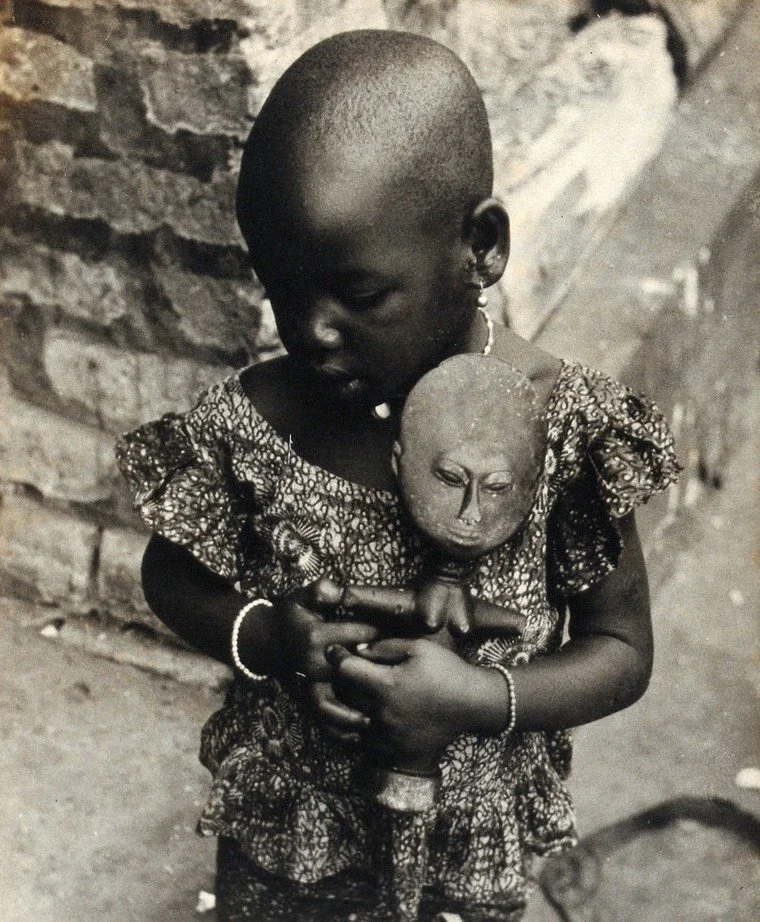
The origins of the Akua’ba doll stem from the legend of a woman called ‘‘Akua’’ ( with many variations of the name ). She couldn't get pregnant so went to a local diviner or priest and paid for a small carving of a small wooden doll. Akua fed it, carried it, bathed it - carrying for it as it was her own child. People in the village started calling the doll ‘‘Akua’’ ‘‘Ba’’ ( ‘‘Ba’’ meaning child ) - translating to ‘‘Akua’s Child’’. Akua soon became pregnant and her daughter grew up with the doll.
The legend and tradition still live on today. If an Akan/Asante woman has difficulty conceiving she would be encouraged to visit a local shrine accompanied by a
senior woman in her family. There she might purchase a figure such as this, which would be placed for a period on the altar, later to be reclaimed by the woman along with specific medicines. Once the woman has conceived and had a successful delivery, she would return the figure to the shrine as a form of offering. If the child died, the akua’ba might be kept by the woman as a memorial.

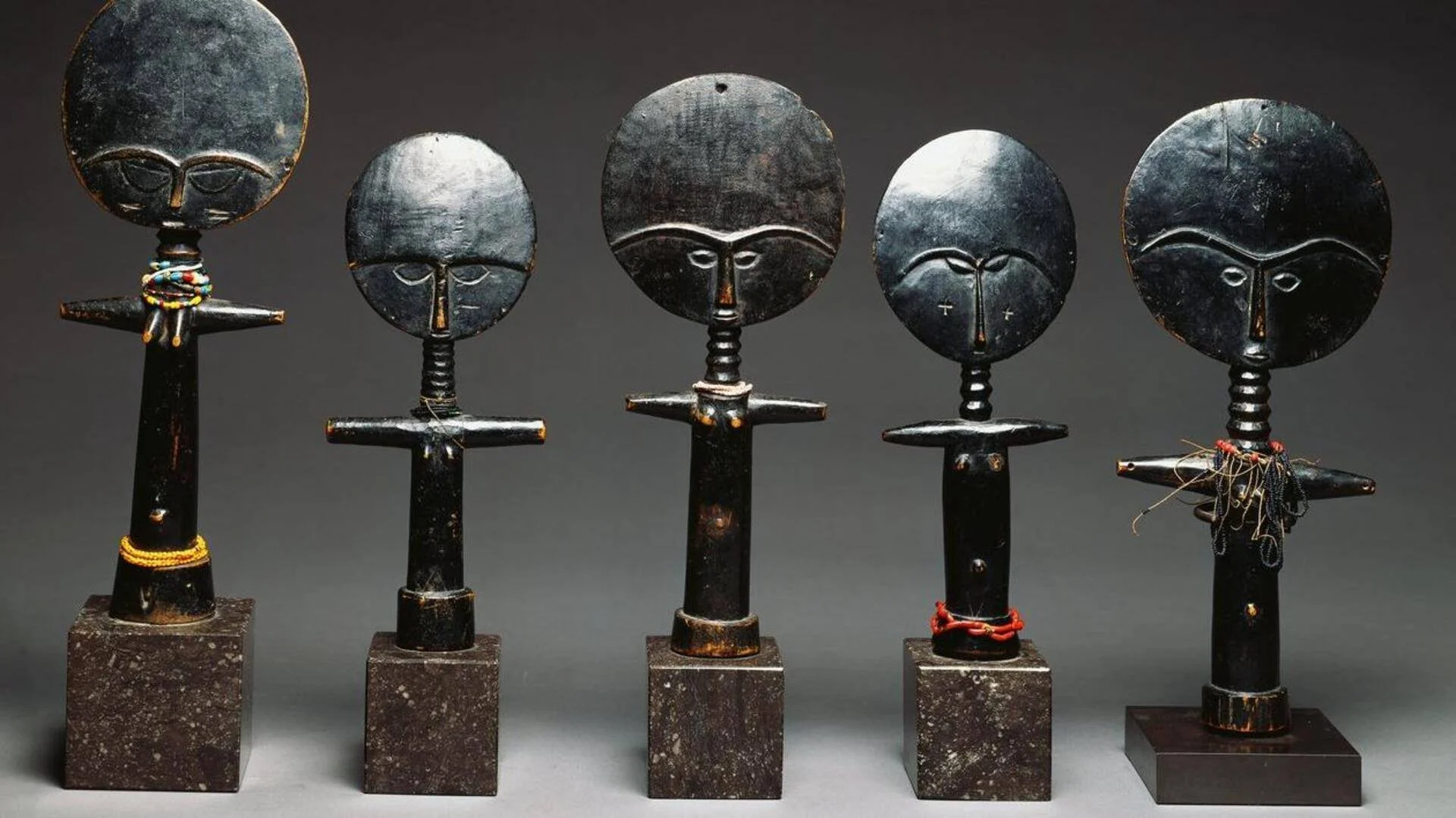
The flat, disk like head is a strongly exaggerated conception of the Akan ideal of beauty. Round or oval shaped heads are considered ideal and this is accomplished in actual practice by the gently modelling of an infant’s soft cranial bones. The flat profile of these figures is also more practical when they are carried against the back wrapped in the woman’s skirt. Also standard is the ringed neck, a convention for rolls of fat and hence beauty and prosperity. The small scars seen on the faces of many akua’ba are those made for medicinal purposes as
protection against convulsions.
Patina shown , back of head marking
Material : Wood
Origin : Ghana
Measures approx 14.5 inches high
A beautiful Ghanaian Ashanti Akua’ba Doll
Option to buy as a set of two. See ‘‘ Ghanian Ashanti / Akan Akua’ba Fertility Doll 2’’ ( this would be the second doll in the set in addition to this one. ).
The origins of the Akua’ba doll stem from the legend of a woman called ‘‘Akua’’ ( with many variations of the name ). She couldn't get pregnant so went to a local diviner or priest and paid for a small carving of a small wooden doll. Akua fed it, carried it, bathed it - carrying for it as it was her own child. People in the village started calling the doll ‘‘Akua’’ ‘‘Ba’’ ( ‘‘Ba’’ meaning child ) - translating to ‘‘Akua’s Child’’. Akua soon became pregnant and her daughter grew up with the doll.
The legend and tradition still live on today. If an Akan/Asante woman has difficulty conceiving she would be encouraged to visit a local shrine accompanied by a
senior woman in her family. There she might purchase a figure such as this, which would be placed for a period on the altar, later to be reclaimed by the woman along with specific medicines. Once the woman has conceived and had a successful delivery, she would return the figure to the shrine as a form of offering. If the child died, the akua’ba might be kept by the woman as a memorial.

The flat, disk like head is a strongly exaggerated conception of the Akan ideal of beauty. Round or oval shaped heads are considered ideal and this is accomplished in actual practice by the gently modelling of an infant’s soft cranial bones. The flat profile of these figures is also more practical when they are carried against the back wrapped in the woman’s skirt. Also standard is the ringed neck, a convention for rolls of fat and hence beauty and prosperity. The small scars seen on the faces of many akua’ba are those made for medicinal purposes as
protection against convulsions.
Patina shown , back of head marking
Material : Wood
Origin : Ghana
Measures approx 14.5 inches high
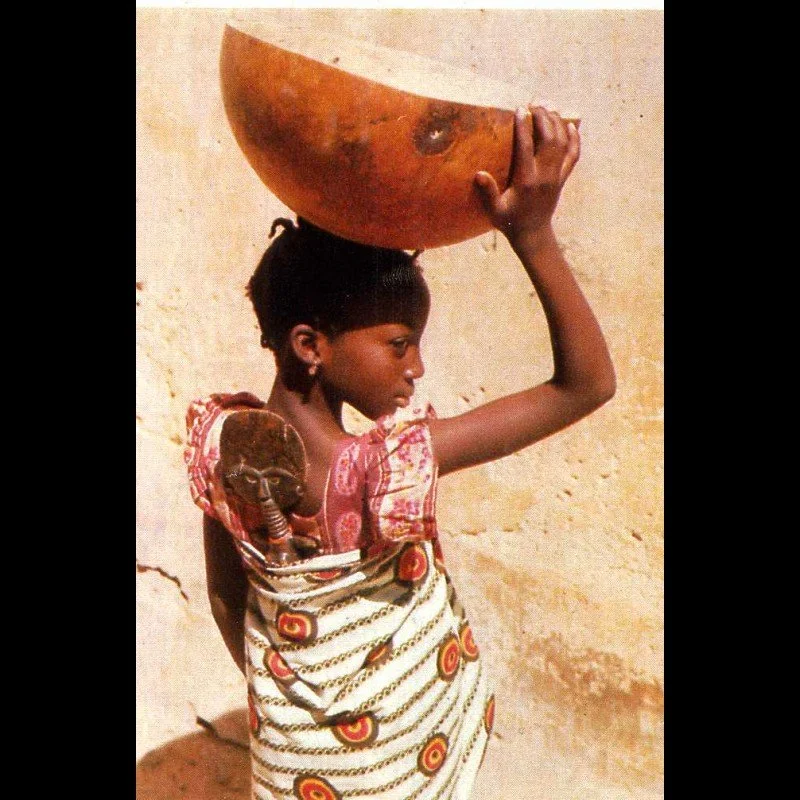 Image 1 of 6
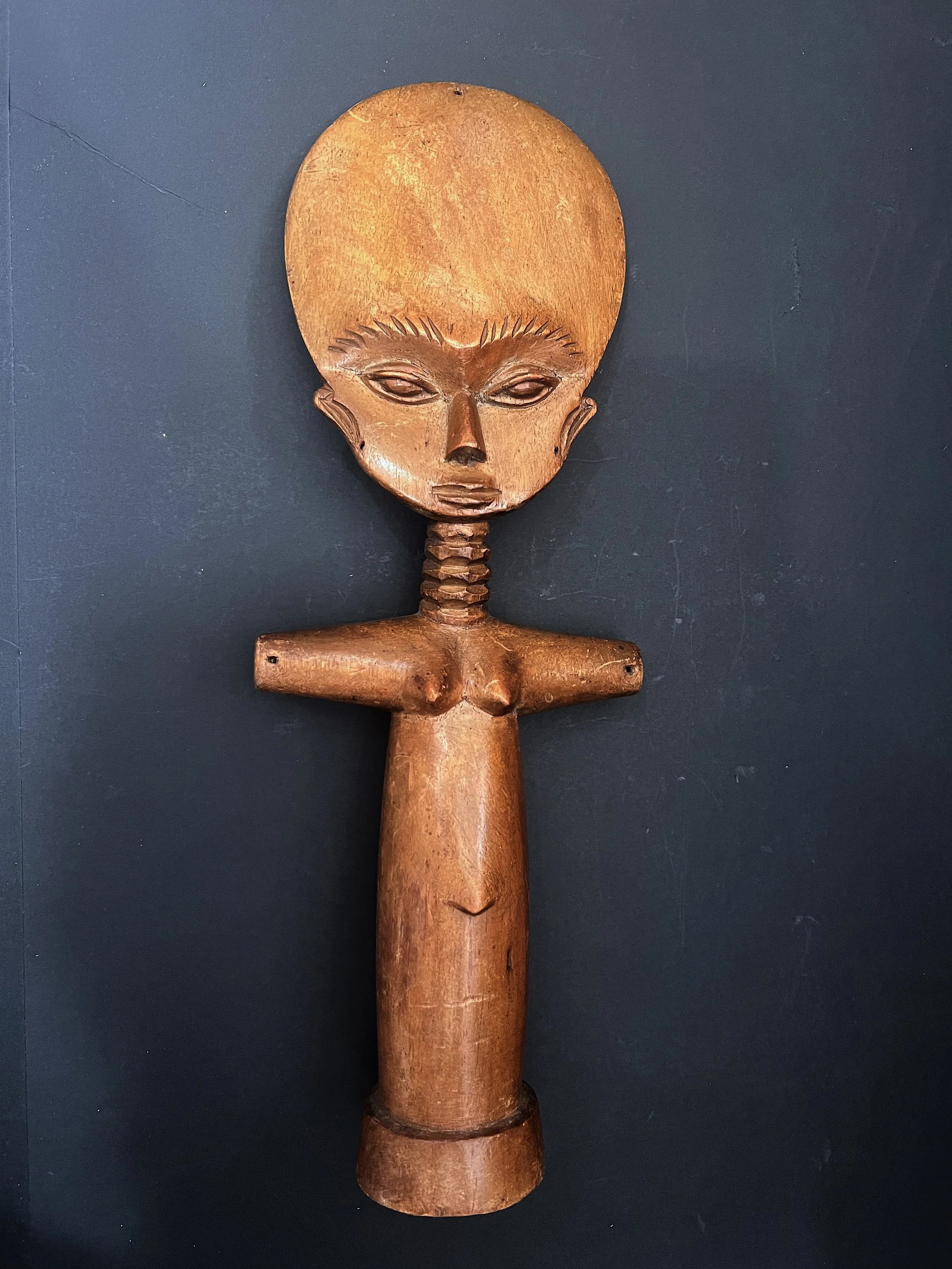 Image 2 of 6
 Image 3 of 6
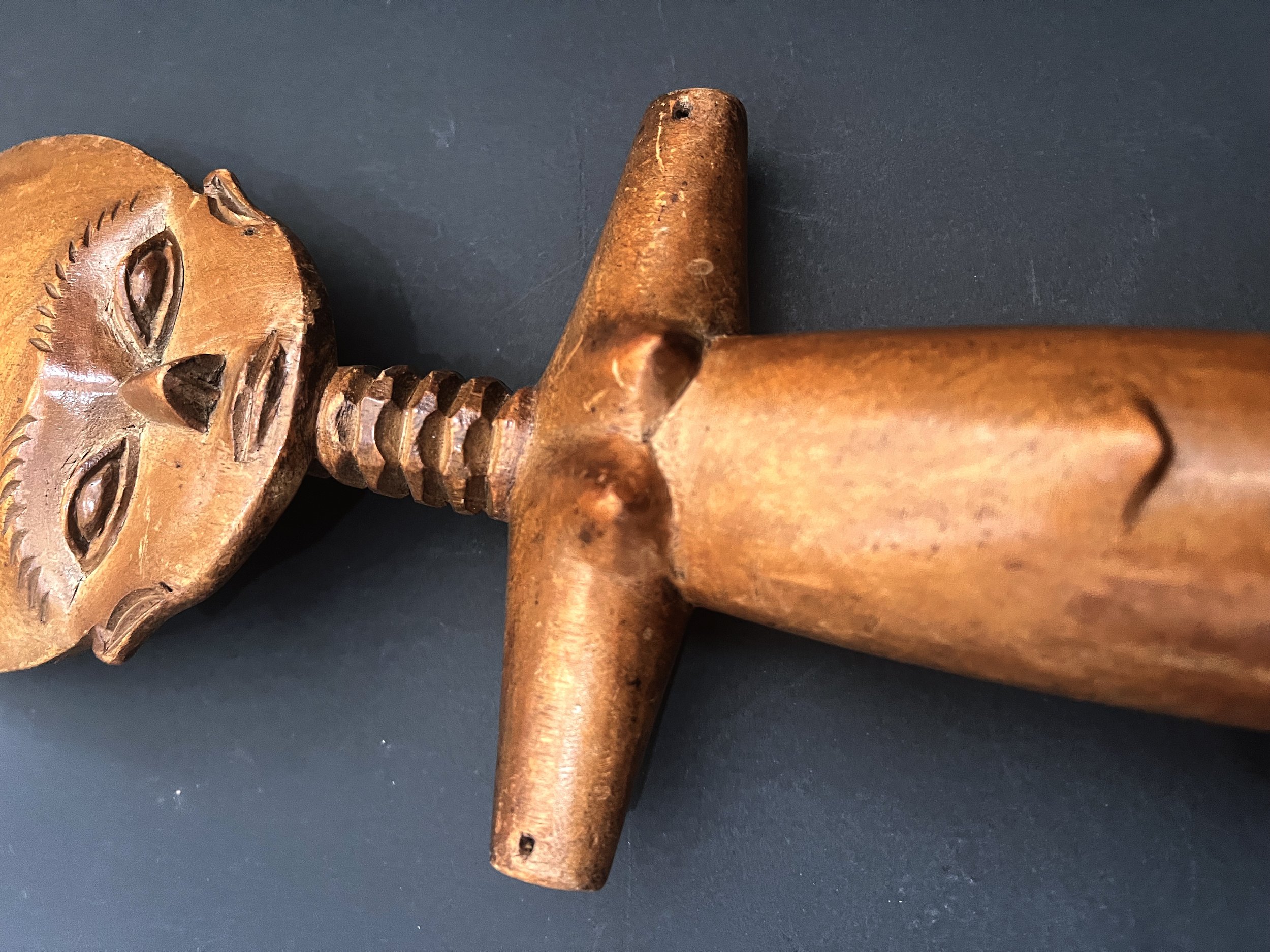 Image 4 of 6
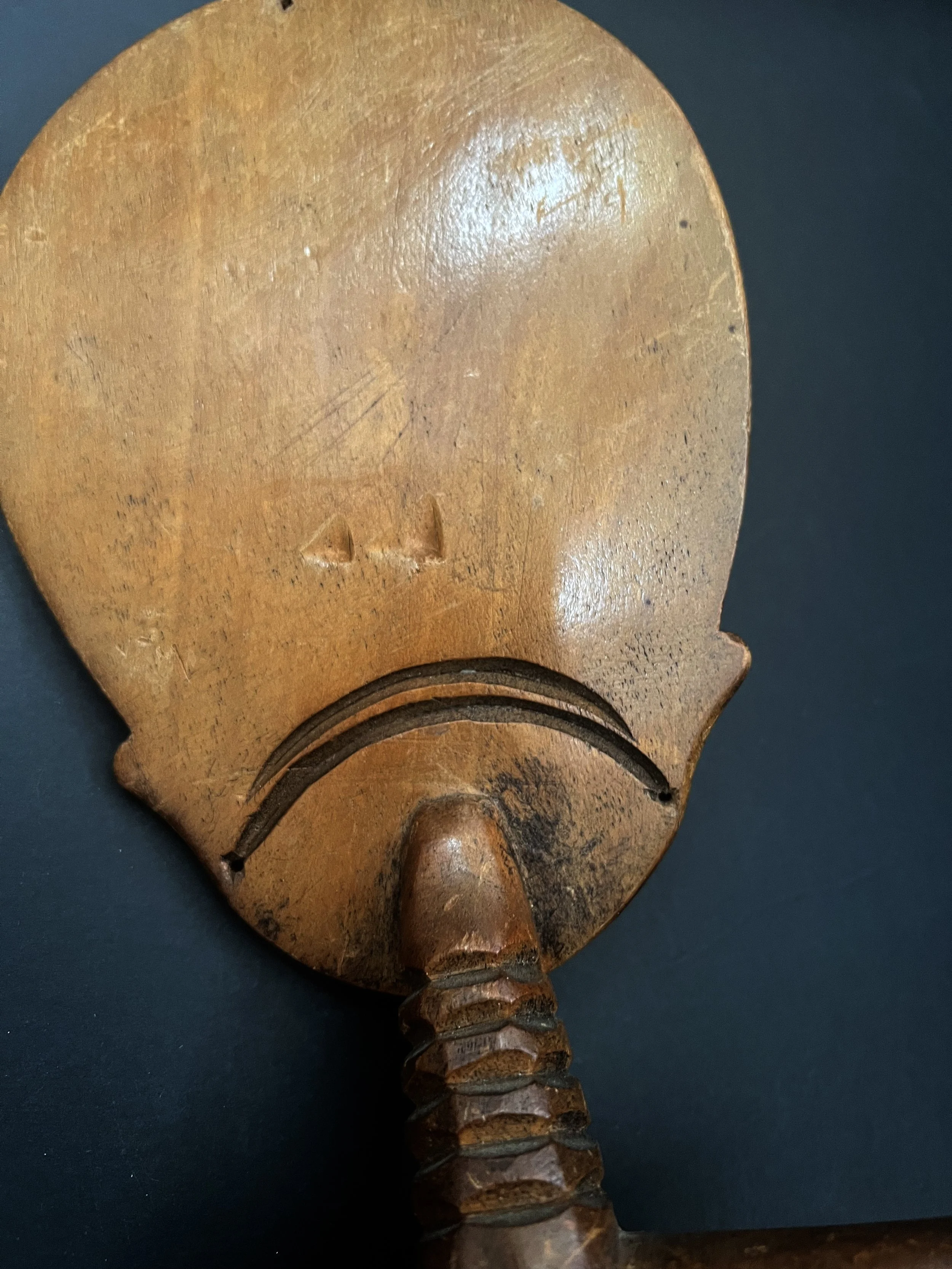 Image 5 of 6
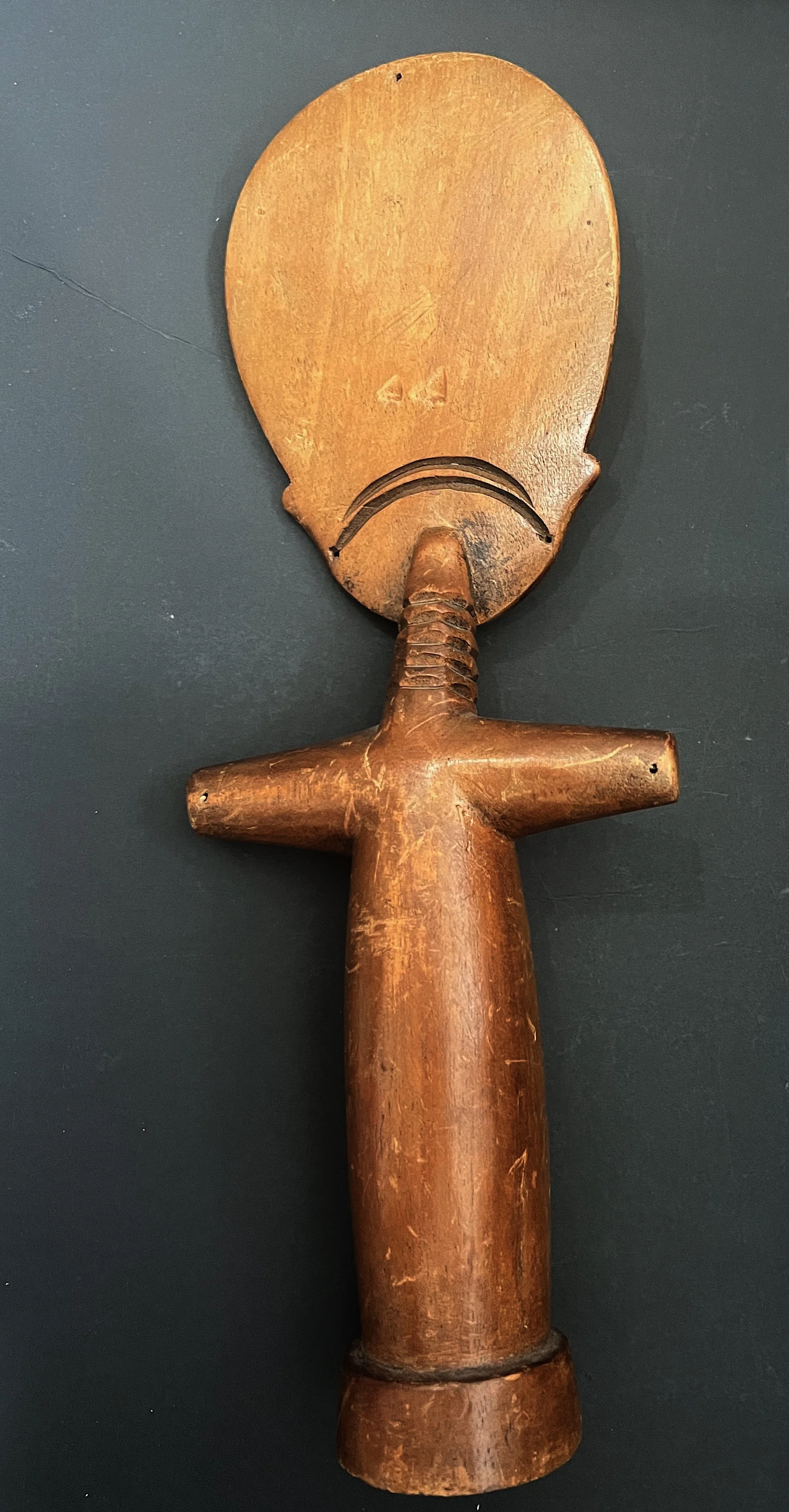 Image 6 of 6