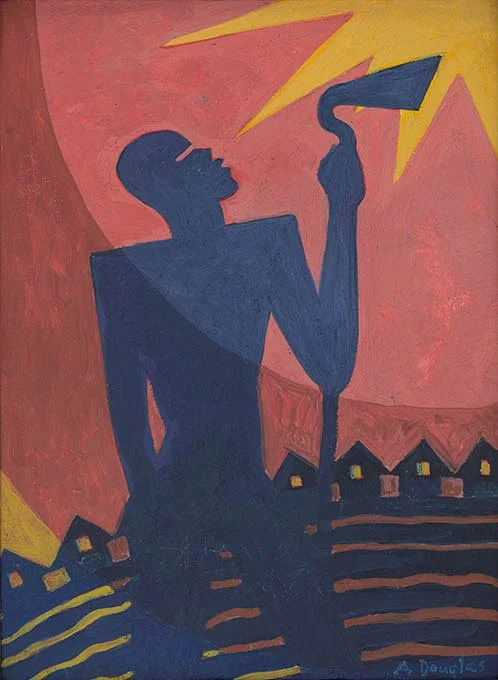
The Toiler, c. 1935. Oil or tempera on board, 8 3/4 × 6 5/8 inches. This painting presents a monumental silhouetted laborer gripping a shovel beneath radiating beams of light, a composition characteristic of Aaron Douglas’s Harlem Renaissance visual language. Rendered in flattened geometric forms and bold tonal contrasts, the figure embodies dignity, endurance, and upward aspiration. The work reflects Douglas’s broader engagement with themes of Black labor, modernity, and collective struggle. Published in Southern/Modern: Rediscovering Southern Art from the First Half of the Twentieth Century and exhibited in: Uptown Triennial 2020 (Wallach Art Gallery, Columbia University, New York); Aaron Douglas and Arna Bontemps: Partners in Activism (Alexandria Museum of Art, 2015–2016); Southern Gothic: Literary Intersections with Art from the Johnson Collection (Wofford College, 2019); Southern/Modern: Rediscovering Southern Art from the First Half of the Twentieth Century (Georgia Museum of Art, 2023; Frist Art Museum, 2024; Dixon Gallery & Gardens, 2024; Mint Museum Uptown, 2024–2025); and Elevation from Within: The Study of Art at Historically Black Colleges and Universities (TJC Gallery, 2019; Richardson Family Art Museum, 2021; Fisk University, 2022; Florida A&M University, 2023). Douglas, A. (c. 1935). The toiler [Oil or tempera on board].
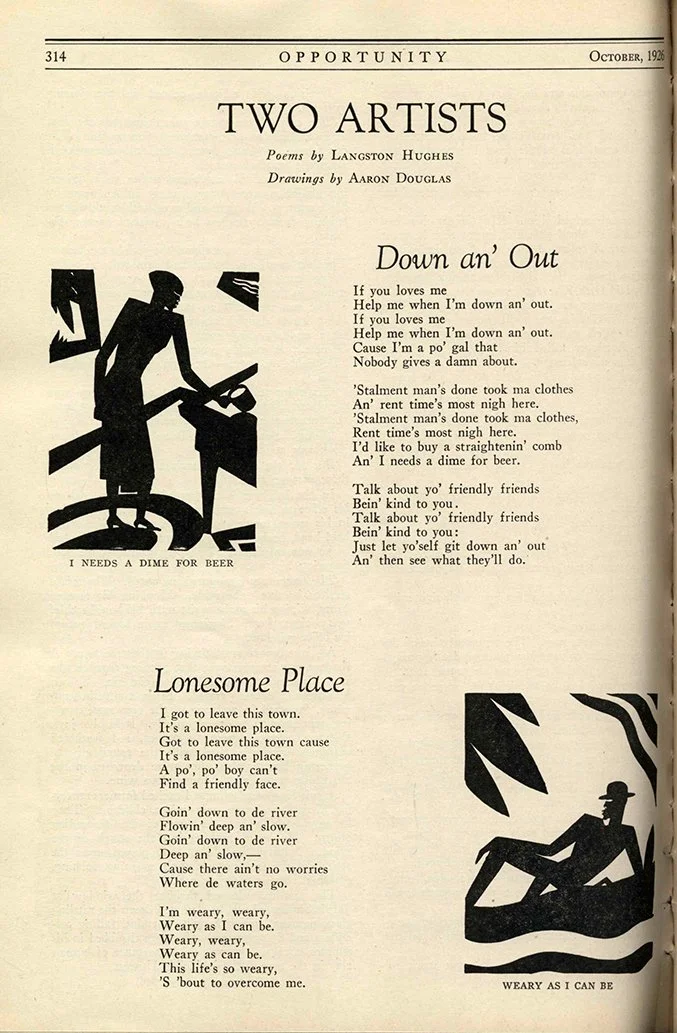
Aaron Douglas, illustrations for Langston Hughes’s poems “Down an’ Out” and “Lonesome Place,” published in Opportunity, October 1926. This magazine spread, titled Two Artists, features poems by Langston Hughes accompanied by graphic drawings by Aaron Douglas. Douglas’s illustrations, including “I Needs a Dime for Beer” and “Weary as I Can Be,” employ flattened geometric shapes, dynamic diagonals, and expressive negative space, reflecting the emerging Harlem Renaissance aesthetic. Published in Opportunity, a key literary journal of the New Negro movement, the collaboration exemplifies the synergy between visual art and poetry in shaping early twentieth-century Black modernism. Douglas, A. (1926, October). Illustrations for Langston Hughes’s “Down an’ Out” and “Lonesome Place.” Opportunity, 314.
Magazine (and Book) Cover Illustrations by Aaron Douglas
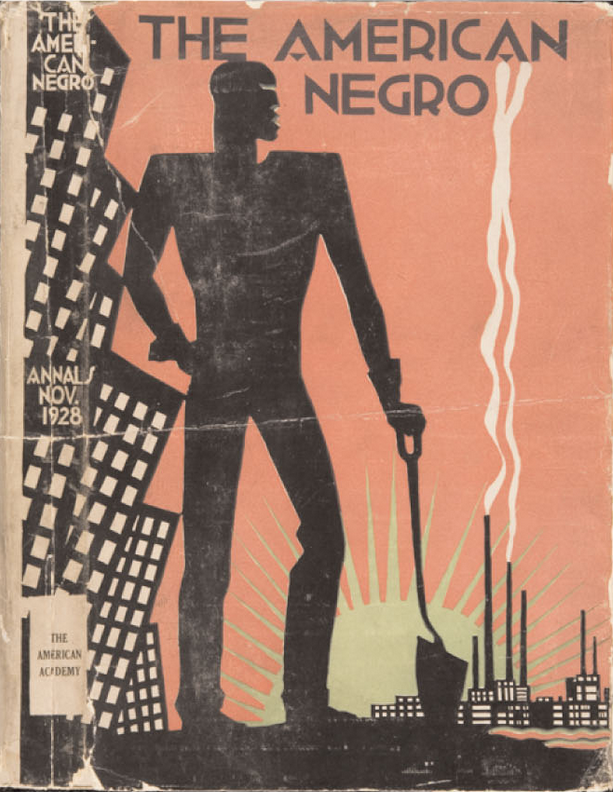
Aaron Douglas, cover design for The American Negro, 1928. This cover design for The American Negro (Annals, November 1928) presents a monumental silhouetted male figure standing before a rising sun and an industrial cityscape. Holding a shovel, the figure symbolizes labor, progress, and modern industrial participation, while the fractured urban architecture to the left suggests both transformation and structural upheaval. The design reflects Harlem Renaissance ideals of racial uplift and positions the Black worker as central to the making of modern America. Douglas, A. (1928). Cover design for The American Negro [Book cover].
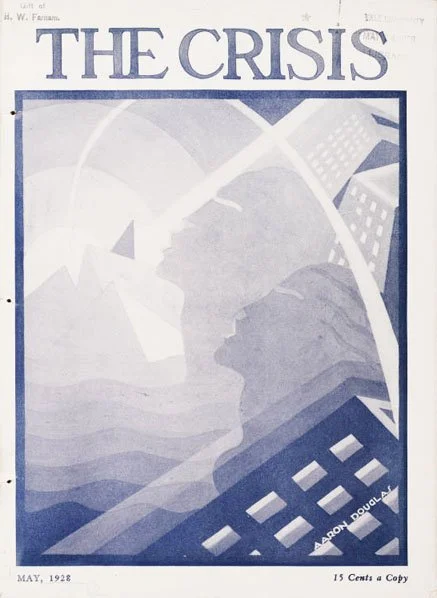
Aaron Douglas, cover design for The Crisis, May 1928. This cover for the May 1928 issue of The Crisis presents two upward-facing silhouetted profiles framed by intersecting arcs of light and a modern city skyline. Rendered in layered blue tonalities, the composition suggests aspiration, migration, and collective vision. The geometric buildings and radiant beams evoke industrial modernity and spiritual illumination, while the overlapping faces imply generational continuity and shared destiny. Douglas, A. (1928, May). Cover design for The Crisis [Magazine cover].
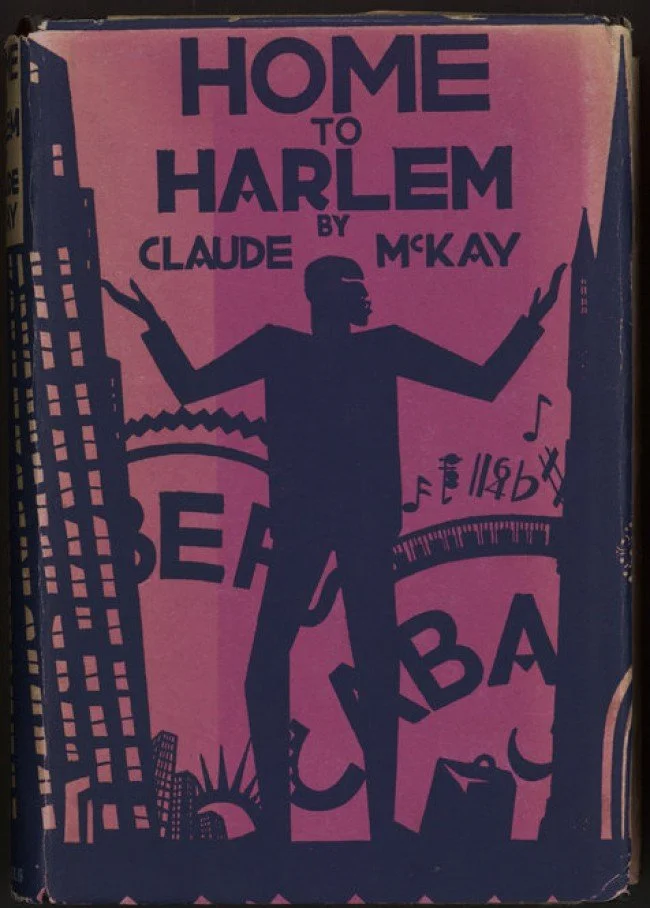
Aaron Douglas, cover design for Home to Harlem by Claude McKay, 1928. This dynamic cover illustration for Claude McKay’s novel Home to Harlem features a bold silhouetted male figure framed by stylized skyscrapers, musical notes, and urban signage. Rendered in striking pink and deep indigo tones, Douglas employs simplified geometric forms, Art Deco typography, and rhythmic composition to evoke the vibrancy of Harlem’s nightlife and cultural life. Through flattened planes and high-contrast design, Douglas visually translates McKay’s literary depiction of Harlem into a distinctly modern Harlem Renaissance aesthetic. Douglas, A. (1928). Cover design for Home to Harlem by Claude McKay [Book cover].
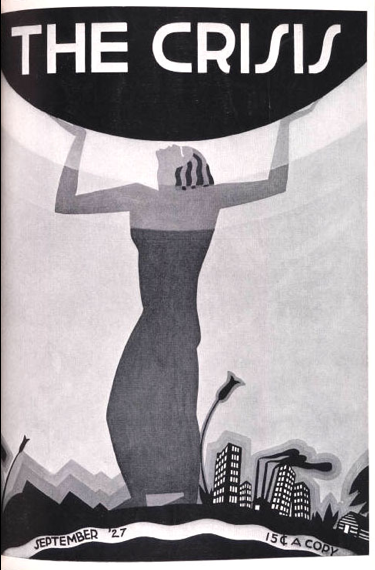
Aaron Douglas, cover design for The Crisis, September 1927. This cover illustration for the September 1927 issue of The Crisis depicts a monumental silhouetted female figure lifting the magazine’s title overhead, symbolizing strength, endurance, and collective uplift. Below her, a modern city skyline rises amid stylized terrain, suggesting progress, migration, and the evolving urban landscape of Black America. The Crisis, the official magazine of the NAACP, served as a major intellectual and political platform, and Douglas’s imagery visually reinforces themes of resilience and advancement central to the New Negro movement. Douglas, A. (1927, September). Cover design for The Crisis [Magazine cover].
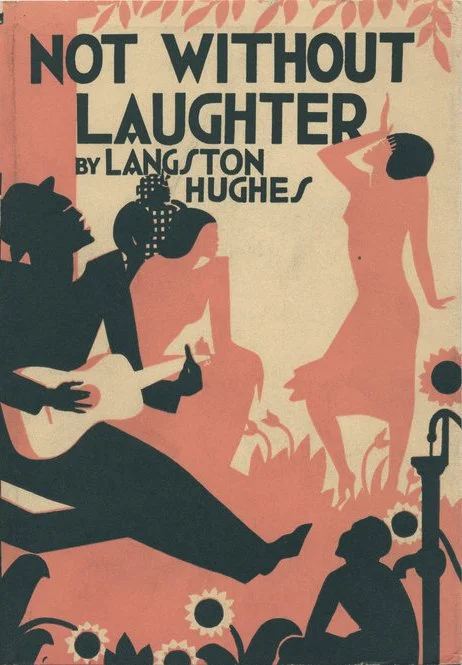
Aaron Douglas, cover design for Not Without Laughter by Langston Hughes, 1930. This cover illustration for Langston Hughes’s novel Not Without Laughter features silhouetted figures engaged in music, dance, and communal gathering, framed by stylized foliage and sunflowers. The design exemplifies Douglas’s Harlem Renaissance modernism, translating Hughes’s literary exploration of African American experience into a dynamic visual language rooted in diasporic aesthetics and Art Deco abstraction. Douglas, A. (1930). Cover design for Not without laughter by Langston Hughes [Book cover].
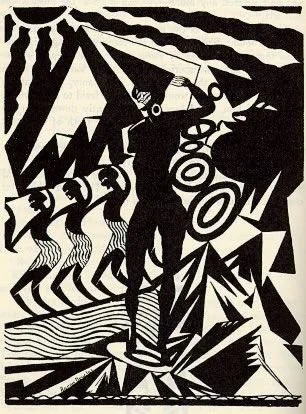
Sahdji (Tribal Women), 1925. Ink and graphite on wove paper, 12 1/2 × 9 inches (31.8 × 22.9 cm). Drawing. Object no. HUGA031. African American Collection. Not on view. This drawing exemplifies Aaron Douglas’s early Harlem Renaissance visual language, characterized by bold silhouettes, rhythmic repetition, and angular geometric forms. Sahdji (Tribal Women) depicts stylized figures engaged in ritualized movement beneath radiating light, merging African-inspired motifs with modernist abstraction. The composition’s flattened spatial planes and dynamic diagonals reflect Douglas’s synthesis of African aesthetics, Art Deco design, and Cubist structure. Created in 1925, the work aligns with Douglas’s broader effort to visually reconstruct diasporic identity and ancestral memory through modernist graphic form. Douglas, A. (1925). Sahdji (Tribal women) [Ink and graphite on wove paper]. African American Collection. Object No. HUGA031.
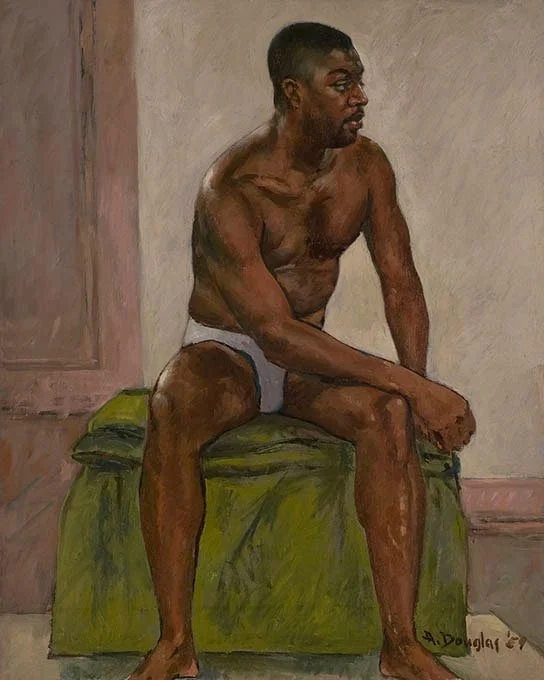
The Athlete, 1959. Oil on canvas board, 23 7/8 × 19 7/8 inches. This painting depicts a seated male figure rendered in naturalistic form, markedly different from Aaron Douglas’s earlier silhouetted, Cubist-influenced Harlem Renaissance compositions. The work demonstrates Douglas’s versatility beyond his iconic graphic style, situating him within broader mid-twentieth-century figurative traditions. Published in New Encyclopedia of Southern Culture, Volume 21: Art & Architecture. Exhibited in: Carolina Collects (Columbia Museum of Art, 2008); Aaron Douglas and Arna Bontemps: Partners in Activism (Alexandria Museum of Art, 2015–2016); and Elevation from Within: The Study of Art at Historically Black Colleges and Universities (TJC Gallery, 2019; Fisk University, 2022; Florida A&M University, 2023; Morgan State University, 2024). Douglas, A. (1959). The athlete [Oil on canvas board].
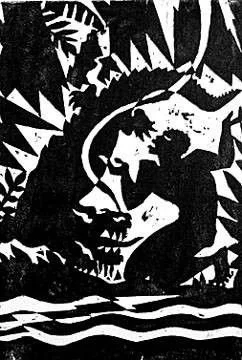
Surrender, 1926. This 1926 composition exemplifies Aaron Douglas’s early Harlem Renaissance graphic style, characterized by sharp angular forms, silhouetted figures, and high-contrast black-and-white design. This work demonstrates Douglas’s commitment to forging a distinctly modern Black visual language that merged ancestral symbolism with contemporary experimentation. Douglas, A. (1926). Surrender [Graphic artwork].
![Emperor Jones, 1926.
This multi-panel composition was created as an illustration for Eugene O’Neill’s play The Emperor Jones.
Douglas, A. (1926). Emperor Jones [Illustration].](https://images.squarespace-cdn.com/content/v1/65b41067c4042363cf11625f/7c85e501-4bb5-4d97-9e24-029fe33369f3/Aaron_Douglas_Emperor+Jones_1926.jpg)
Emperor Jones, 1926. This multi-panel composition was created as an illustration for Eugene O’Neill’s play The Emperor Jones. Douglas, A. (1926). Emperor Jones [Illustration].
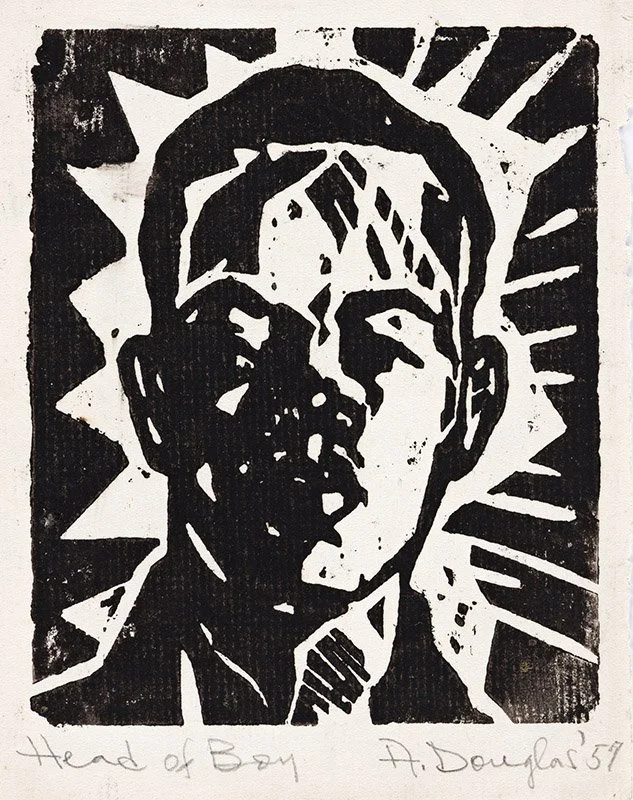
Head of Boy (Portrait of Langston Hughes), 1957. Woodcut on cream laid paper; support size 6 1/4 × 4 7/8 inches; image size 4 7/8 × 4 inches. This woodcut portrait presents a stylized head of Langston Hughes rendered in bold black-and-white contrast. Produced in 1957, the work reflects Douglas’s continued engagement with portraiture and printmaking later in his career, translating his muralist visual language into intimate scale. Exhibited in Roots/Routes: Mobility and Displacement in Art of the American South (Richardson Family Art Center, Wofford College, 2023) and Elevation from Within: The Study of Art at Historically Black Colleges and Universities (Morgan State University, 2024). Douglas, A. (1957). Head of boy (Portrait of Langston Hughes) [Woodcut on cream laid paper].
The Creation, 1927
This composition was created as one of Aaron Douglas’s illustrations for God’s Trombones: Seven Negro Sermons in Verse (1927) by James Weldon Johnson. The Creation marked the emergence of Douglas’s mature visual language—spiritual, modern, and rooted in diasporic consciousness.
Douglas, A. (1927). The creation [Illustration].
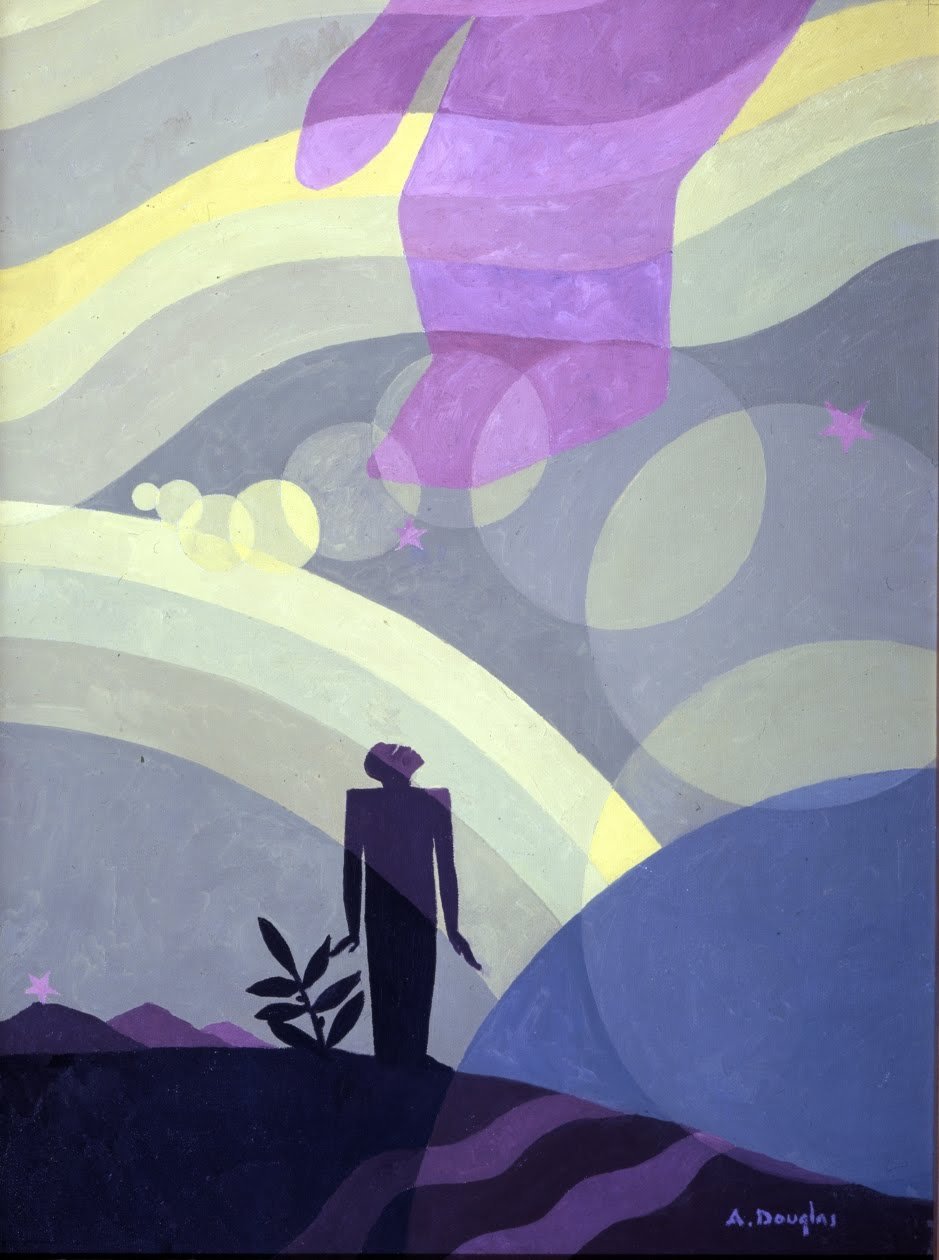
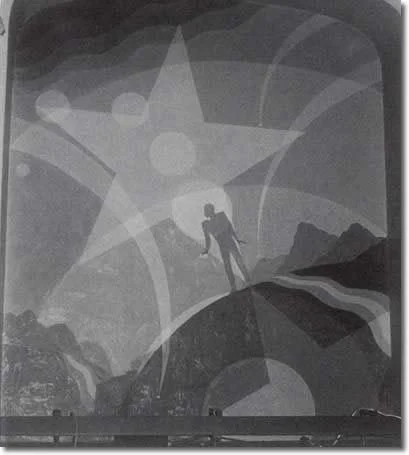
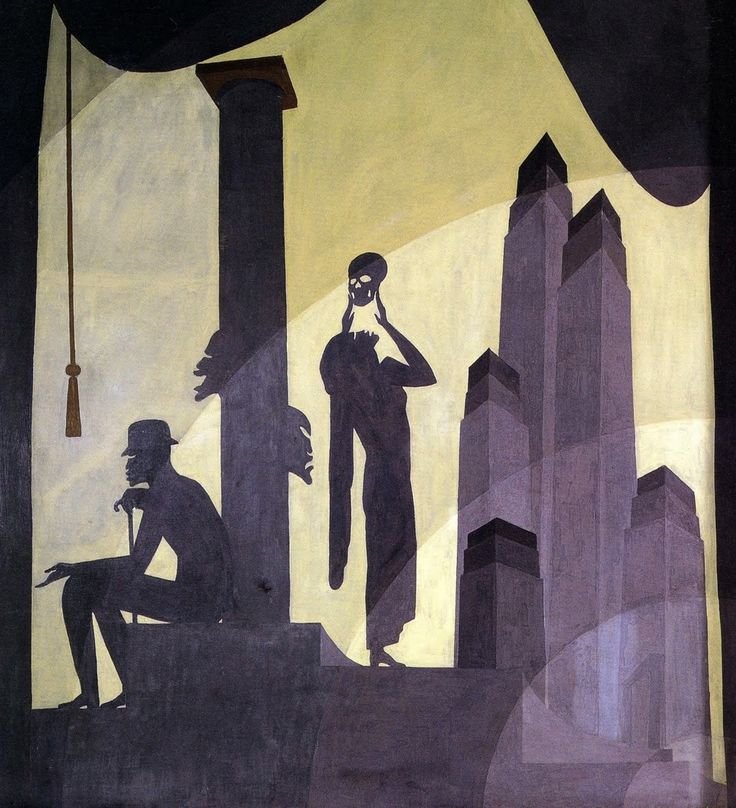
Illustration from God’s Trombones: Seven Negro Sermons in Verse, 1927. Created in 1927 for James Weldon Johnson’s God’s Trombones: Seven Negro Sermons in Verse, this illustration exemplifies Aaron Douglas’s early mature Harlem Renaissance style. Through elongated forms, dramatic light contrasts, and flattened perspective, the composition conveys themes of prophecy, moral reckoning, and divine presence while asserting a distinctly modern Black visual aesthetic rooted in diasporic consciousness. Douglas, A. (1927). Illustration from God’s trombones: Seven Negro sermons in verse [Book illustration].
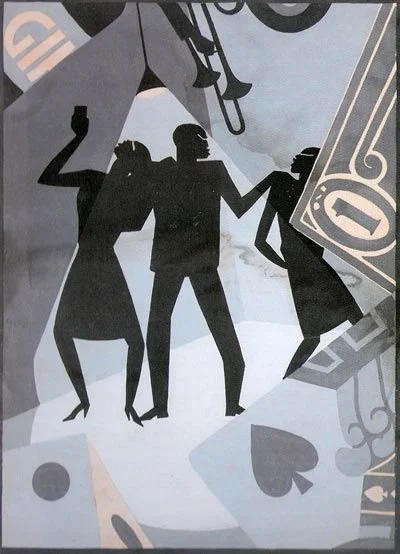
The Prodigal Son, 1927. Created in 1927, The Prodigal Son reflects Aaron Douglas’s Harlem Renaissance synthesis of biblical narrative and modern urban experience. The silhouetted figures—set amid angular playing cards, a trumpet, and layered geometric forms—suggest themes of temptation, excess, and moral reckoning. By merging sacred narrative with modern nightlife imagery, he constructs a distinctly Black modernist aesthetic that speaks to both spiritual allegory and cultural transformation during the 1920s. Douglas, A. (1927). The prodigal son [Painting/illustration].
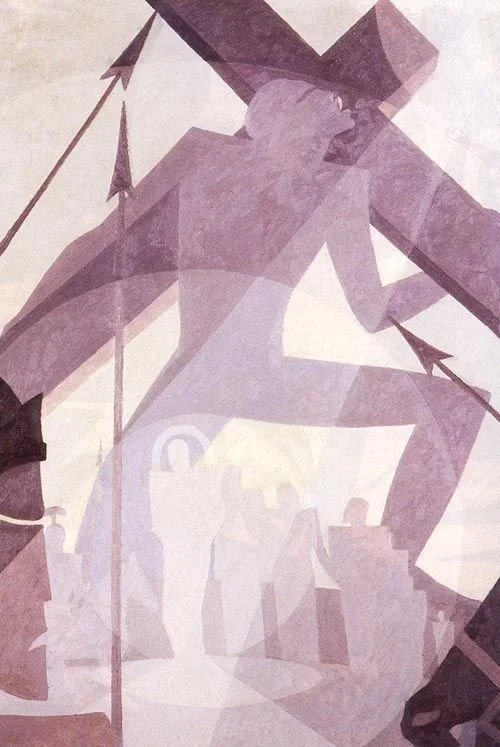
The Crucifixion, 1927. Created in 1927, The Crucifixion reflects Aaron Douglas’s modernist reinterpretation of Christian iconography during the Harlem Renaissance. Drawing upon African sculptural aesthetics, Art Deco design, and European modernism, Douglas reimagines the crucifixion as both sacred narrative and metaphor for collective suffering and redemption within the Black historical experience. Douglas, A. (1927). The crucifixion [Painting/illustration].
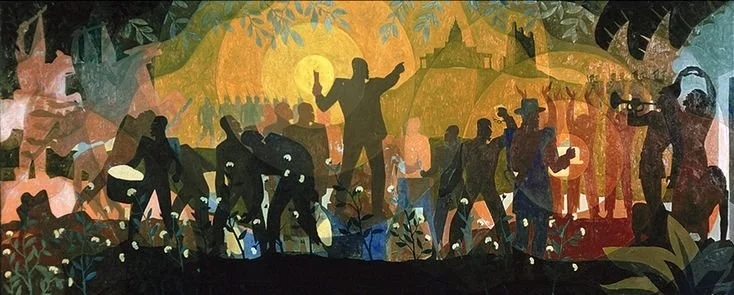
Aspects of Negro Life: From Slavery Through Reconstruction, 1934. Completed in 1934 as part of the four-panel mural cycle Aspects of Negro Life, this work traces the transition of African Americans from enslavement through Reconstruction. Silhouetted figures labor in the foreground while others gather in acts of resistance, worship, and community formation. A central orator-like figure stands illuminated against a radiant sunburst, symbolizing emancipation, leadership, and the fragile promise of political transformation. Commissioned during the Harlem Renaissance, the series stands as a landmark achievement in twentieth-century American muralism. Douglas, A. (1934). Aspects of Negro life: From slavery through Reconstruction [Mural].
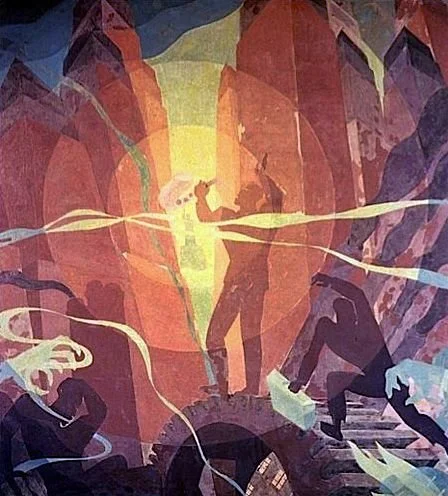
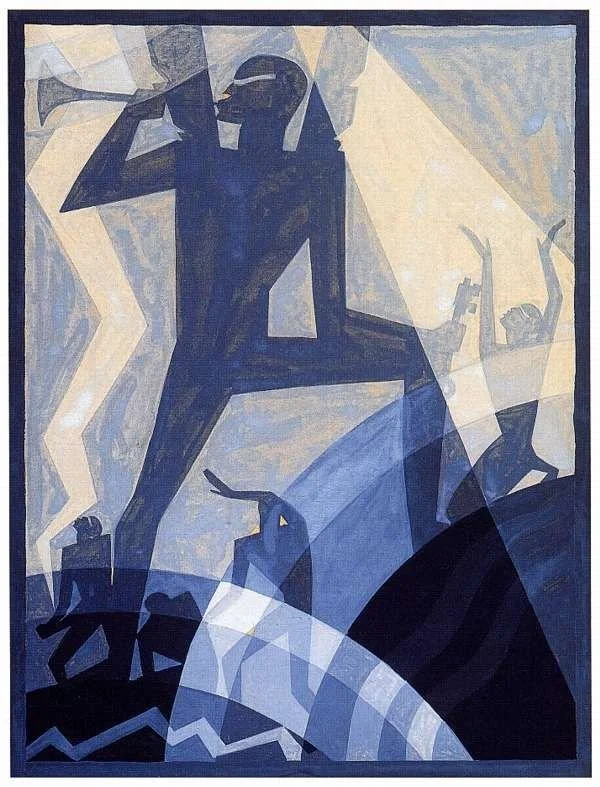
Aspects of Negro Life: Song of the Towers, 1934. Created in 1934 as the final panel of the mural cycle Aspects of Negro Life, Song of the Towers represents the migration of African Americans to northern industrial cities and the cultural transformations of the Harlem Renaissance. A central silhouetted figure raises a trumpet beneath radiating concentric circles of light, symbolizing artistic expression, modern industry, and political awakening. Douglas, A. (1934). Aspects of Negro life: Song of the towers [Mural].
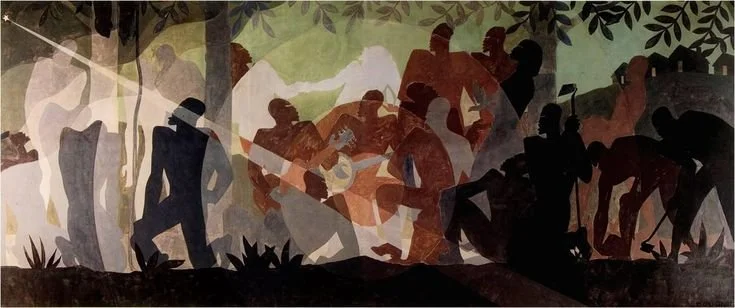
The Prodigal Son, 1927. Created in 1927, The Prodigal Son reflects Aaron Douglas’s Harlem Renaissance synthesis of biblical narrative and modern urban experience. The silhouetted figures—set amid angular playing cards, a trumpet, and layered geometric forms—suggest themes of temptation, excess, and moral reckoning. Douglas uses flattened planes, tonal gradation, and Art Deco abstraction to reinterpret the biblical parable within a contemporary Jazz Age context. Douglas, A. (1927). The prodigal son [Painting/illustration].
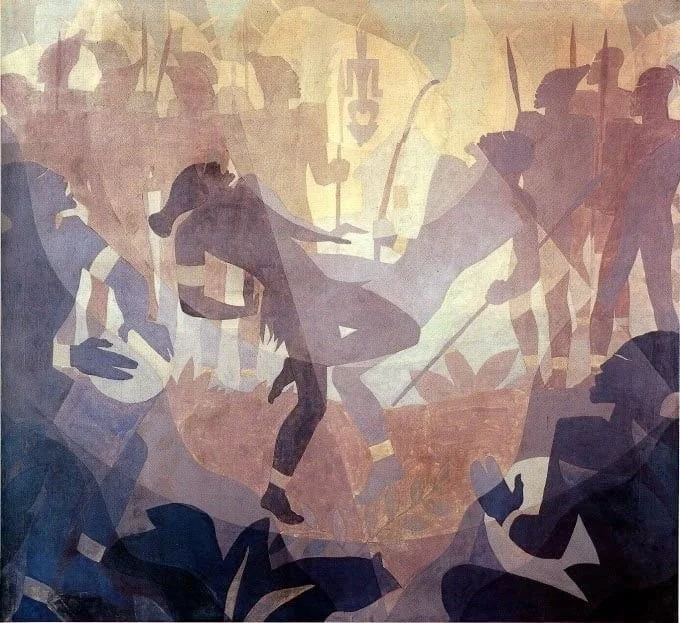
Aspects of Negro Life: The Negro in an African Setting, 1934. Created in 1934 as part of the four-panel mural cycle Aspects of Negro Life, The Negro in an African Setting represents the ancestral origins of the African diaspora. Silhouetted figures gather in rhythmic formation, engaged in dance, ritual, and communal life, while spears, drums, and symbolic forms suggest spiritual and cultural continuity. Douglas, A. (1934). Aspects of Negro life: The Negro in an African setting [Mural].
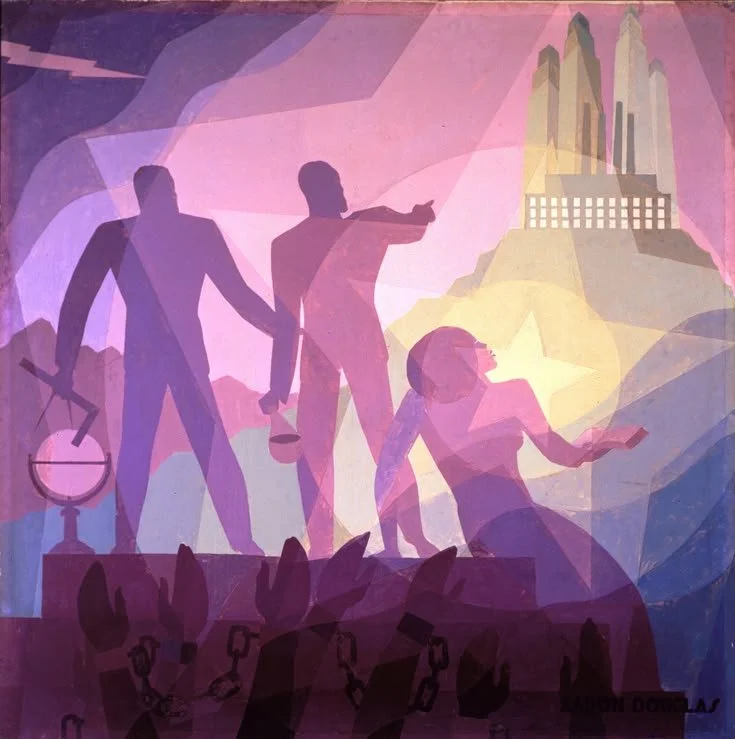
Aspiration, 1936. Painted in 1936, Aspiration reflects Aaron Douglas’s vision of Black progress, education, and futurity during the Harlem Renaissance and New Deal era. Three silhouetted figures stand atop a rise, gesturing toward a radiant cityscape crowned with modern skyscrapers. At their feet lie broken chains, symbolizing emancipation and the enduring struggle against oppression. The globe, compass, and other instruments evoke science, knowledge, and global consciousness, while Douglas’s signature concentric light and layered transparency create a sense of spiritual illumination and forward momentum. Douglas, A. (1936). Aspiration [Painting/mural].
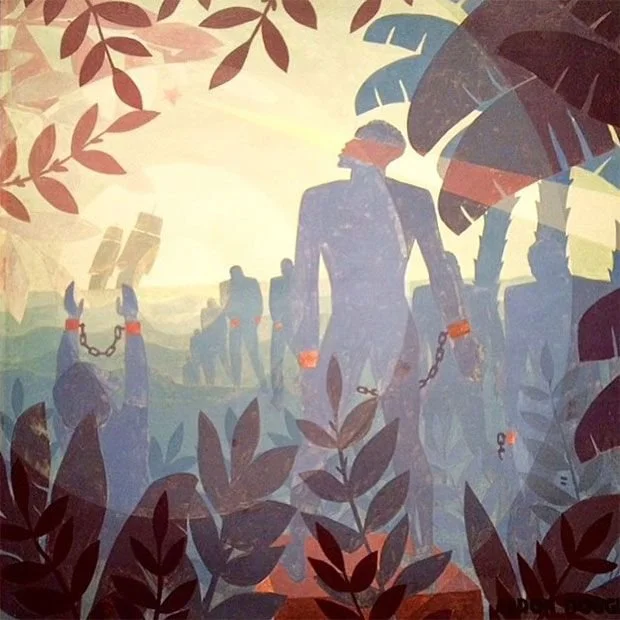
Into Bondage, 1936. Painted in 1936, Into Bondage presents a haunting meditation on the transatlantic slave trade and the violent rupture of African life. A central bound figure, silhouetted and faceless, stands amid lush foliage and subdued tonal layers, wrists shackled in glowing red cuffs that punctuate the muted palette. In the background, ships wait at the horizon, signaling forced displacement and the beginning of enslavement. Douglas employs concentric light, layered transparency, and stylized vegetation to evoke both ancestral presence and impending catastrophe. Douglas, A. (1936). Into bondage [Painting].
Judgement Day, 1939
Oil on tempered hardboard, 121.92 × 91.44 cm (48 × 36 in.); framed: 137.48 × 106.68 × 6.35 cm (54 1/8 × 42 × 2 1/2 in.). Accession no. 2014.135.1. Patrons' Permanent Fund, The Avalon Fund.
Painted more than a decade after his 1927 book illustration for God’s Trombones: Seven Negro Sermons in Verse by James Weldon Johnson, The Judgment Day expands upon Douglas’s earlier graphic interpretation of the biblical theme. In 1927, Douglas created eight groundbreaking illustrations for Johnson’s poetry collection, marking the emergence of his mature style.
Douglas, A. (1939). The judgment day [Oil on tempered hardboard]. Patrons' Permanent Fund, The Avalon Fund. Accession No. 2014.135.1.
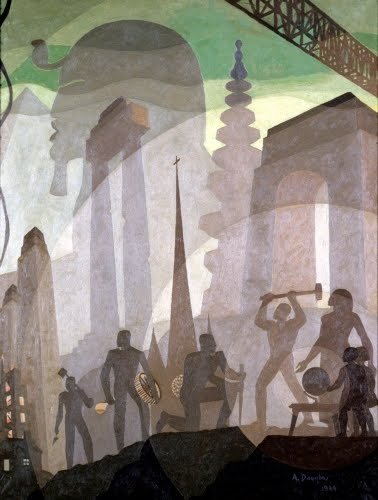
Building More Stately Mansions, 1944. Oil on canvas, 53 15/16" x 42 1/8" (137 x 107 cm). The University Galleries, Aaron Douglas Collection, Fisk University, Nashville, TN. Image courtesy the Los Angeles County Museum of Art, 1976. © 2017 Aaron Douglas Foundation/Licensed by VAGA, New York. (8S-21886dsvg)
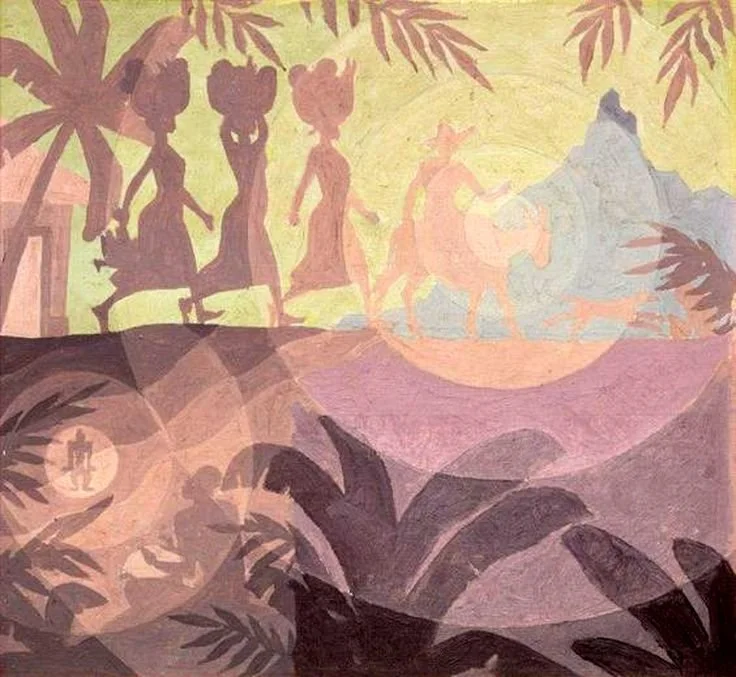
Study for Haitian Mural, 1942. Created in 1942, this preparatory study reflects Aaron Douglas’s engagement with Caribbean history and revolutionary symbolism. Silhouetted figures move across a tropical landscape framed by palm trees and mountainous terrain, evoking Haiti’s geography and the legacy of its revolution. A mounted figure, illuminated within a circular halo of light, suggests leadership, resistance, and national awakening—possibly referencing Toussaint Louverture or the broader Haitian struggle for liberation. Douglas employs layered transparency, muted earth tones, and concentric radiance to fuse African diasporic identity with modernist abstraction. . Douglas, A. (1942). Study for Haitian mural [Painting study].
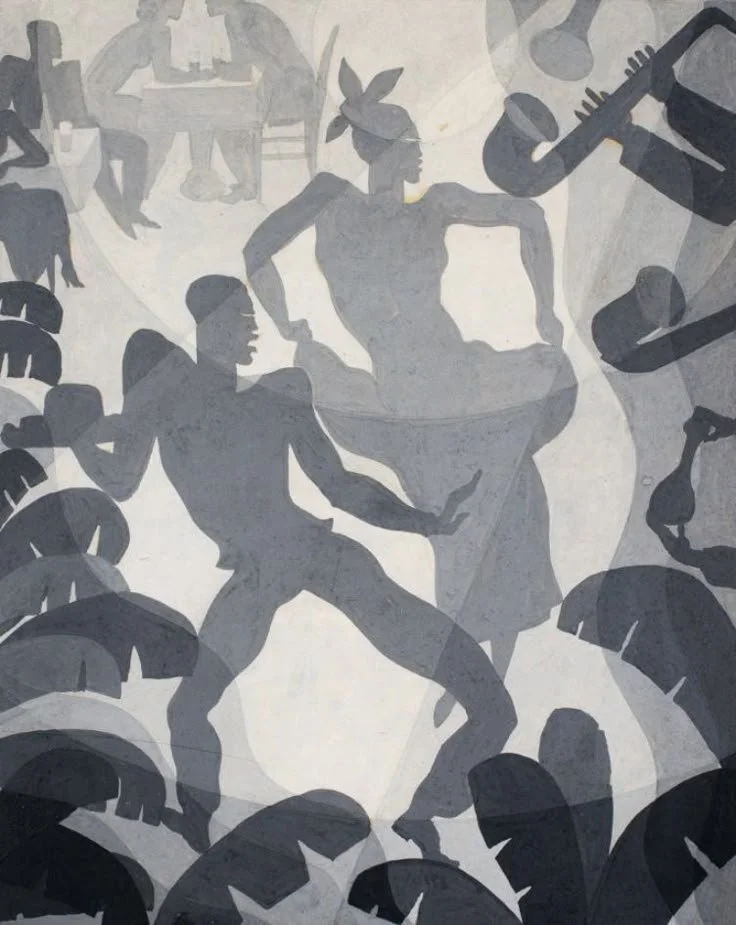
The Dance, n.d. In The Dance, Aaron Douglas captures the rhythmic vitality of Black cultural expression through silhouetted figures in motion, surrounded by stylized foliage and musical instruments. The composition emphasizes elongated limbs, angular poses, and layered tonal gradations that create a sense of syncopation and spatial depth. A trumpet and seated figures in the background suggest the social and musical atmosphere of the Jazz Age, while Douglas’s signature concentric light and flattened geometric planes situate the scene within his modernist Harlem Renaissance vocabulary. Douglas, A. (n.d.). The dance [Painting/illustration].
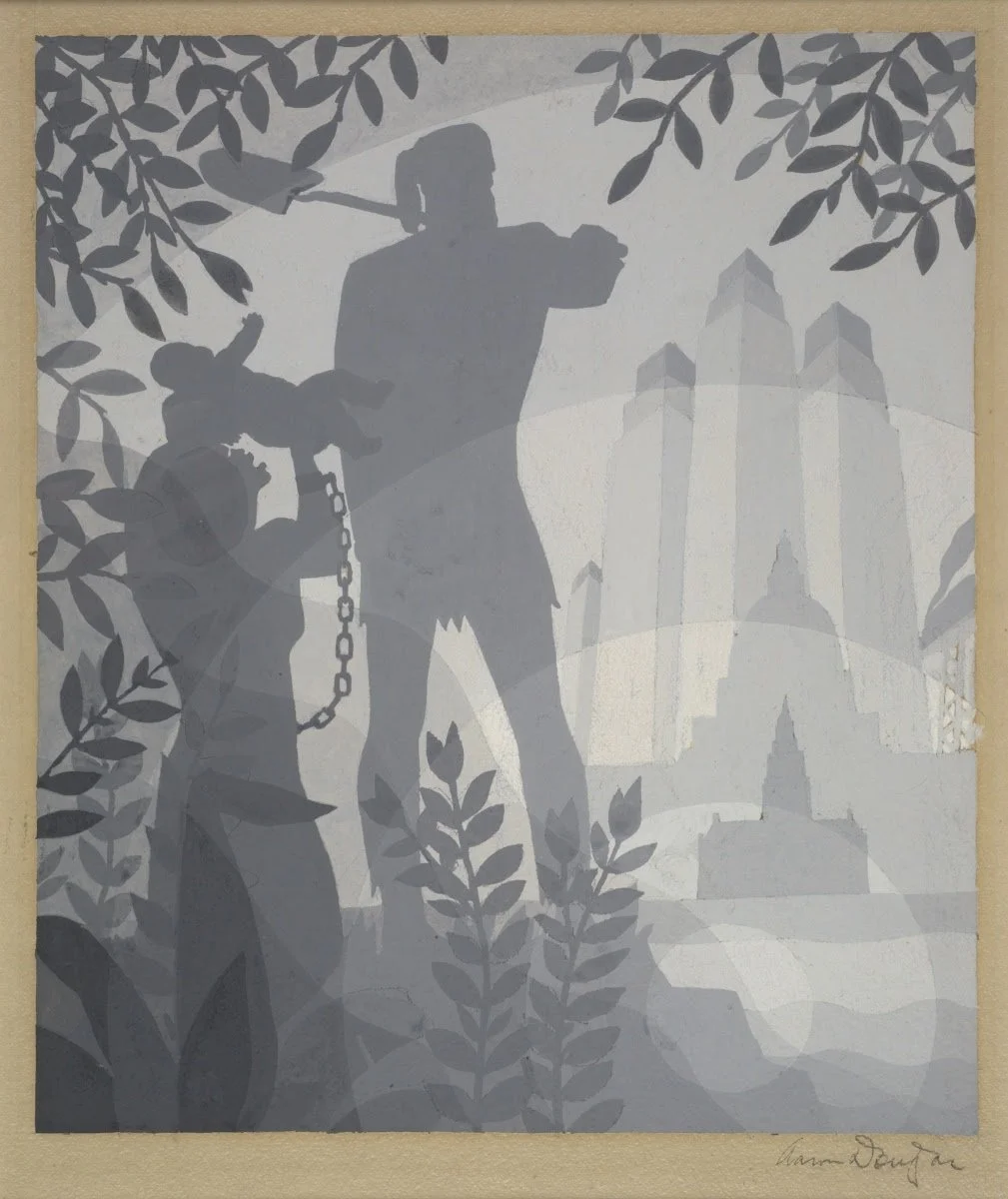
The Founding of Chicago, n.d. In The Founding of Chicago, Aaron Douglas reimagines the city’s origins through his signature silhouetted figures and layered tonal gradations. A central standing figure dominates the foreground, framed by foliage and holding a tool or instrument across his shoulder, while another figure remains partially bound in chains—suggesting the intertwined histories of labor, migration, and struggle. In the distance, modern skyscrapers rise in luminous vertical planes, symbolizing industrial progress and urban transformation. Douglas, A. (n.d.). The founding of Chicago [Painting/illustration].
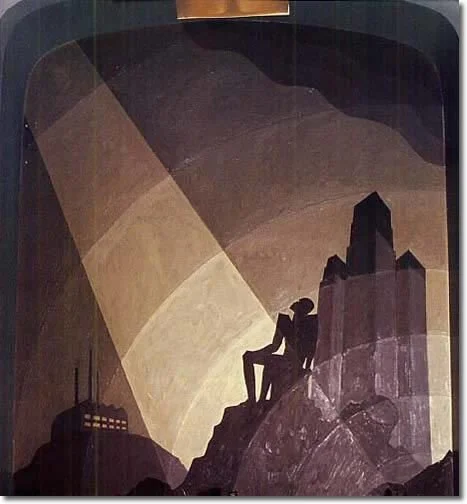
In Noah’s Ark, Aaron Douglas reinterprets the biblical flood narrative through his hallmark Harlem Renaissance modernism. A silhouetted figure sits contemplatively atop a rocky elevation as radiant beams of light descend from above, cutting across layered tonal arcs that suggest divine intervention and renewal. Geometric architectural forms rise in the background, merging sacred story with modern urban symbolism. Douglas employs flattened planes, concentric illumination, and restrained monochromatic gradations to evoke spiritual tension and redemption. Douglas, A. (n.d.). Noah’s ark [Painting/mural].
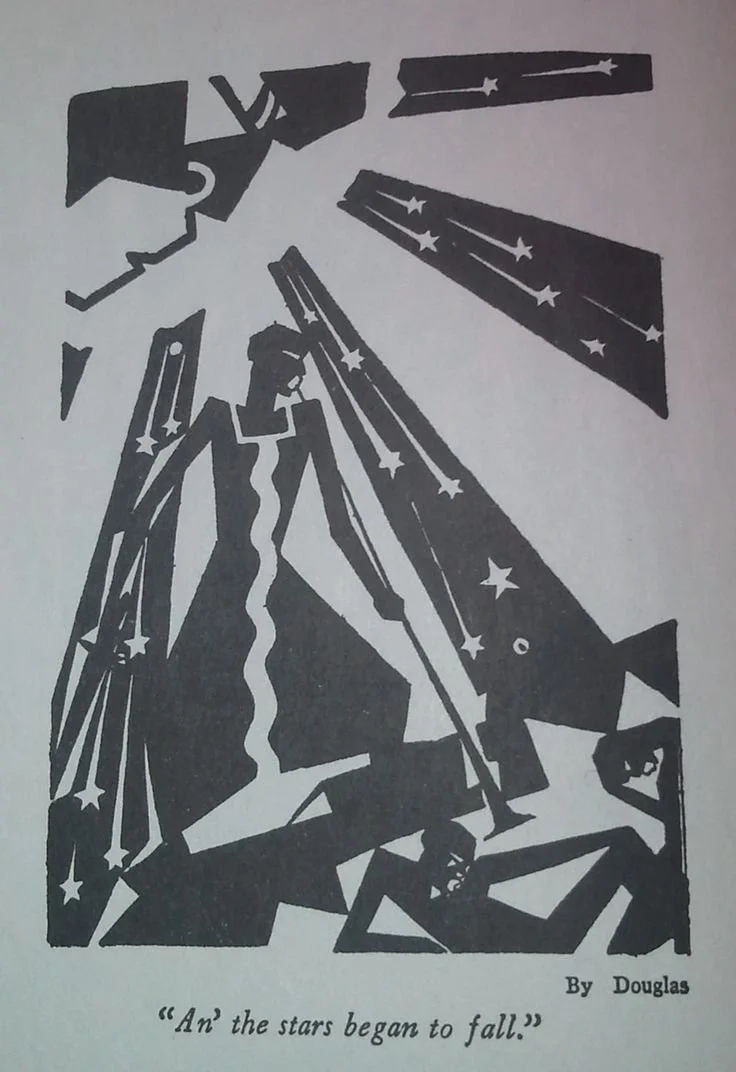
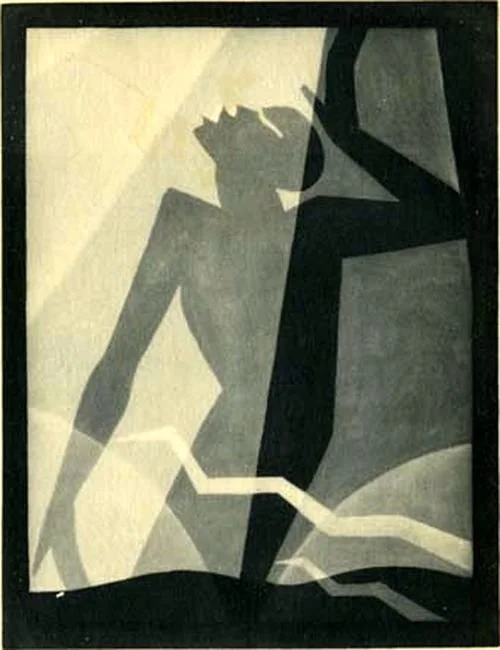
“An’ the Stars Began to Fall”, n.d. This black-and-white illustration by Aaron Douglas visually interprets the apocalyptic spiritual lyric “An’ the stars began to fall.” A central elongated figure stands beneath radiant beams filled with falling stars, while a collapsed body lies below, intensifying the scene’s prophetic and cosmic drama. Executed in Douglas’s signature silhouetted style, the composition features angular planes, dynamic diagonals, and high-contrast black-and-white design. Douglas, A. (n.d.). “An’ the stars began to fall” [Illustration].
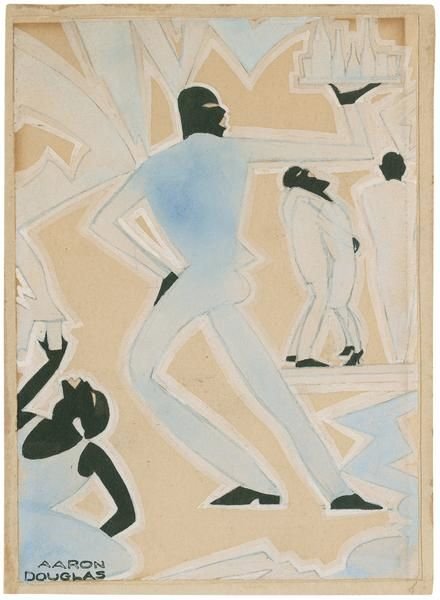
Untitled (Nightclub Scene in Blue and Black), n.d. This dynamic nightclub scene reflects Aaron Douglas’s engagement with Jazz Age modernity and Harlem Renaissance culture. Douglas’s layered transparency, flattened perspective, and Art Deco abstraction translate the energy of Black urban nightlife into a modernist visual language that celebrates movement, music, and cultural expression. Douglas, A. (n.d.). Untitled (Nightclub scene in blue and black) [Painting/illustration].
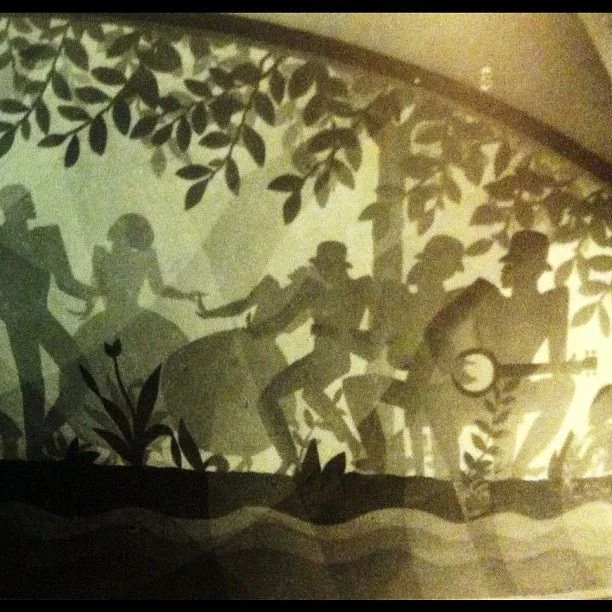
Aspects of Negro Life: Song of the Towers, 1934. This mural panel, part of Aaron Douglas’s landmark four-part series Aspects of Negro Life (1934), visualizes the Great Migration and the cultural flowering of the Harlem Renaissance. Concentric arcs of light radiate across the composition, creating spiritual illumination and forward momentum. Douglas combines African-inspired abstraction, Art Deco geometry, and layered transparency to narrate the journey from rural Southern life to urban industrial modernity, emphasizing resilience, creativity, and cultural continuity. Douglas, A. (1934). Aspects of Negro life: Song of the towers [Mural].
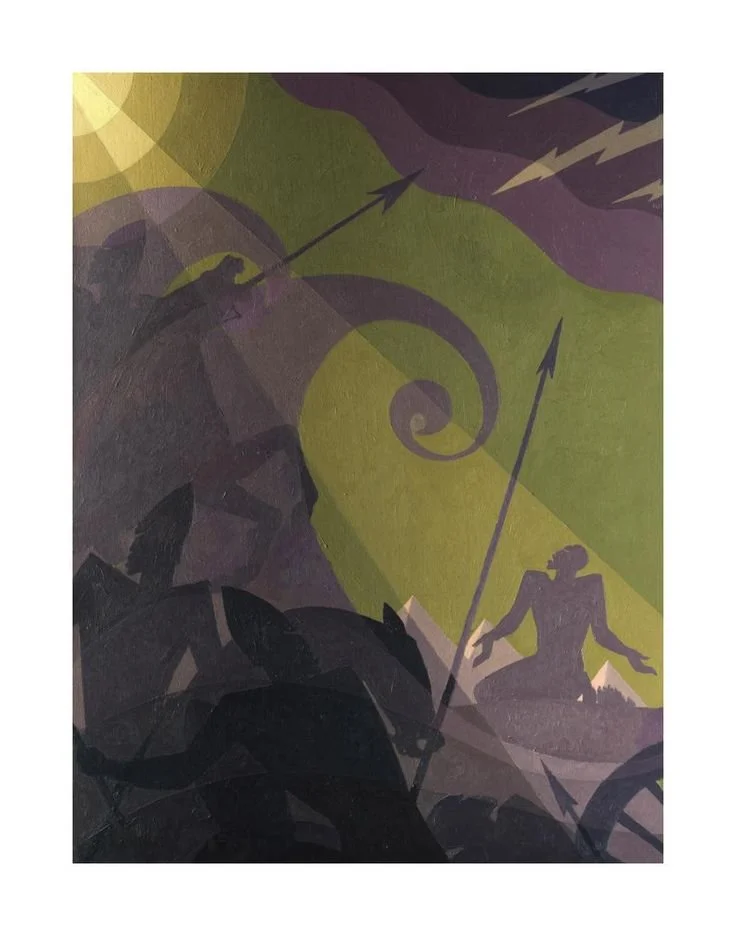
In Let My People Go, Aaron Douglas reinterprets the biblical Exodus narrative through his distinctive Harlem Renaissance modernism. Silhouetted figures, spears raised against swirling cosmic forms and streaks of lightning, occupy a dramatic landscape charged with spiritual intensity. A seated central figure appears contemplative or prophetic, while diagonals and concentric arcs create a sense of divine movement and impending liberation. Douglas’s layered transparency, bold geometry, and radiant color contrasts merge African-inspired abstraction with modernist design, transforming the Exodus story into an allegory of emancipation, resistance, and collective deliverance within the Black historical experience. Douglas, A. (n.d.). Let my people go [Painting/illustration].
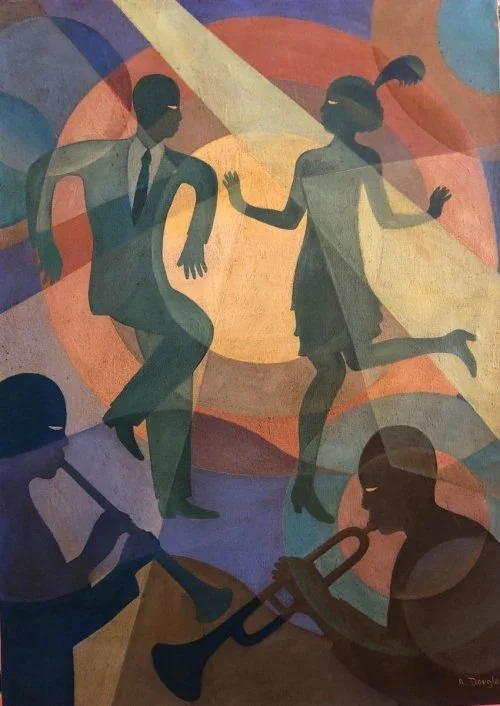
In Club Night, Aaron Douglas captures the syncopated energy of Harlem Renaissance nightlife through silhouetted dancers and musicians framed by concentric circles of light. A couple moves dynamically across the center of the composition, their elongated limbs and angular poses echoing the rhythm of live jazz played below by a seated and standing trumpeter. Douglas employs layered transparency, radiant color gradations, and Art Deco geometry to translate music into visual form. The composition embodies modern Black urban culture—movement, sound, and communal expression—while affirming Douglas’s role in shaping a distinctly modernist aesthetic rooted in African diasporic identity. Douglas, A. (n.d.). Club night [Painting/illustration].