Caribbean: Grenada – Treasures of the Past. A short documentary video exploring the archaeological heritage of Grenada in the Caribbean, highlighting the island’s role as a conduit of Indigenous migration and cultural exchange across the West Indies. The video presents archaeological sites, artifacts, and interpretations that illuminate the deep history of human settlement in Grenada, situating local material culture within broader Caribbean pre-Columbian heritage. The content provides visual context for the movement of peoples and material traditions across island landscapes and emphasizes the importance of archaeological research in reconstructing past lifeways. Publicly accessible on YouTube and used here for educational and interpretive purposes.
The YouTube channel Caribbean: Grenada – Treasures of the Past. (n.d.). Caribbean: Grenada – Treasures of the Past[Video].
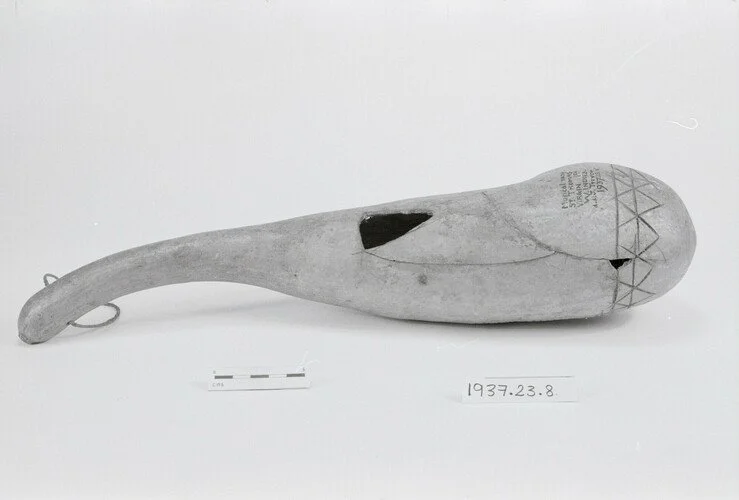
Musical rasp Material Gourd Plant. Date collected 1937 British Virgin Islands (British Overseas Territory) St Thomas. Digital asset copyright: Pitt Rivers Museum, University of Oxford. (n.d.). https://www.prm.ox.ac.uk/collections-online#/item/prm-object-39804
![Pitt Rivers Museum, University of Oxford. (n.d.). Wooden crossbow trap. [Review of Wooden crossbow trap. ]. https://www.prm.ox.ac.uk/collections-online#/item/prm-object-145295
Crossbow trap. Made from wood. The stock is rectangular in section and car](https://images.squarespace-cdn.com/content/v1/65b41067c4042363cf11625f/3ca08994-febc-4366-a0f2-a496d8ecbb74/RS353778_PRM1884.16.6.jpg)
Pitt Rivers Museum, University of Oxford. (n.d.). Wooden crossbow trap. [Review of Wooden crossbow trap. ]. https://www.prm.ox.ac.uk/collections-online#/item/prm-object-145295 Crossbow trap. Made from wood. The stock is rectangular in section and carved hollow, there is a hole at the end where the bolt fires from. The bow is circular in section, the bow string is made from twisted plant fibre. In the middle of the string there is a wooden pin which fixes into a hole in the stock. Jamaica. Date Collected 1874. Donated: 1884.
![Pitt Rivers Museum, University of Oxford. (n.d.). Palm leaf fan. [Review of Palm leaf fan.]. https://www.prm.ox.ac.uk/collections-online#/item/prm-object-29352
Palm leaf fan. The fan is constructed from a large kite-shaped body of interwoven palm lea](https://images.squarespace-cdn.com/content/v1/65b41067c4042363cf11625f/b9edbc8d-4b2f-492c-9b53-79770b14c345/RS226121_PRM1905.36.8.jpg)
Pitt Rivers Museum, University of Oxford. (n.d.). Palm leaf fan. [Review of Palm leaf fan.]. https://www.prm.ox.ac.uk/collections-online#/item/prm-object-29352 Palm leaf fan. The fan is constructed from a large kite-shaped body of interwoven palm leaf strips. The style of the weave leaves a curving pattern of strips toward the widest end of the fan. By the handle the strips are much narrower and the curve is less distinct. The handle of the fan has been constructed using a stick which has been pushed through the body of the kite creating a supporting spine. The base of the handle has been made using a shorter stick and the main stick, binding them together with palm leaf strips which are knotted at the base of the handle. [LKG 27/08/2009] Date collected 1905, Donated: 1905 Guadeloupe (Overseas Department of France)
![Figure Pendant. 10th–15th century. Taíno culture; Dominican Republic, Caribbean. Carved stone pendant (H. 5.1 cm [2 in]) representing a crouching anthropomorphic zemí figure, created by Taíno carvers using direct percussion and grinding to shape and](https://images.squarespace-cdn.com/content/v1/65b41067c4042363cf11625f/6f2b2ec4-eb1d-4ffe-beb0-c9c9390e89eb/main-image-4.jpeg)
Figure Pendant. 10th–15th century. Taíno culture; Dominican Republic, Caribbean. Carved stone pendant (H. 5.1 cm [2 in]) representing a crouching anthropomorphic zemí figure, created by Taíno carvers using direct percussion and grinding to shape and smooth the stone surface. In Taíno cosmology, zemí (or cemí) refers to ancestral and spiritual forces embodied in objects and beings; pendants such as this were worn by leaders, healers, or ritual specialists as symbols of authority, protection, and connection to deities and ancestors. This pendant reflects the artistic skill and spiritual lifeworld of pre-Columbian Taíno societies of the Greater Antilles. Object Number: 1983.544.4. Gift of Vincent and Margaret Fay, 1983. Collection of the The Metropolitan Museum of Art, New York. Public domain. The Metropolitan Museum of Art. (n.d.). Figure Pendant (Object No. 1983.544.4).
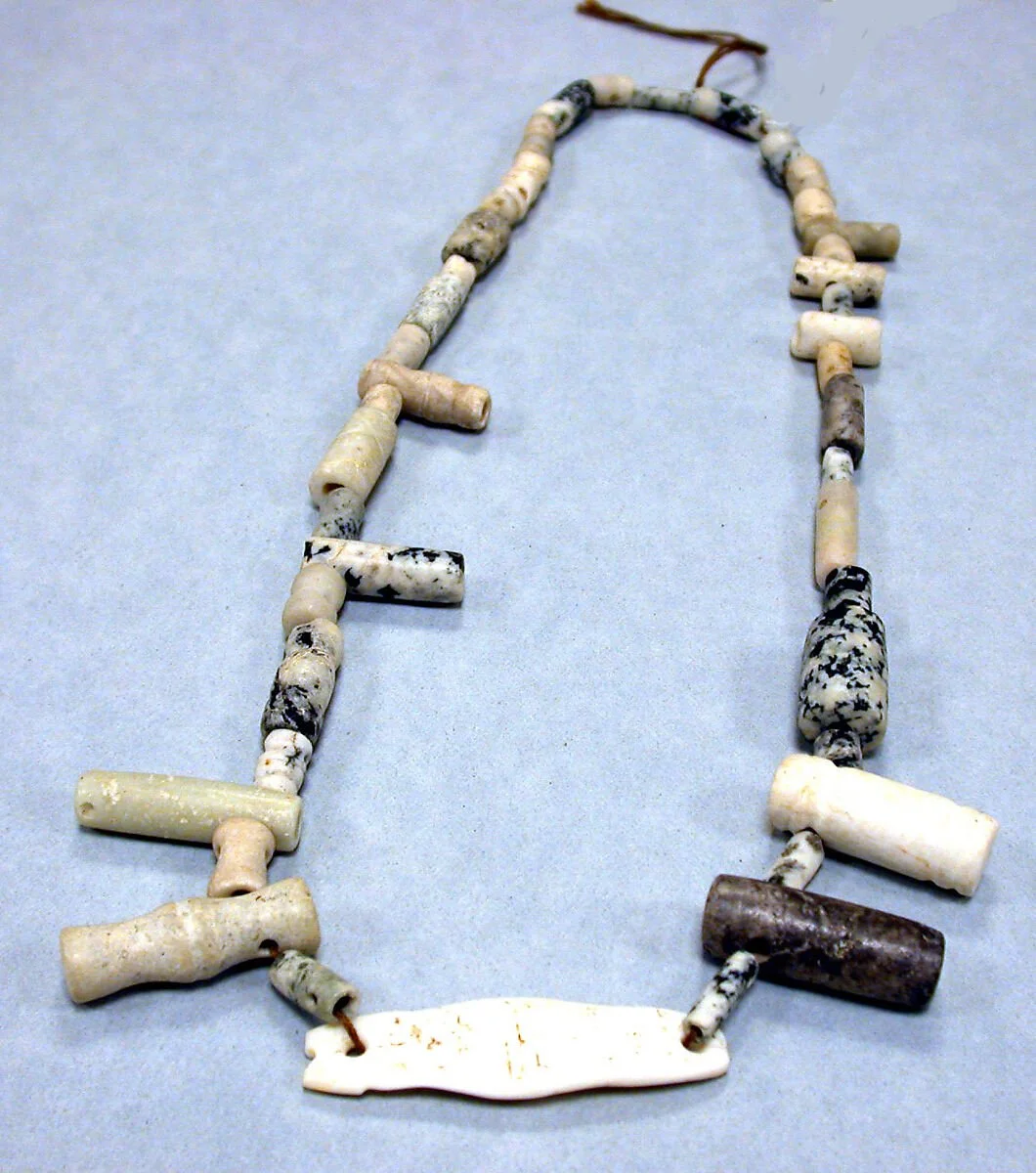
Beads. 10th–15th century. Taíno culture; Dominican Republic, Caribbean. Stone beads (diameter 3/8 in. × length 1 5/8 in. / 1 × 4.1 cm) comprising part of a necklace or ornament. These small carved stone beads reflect personal adornment practices among pre-Columbian Taíno peoples, where stone ornaments served both aesthetic and social functions and were incorporated into dress, status displays, and exchange networks. Their manufacture entailed shaping and perforating stone using abrasion and pecking techniques typical of Caribbean Indigenous lithic craft. Gift of Mr. and Mrs. Reynold C. Kerr, 1984 (Object No. 1984.519.3–.43). Collection of the The Metropolitan Museum of Art, New York. Public domain. The Metropolitan Museum of Art. (n.d.). Beads (Object No. 1984.519.3–.43).
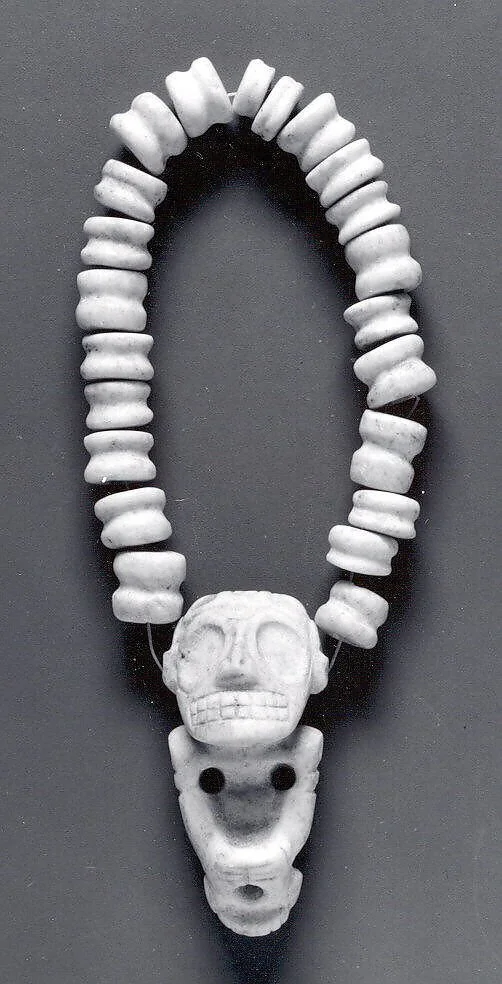
Necklace with Pendant Figure. 13th–15th century. Taíno culture; Dominican Republic, Caribbean. Stone pendant with anthropomorphic zemí figure (pendant height 1 3/4 in. / 4.4 cm), worn as a necklace and associated with leaders, healers, or ritual specialists. The figure represents a zemí — a spiritual force or entity central to Taíno cosmology that embodied the presence of deities and ancestors and was invoked in ceremonial contexts. The pendant reflects the skilled lithic shaping and perforation techniques used by Taíno artisans and the integration of spiritual iconography into personal adornment. Gift of Vincent and Margaret Fay, 1983 (Object No. 1983.544.2). Collection of the The Metropolitan Museum of Art, New York. Public domain. The Metropolitan Museum of Art. (n.d.). Necklace with pendant figure (Object No. 1983.544.2).
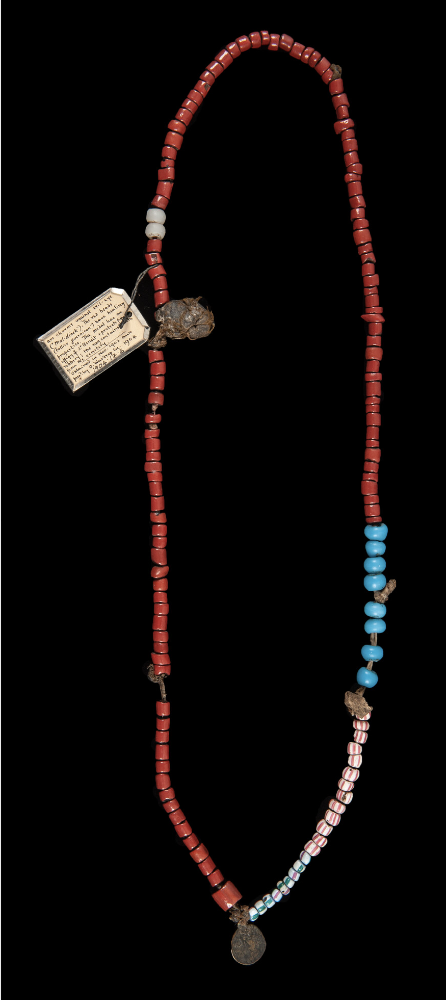
Wanga (Beaded Ritual Object). Before 1904. Haiti; Port-au-Prince, Caribbean. Material: bead. This beaded ritual object, identified as a wanga, is associated with Haitian Vodou spiritual practice. Wangas are typically charm or power objects used within ritual contexts for protection, healing, spiritual communication, or the channeling of specific lwa (spirits). Collected by John Oliver Wardrop (also recorded as J.O. Wardrop; archival records confirm these refer to the same individual) by 1904 and donated the same year, the object entered the Pitt Rivers Museum collection as Accession no. 1904.17.6. Research conducted in 2019–2020 (Beyond the Binary Project) contextualizes Vodou cosmology as inclusive of diverse gender and sexual identities, noting that certain lwa are understood as LGBTIQ+ figures and that ritual possession transcends binary gender roles. While broader Haitian society may hold differing views, Vodou communities have historically provided spiritual protection and chosen kinship networks for marginalized identities. Donated 1904. Collection of the Pitt Rivers Museum, University of Oxford. Pitt Rivers Museum. (n.d.). Wanga (beaded ritual object) (Accession No. 1904.17.6). University of Oxford.
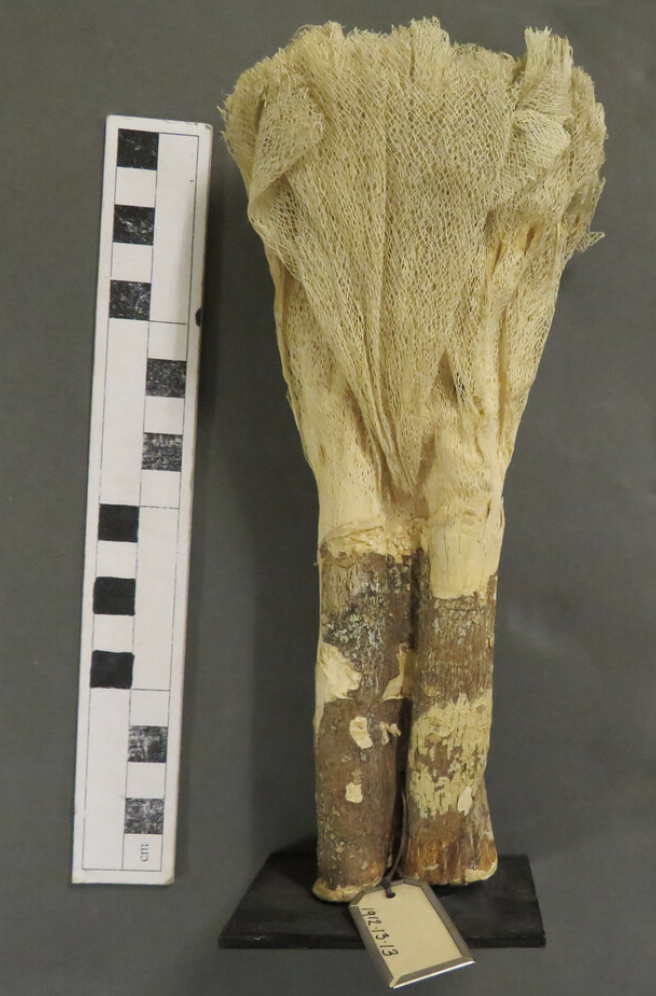
Specimen of Lace-Bark. Before 1912. Unknown field collector; Caribbean. Material: lace-bark wood plant, beaten; mounted on a stand. Dimensions: Height 205 mm × Width 91 mm × Depth 57 mm. This botanical artifact consists of a piece of lace-bark wood retaining both its natural bark form on the lower half and an expanded, beaten lace-like texture above, mounted for display or study. Collected by 1912 and donated in the same year by Mary Elizabeth Wilkins, the specimen was incorporated into the Pitt Rivers Museum’s ethnographic botanical holdings (Accession no. 1912.13.13). Collection of the Pitt Rivers Museum, University of Oxford. Pitt Rivers Museum. (n.d.). Specimen of lace-bark (Accession No. 1912.13.13). University of Oxford.
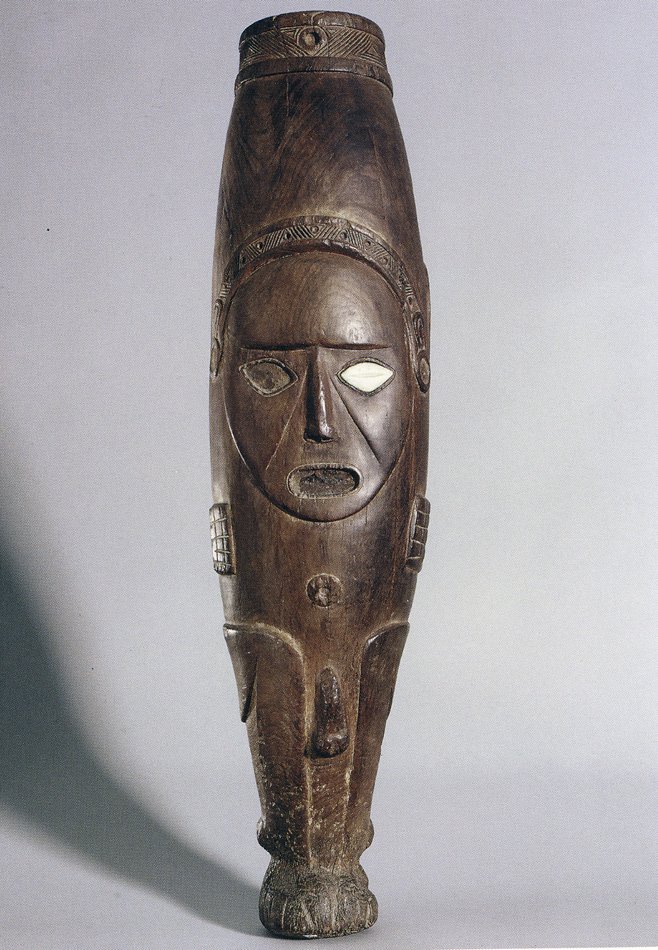
A wooden Cemí sculpture created by the Taino people of the Caribbean between 1200 and 1500. These sculptures served as sacred vessels for spirits or ancestors.

Taíno zemí cohoba stand, a sacred wooden figure created by the Taíno people of the Caribbean, likely originating from the Dominican Republic between 1000 and 1500 CE. The Metropolitan Museum of Art. (n.d.). Zemí cohoba stand. https://www.metmuseum.org/art/collection/search/312602

Taíno wood carving known as a zemí cohoba stand or bird figure, dating approximately to 1000–1273 CE. British Museum. (n.d.). Figure (museum no. Am, MI.168). https://www.britishmuseum.org/collection/object/E_Am-MI-168.

A Taino Duho, a ceremonial seat or stool used by chiefs and shamans in the Caribbean. Latin American Studies. (n.d.). Duhos. https://www.latinamericanstudies.org/taino/duhos.htm

A Taíno ritual seat, also known as a duho, which was used by indigenous Caribbean nobility. Latin American Studies. (n.d.). Duhos (Taíno ceremonial seats). https://www.latinamericanstudies.org/taino/duhos.htm
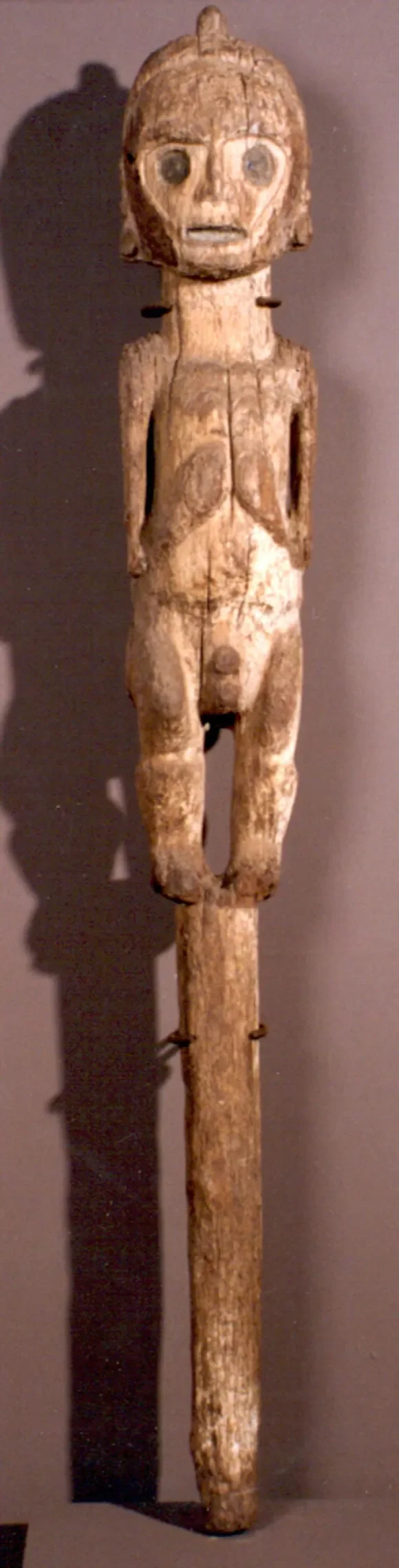
Anthropomorphic Zemi Figure. Taíno culture; Jamaica, Caribbean. Wood, carved. This full-length anthropomorphic figure represents a zemi — a material embodiment of a spiritual force or ancestral being in Taíno cosmology. The large circular eyes, rigid frontal stance, and elongated proportions emphasize its sacred presence rather than anatomical realism. Zemí figures functioned as ritual objects invoked during ceremonies and may have served as intermediaries between community leaders and the spirit world. Collection of the National Gallery of Jamaica. National Gallery of Jamaica. (2009, November 28). Jamaican Taíno art at the NGJ [Photograph of anthropomorphic zemi figure].
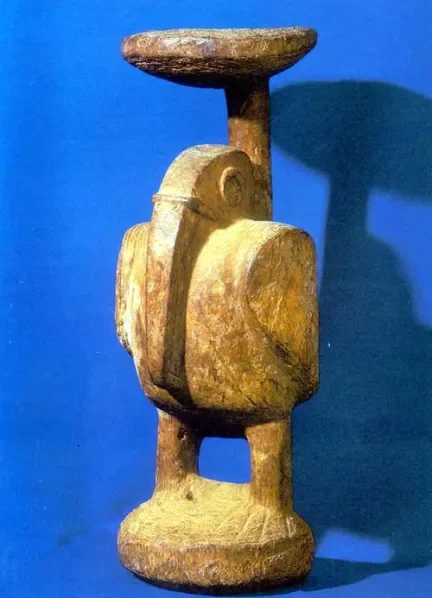
Avian Carved Figure (Possibly a Zemi Representation). Taíno culture; Jamaica, Caribbean. Wood, carved. This sculptural figure represents a stylized bird form carved from a single piece of wood. Avian imagery in Taíno cosmology often signified spiritual intermediaries, mobility between worlds, or ancestral presence. The simplified geometry and balanced symmetry reflect Taíno carving traditions that merged spiritual iconography with functional or ceremonial objects. Collection of the National Gallery of Jamaica. National Gallery of Jamaica. (2009, November 28). Jamaican Taíno art at the NGJ [Photograph of avian carved figure]. https://nationalgalleryofjamaica.wordpress.com/2009/11/28/jamaican-taino-art-at-the-ngj/
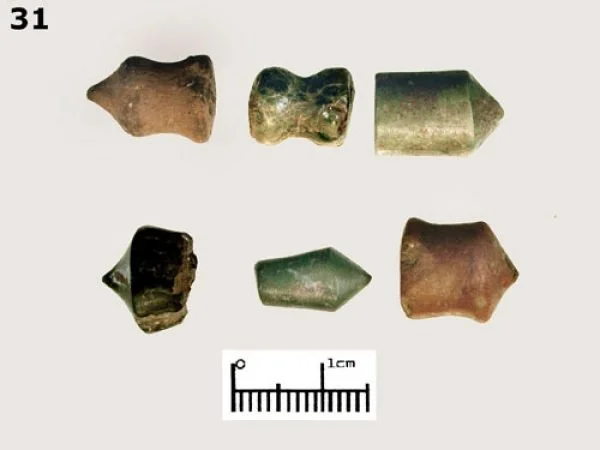
Stone Labrets or Earplugs. 1200–1500 CE. Taíno culture; En Bas Saline, Haiti, Caribbean. Worked stone ornaments interpreted as labrets or earplugs, part of personal adornment and jewelry practices in pre-Columbian Taíno communities. Recovered through archaeological excavation at the En Bas Saline site, these stone labrets/earplugs exemplify the material culture of Taíno everyday life and adornment traditions prior to European contact. Curated by the Historical Archaeology Program, Florida Museum of Natural History, University of Florida. Public domain. Florida Museum of Natural History. (n.d.). Stone labrets or earplugs (Artifact No. 078).
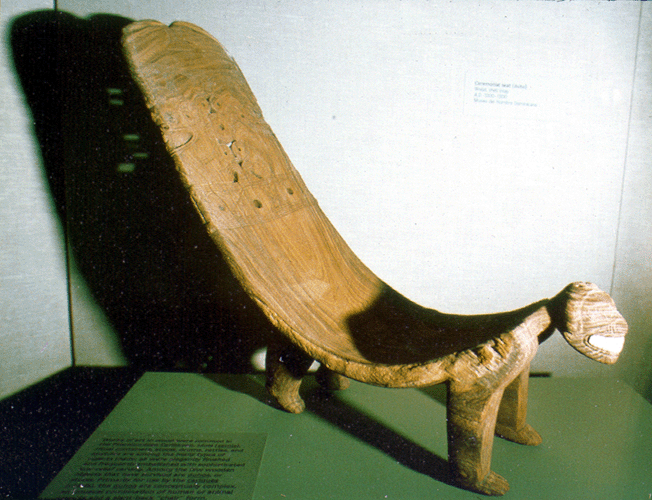
A Taíno duho, a ceremonial wooden seat used by Taíno chiefs (caciques) in the Caribbean for ritual purposes, such as communicating with spirits.

A Taino Duho, a ceremonial seat or stool carved from wood, originating from the Taino culture in the Caribbean region, specifically associated with Haiti or the Dominican Republic.
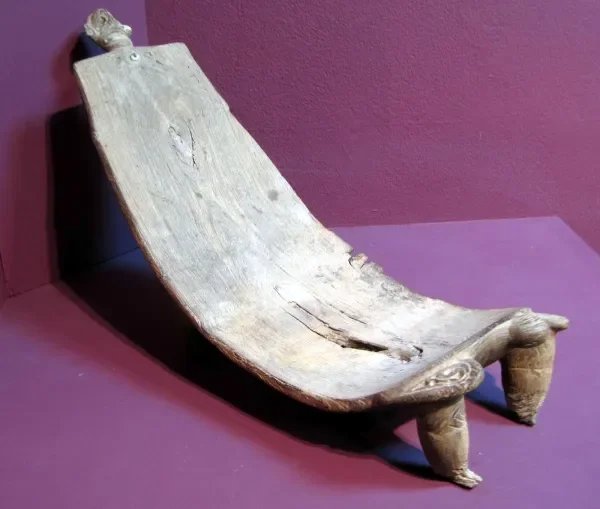
Duho (Ceremonial Seat). Taíno culture; Jamaica, Caribbean. Wood, carved. This wooden duho (ceremonial seat) features a curved reclining surface supported by carved anthropomorphic legs. Duhos were reserved for caciques (chiefs) and high-status individuals and were central to political and ritual life. The low, elongated form supported a semi-reclining posture during ceremonial gatherings, reinforcing hierarchy and authority. Carved from a single log, the seat demonstrates advanced woodworking skill and reflects the social stratification of Taíno society. Collection of the National Gallery of Jamaica. National Gallery of Jamaica. (2009, November 28). Jamaican Taíno art at the NGJ [Photograph of duho ceremonial seat].
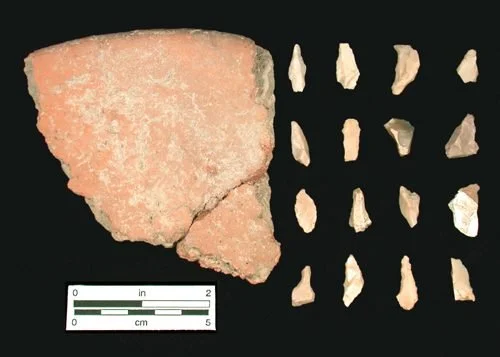
Ceramic Burén and Grater Teeth. 1200–1500 CE. Taíno culture; En Bas Saline, Haiti, Caribbean. A domestic ceramic burén (griddle) paired with microlith grater teeth, uncovered in archaeological deposits at the En Bas Saline site. The burén was hand-formed and fired using traditional ceramic technology, producing a flat cooking surface integral to food preparation in Taíno households, while the grater teeth—small lithic implements—were used to grate or rasp foodstuffs, reflecting routine culinary and domestic practices. Together these artifacts illustrate everyday material culture and subsistence activities of Taíno communities prior to European contact. Recovered through controlled excavation by historical archaeologists; curated as part of the Florida Museum of Natural History Historical Archaeology collections, University of Florida. Public domain. Florida Museum of Natural History. (n.d.). Burén and grater teeth (Artifact No. 091).
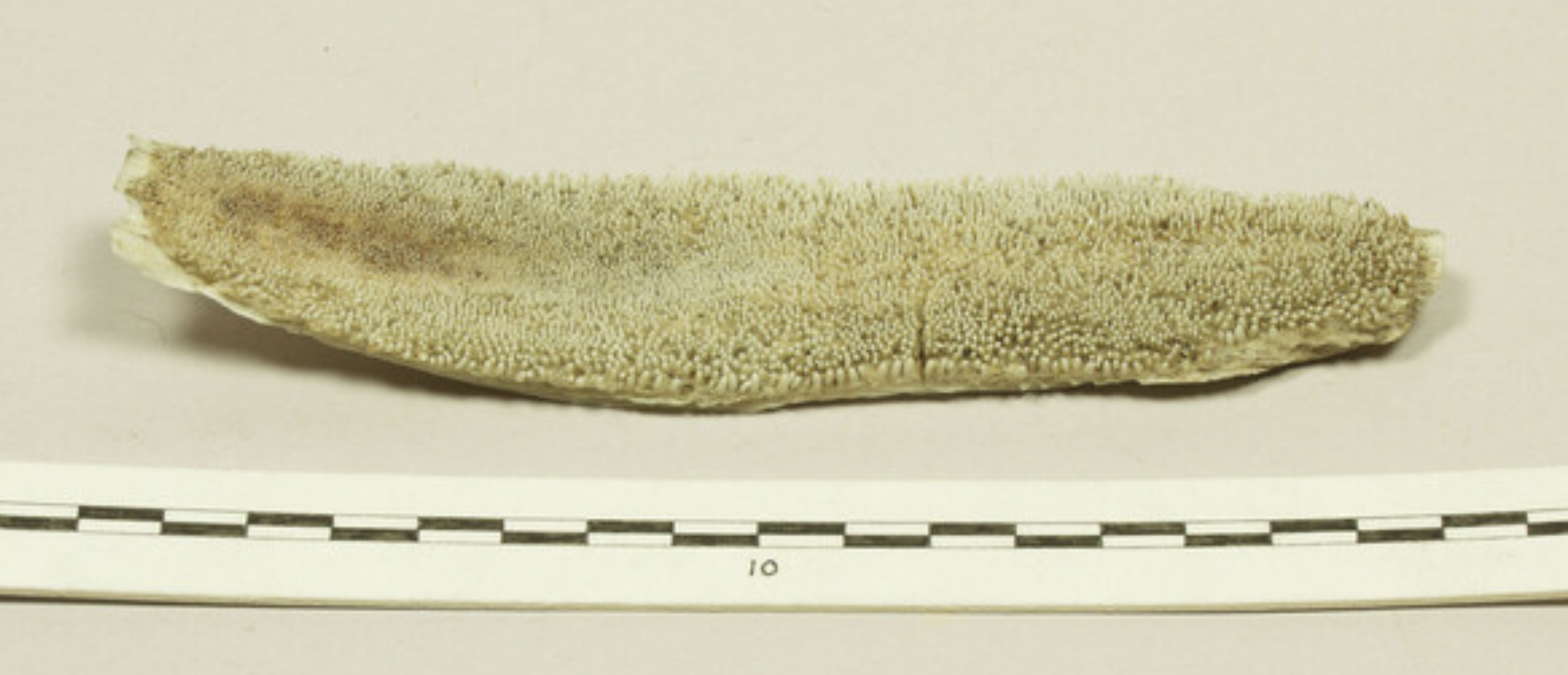
Fish Palate Rasp for Grating Cacao. Before 1906. Unknown field collector; Caribbean. Material: fish palate bone; cut and worn through use. Dimensions: Length 160 mm × Width 38 mm (maximum). This rasp was fashioned from the bony palate of a fish and used as a grating implement for processing cacao, an important food and ceremonial substance in the Caribbean and wider Indigenous foodways. Bone rasps like this provided a roughened surface ideal for breaking down dried cacao seeds into meal or paste as part of traditional preparation techniques prior to the introduction of metal grating tools. Donated in March 1906 by Sarah Constance Silver via the Oxford University Museum of Natural History, the object entered the Pitt Rivers Museum collection as Accession no. 1906.20.82 (Other no.: A. 321). Its production and use predate 1906; the specific collector remains unknown. Collection of the Pitt Rivers Museum, University of Oxford. Pitt Rivers Museum. (n.d.). Fish palate rasp for grating cacao (Accession No. 1906.20.82). University of Oxford.
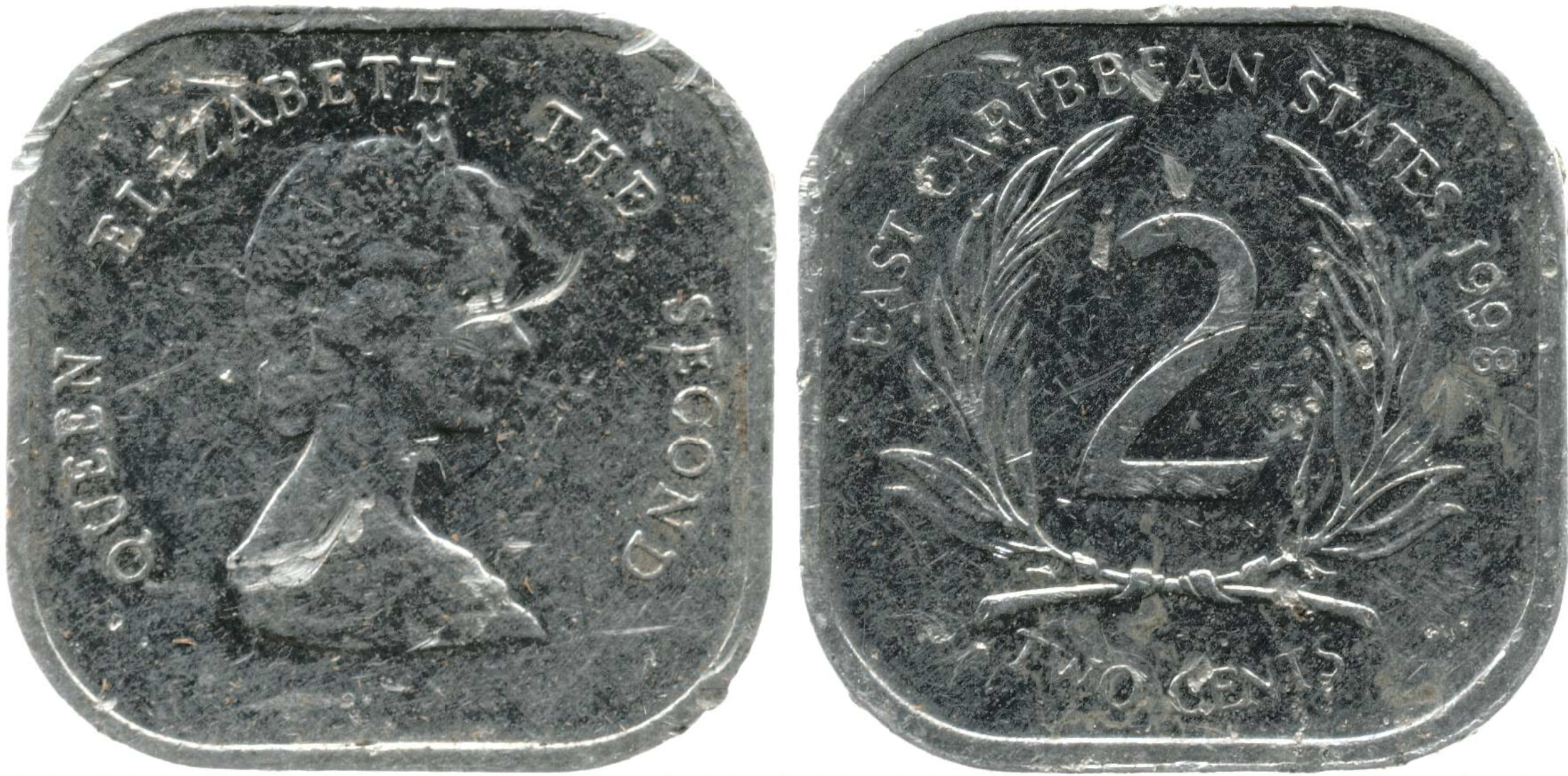
2 Cents Coin, East Caribbean States. 1994. Aluminium; Weight 1.02 grammes. Issued in the Caribbean (East Caribbean States); produced for the British Caribbean Territories, Eastern Group (historic), recorded as East Caribbean States. This aluminium two-cent coin features a portrait of HM Queen Elizabeth II on the obverse, accompanied by the inscription “QUEEN ELIZABETH THE SECOND.” The reverse depicts palm branches tied at the base and bears the inscription “EAST CARIBBEAN STATES 1998 2 TWO CENTS.” The imagery reflects both British monarchic authority and regional Caribbean symbolism, as palm branches signify tropical identity and geographic context. Issued as part of the East Caribbean States monetary system, the coin represents post-colonial currency structures within the Eastern Caribbean while retaining British sovereign imagery. Donated in 2005 by Orbis Publishing. Museum no. 2005,1055.23; Registration no. 2005,1055.23. Department of Money and Medals. Currently not on display. Collection of the British Museum, London. British Museum. (2005). 2 cents coin, East Caribbean States (Museum No. 2005,1055.23; Registration No. 2005,1055.23) [Aluminium coin]. Department of Money and Medals, The British Museum.
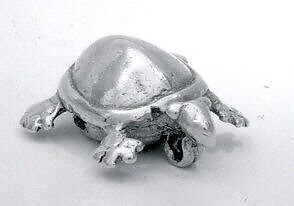
Turtle Bell. Gold; Length 3.3 cm × Width 2.7 cm. Central Caribbean Region (likely Costa Rica), ca. 900–1520 CE. This small gold bell is cast in the form of a turtle—a motif common in Isthmian metalwork and iconography of the Veraguas-Chiriquí tradition. The bell was produced using the lost-wax casting process, with added details such as semi-spherical eyes and a suspension loop formed from joined wax threads. Its resonator contains a metal clapper, indicating it was designed to produce sound, possibly in ritual or ceremonial contexts. The turtle form may reference freshwater or terrestrial species and reflects the significance of reptilian imagery in prehistoric Caribbean and Central American material cultures. Bequest of Alice K. Bache, 1977. Object no. 1977.187.26. Collection of the The Metropolitan Museum of Art, New York. Not on view. The Metropolitan Museum of Art. (n.d.). Turtle bell (Object No. 1977.187.26) [Gold bell].
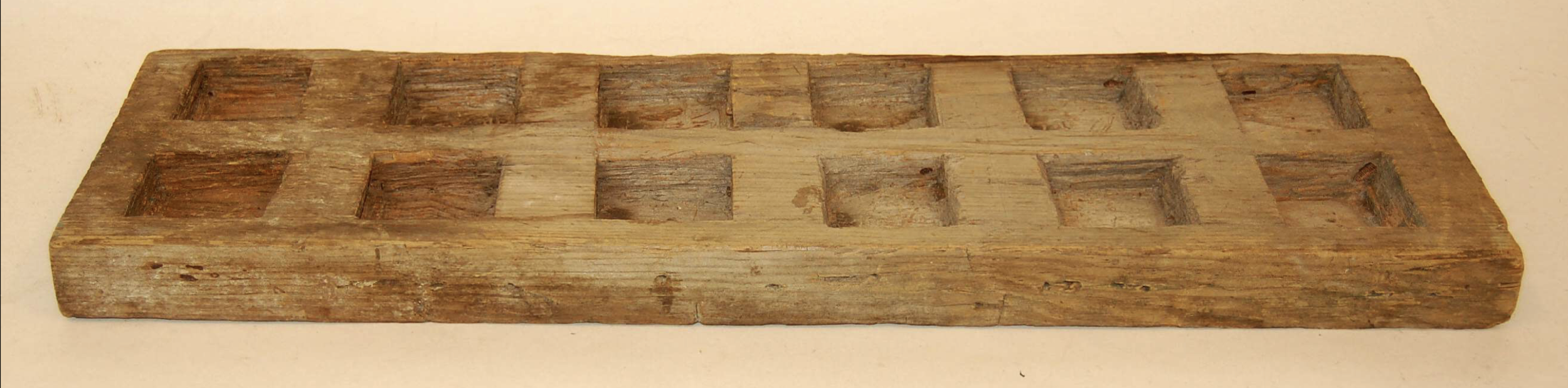
Warri-Board (Mancala Board). 1940s. Carved wood; Length 63.50 cm × Width 18.50 cm × Depth 4 cm. Speightstown, St Peter, Barbados (Lesser Antilles, Caribbean). This wooden warri-board is carved from a rectangular plank featuring twelve square, flat-bottomed holes arranged in two parallel rows of six. Warri is a Caribbean variant of the wider mancala family of board games, widely understood to derive from West African gaming traditions transmitted through the Atlantic world. In Barbados, warri has historically been played in suburban Bridgetown, Speightstown, and rural west coast communities, though participation has declined locally. Formerly owned by Benjamin “Benny” White, the board was purchased in 1996 from Alexander J. de Voogt with funding from the British Museum Society Board Game Fund. Museum no. Am1996,17.2; Registration no. Am1996,17.2. Department of Africa, Oceania and the Americas. Currently not on display. Collection of the British Museum, London. British Museum. (1996). Warri-board (mancala board) (Museum No. Am1996,17.2; Registration No. Am1996,17.2) [Carved wooden game board]. Department of Africa, Oceania and the Americas, The British Museum.
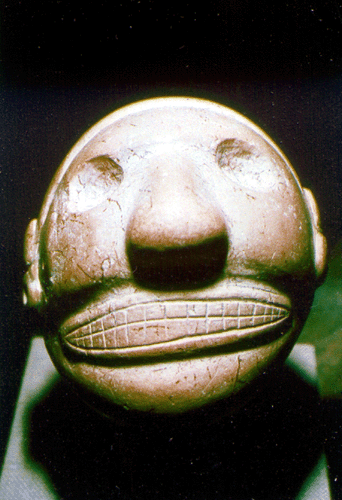
A Tlatilco ceramic mask, likely dating to the Preclassic period between 1200–900 BCE from the Valley of Mexico.
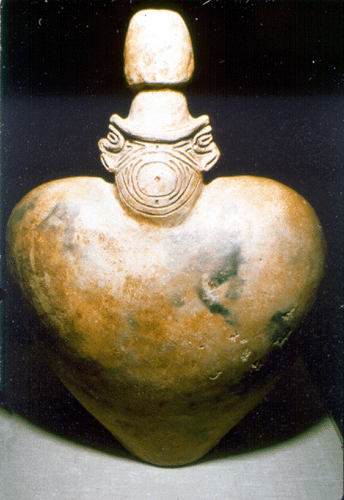
A Taíno heart-shaped bottle, likely dating from 1000 to 1500 AD. Likely a water container used for ceremonial or funerary purposes. The Metropolitan Museum of Art. (n.d.). Heart-shaped bottle with phallic spout. https://www.metmuseum.org/art/collection/search/765338

A Pre-Columbian Taino boat-shaped pottery bowl, likely dating between 1200 and 1500 AD. Latin American Studies. (n.d.). Taíno pottery. https://www.latinamericanstudies.org/taino/pottery.htm
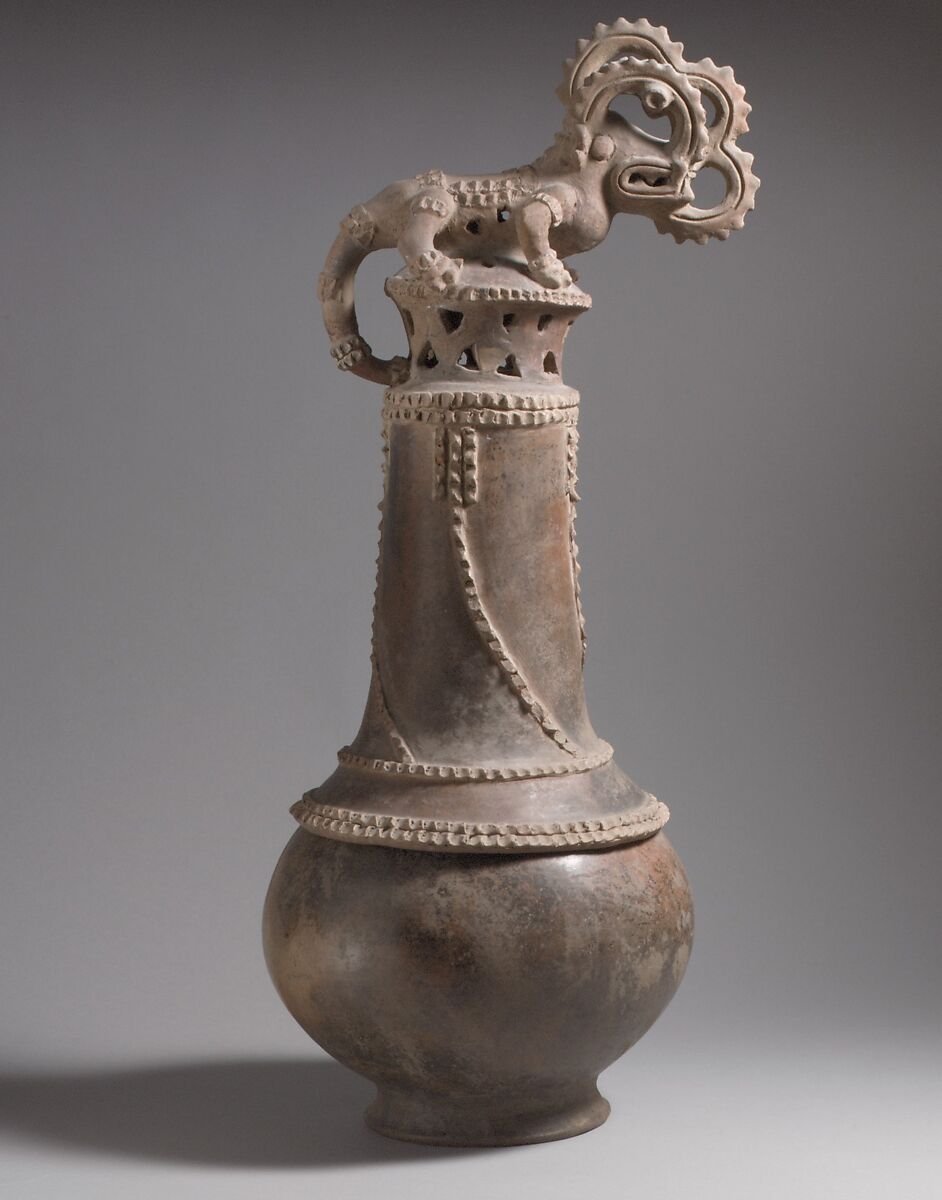
Incense Burner from Costa Rica or Nicaragua. The Metropolitan Museum of Art. (n.d.). Crocodile censer. https://www.metmuseum.org/art/collection/search/312600
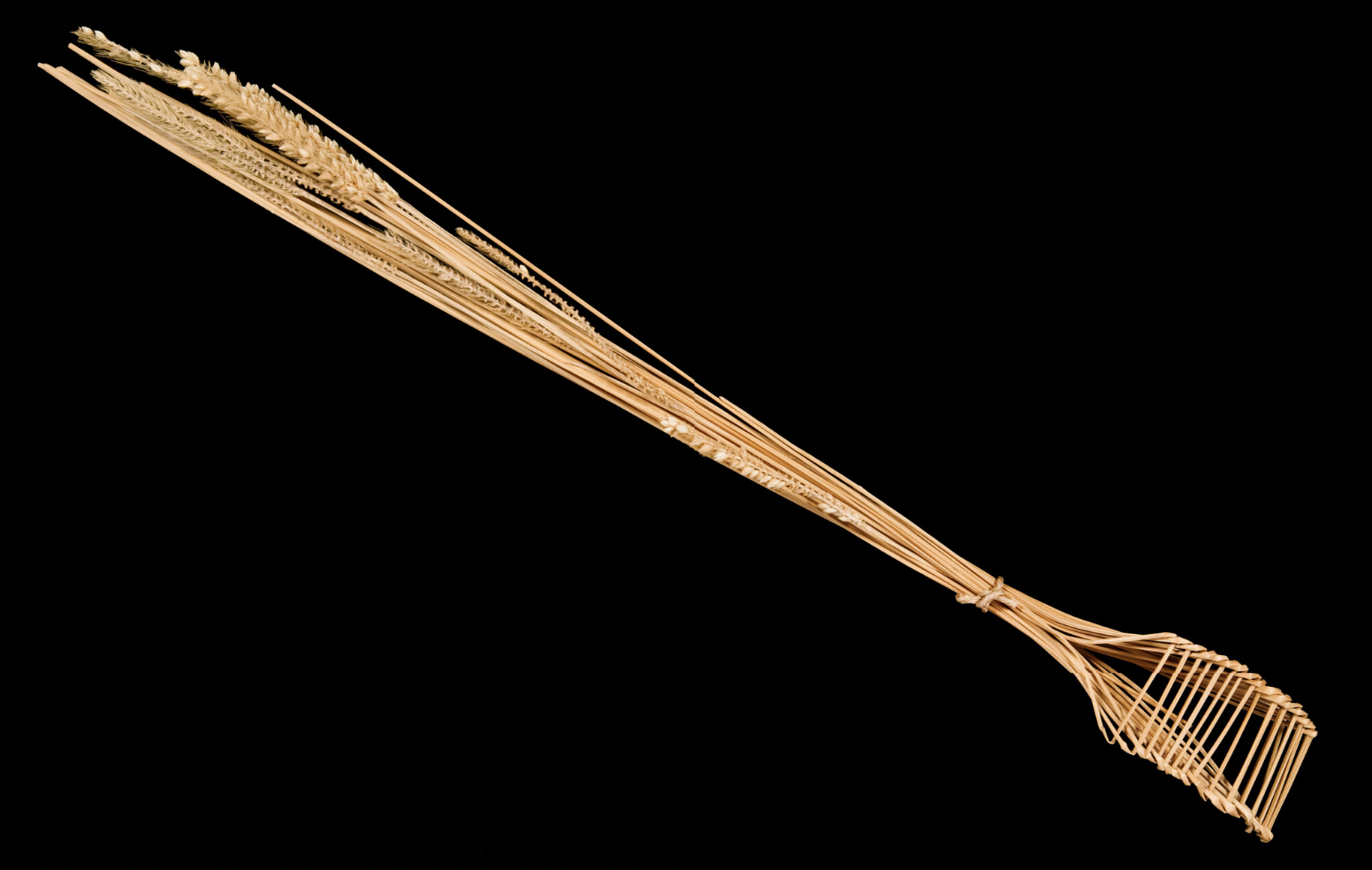
Cockroach Trap. Possibly before 1878. Maker unknown; Jamaica, Caribbean. Grass fibre plant material; woven using basketry techniques. Length: 155 mm (maximum). This woven grass-fibre object is identified as a cockroach trap and reflects domestic pest-control practices within Caribbean material culture prior to the late nineteenth century. Constructed through basketry processes, the object demonstrates skilled fibre manipulation and plant-based craft technologies common across the region. Accession no. 1884.117.104. PR Cat other no.: 3373 (possible). Collection of the Pitt Rivers Museum, University of Oxford. Pitt Rivers Museum. (n.d.). Cockroach trap (Accession No. 1884.117.104). University of Oxford.
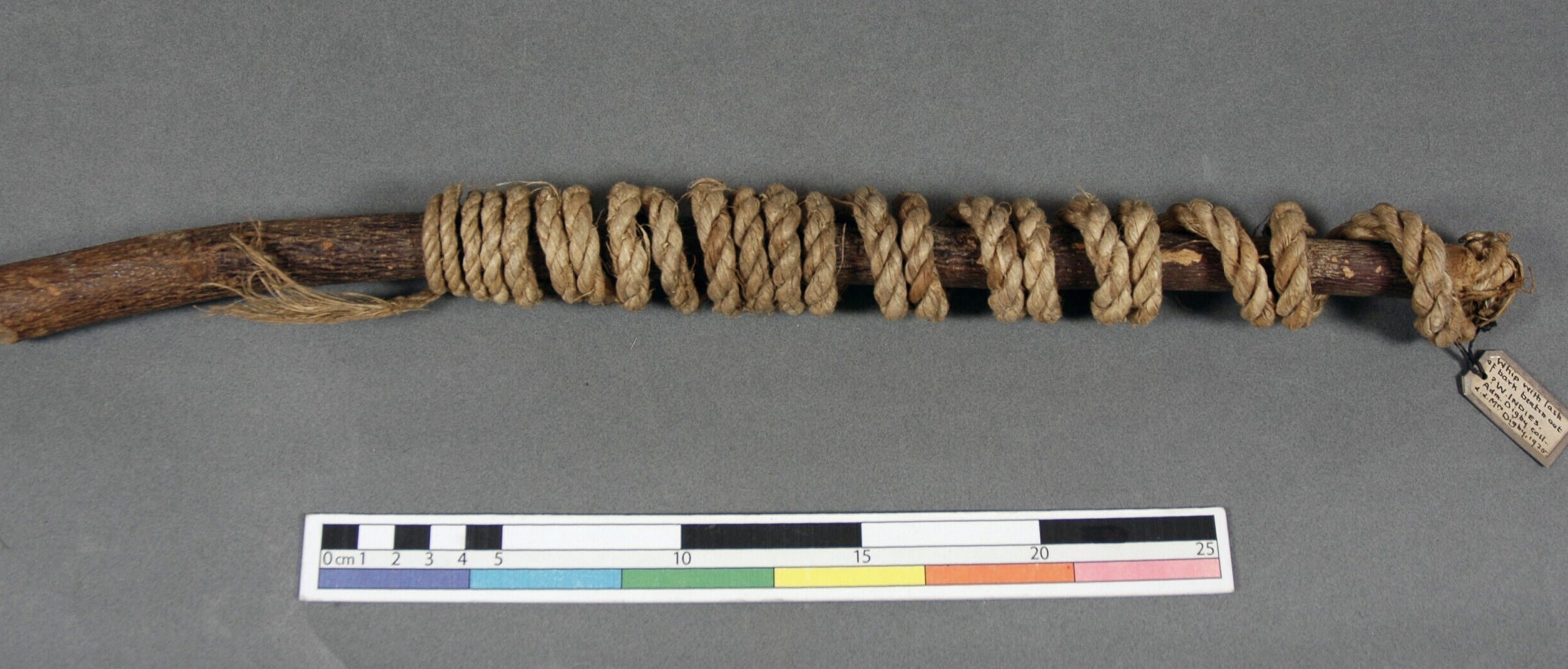
Whip with Beaten and Twisted Lash. Before 1925. Possibly collected by Admiral Digby. Material: plant stem and bark wood; beaten and twisted. Dimensions: Length 454 mm × Width 37 mm (maximum). This whip was crafted from a tree branch whose bark was beaten out and twisted into a cord to form the lash. The construction reflects indigenous plant-fiber processing techniques in the Caribbean region, where natural materials were transformed through beating and twisting to produce durable cords and handles for functional items. Donated in 1925 by Mrs. Digby, the object entered the Pitt Rivers Museum collection as Accession no. 1925.7.1. Its manufacture predates 1925, though precise provenance and field collection details remain uncertain. Collection of the Pitt Rivers Museum, University of Oxford. Pitt Rivers Museum. (n.d.). Whip with beaten and twisted lash (Accession No. 1925.7.1). University of Oxford.
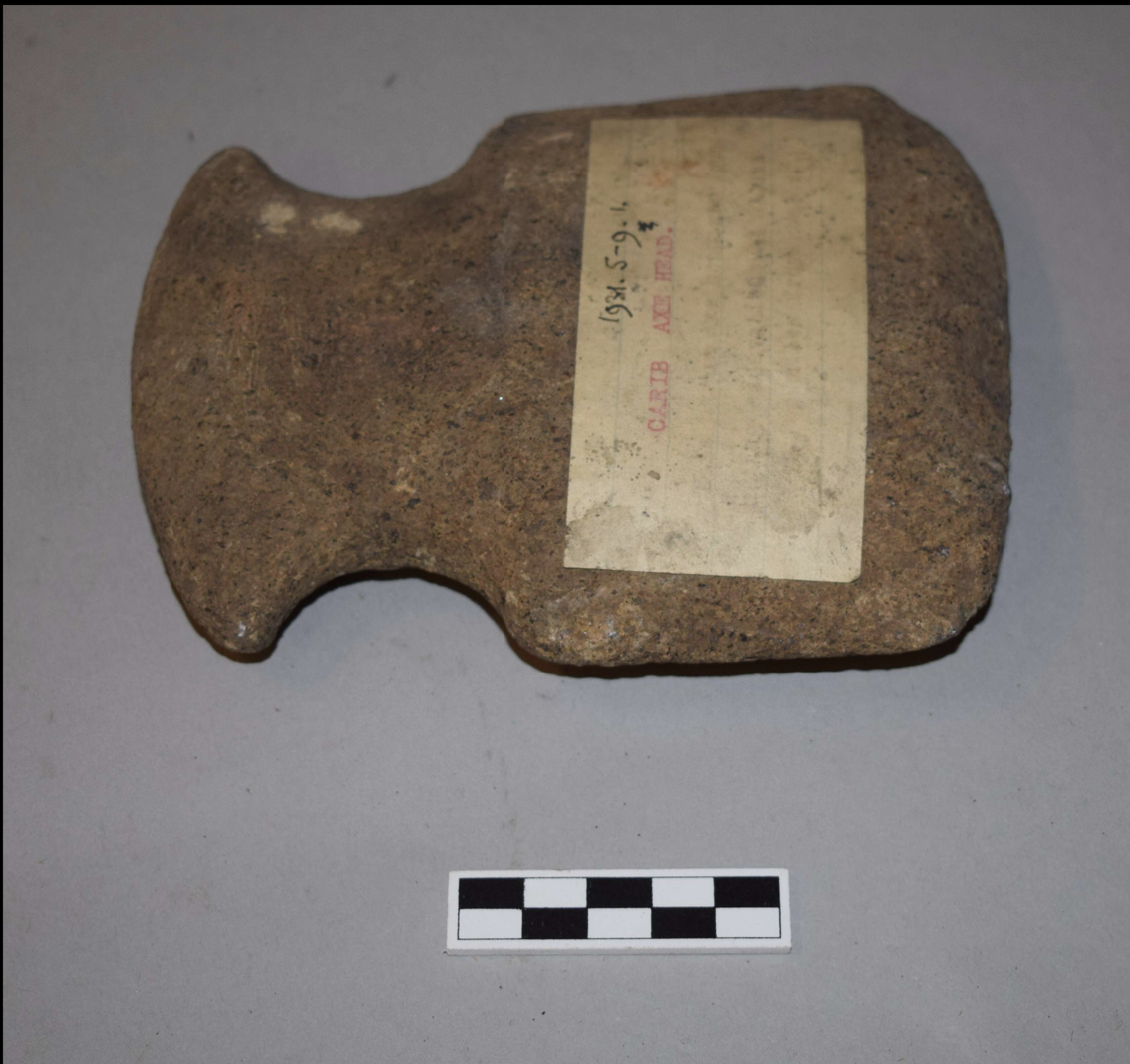
Carib Style Axe. Stone; Length 15 cm × Width 12 cm × Depth 3.20 cm. Caribbean, Americas. This axe, identified as Carib style, was excavated in the Caribbean and reflects Indigenous stone tool traditions of the region. Carved and shaped from stone, the object represents lithic technologies used for woodworking, land clearing, or other utilitarian functions within pre-colonial Caribbean societies. Museum no. Am1931,0509.1; Registration no. Am1931,0509.1. Donated in 1931 by Lt-Cdr R. H. S. Rodger. Department of Africa, Oceania and the Americas. Currently not on display. Collection of the British Museum, London. British Museum. (1931). Carib style axe (Museum No. Am1931,0509.1; Registration No. Am1931,0509.1) [Stone axe]. Department of Africa, Oceania and the Americas, The British Museum.
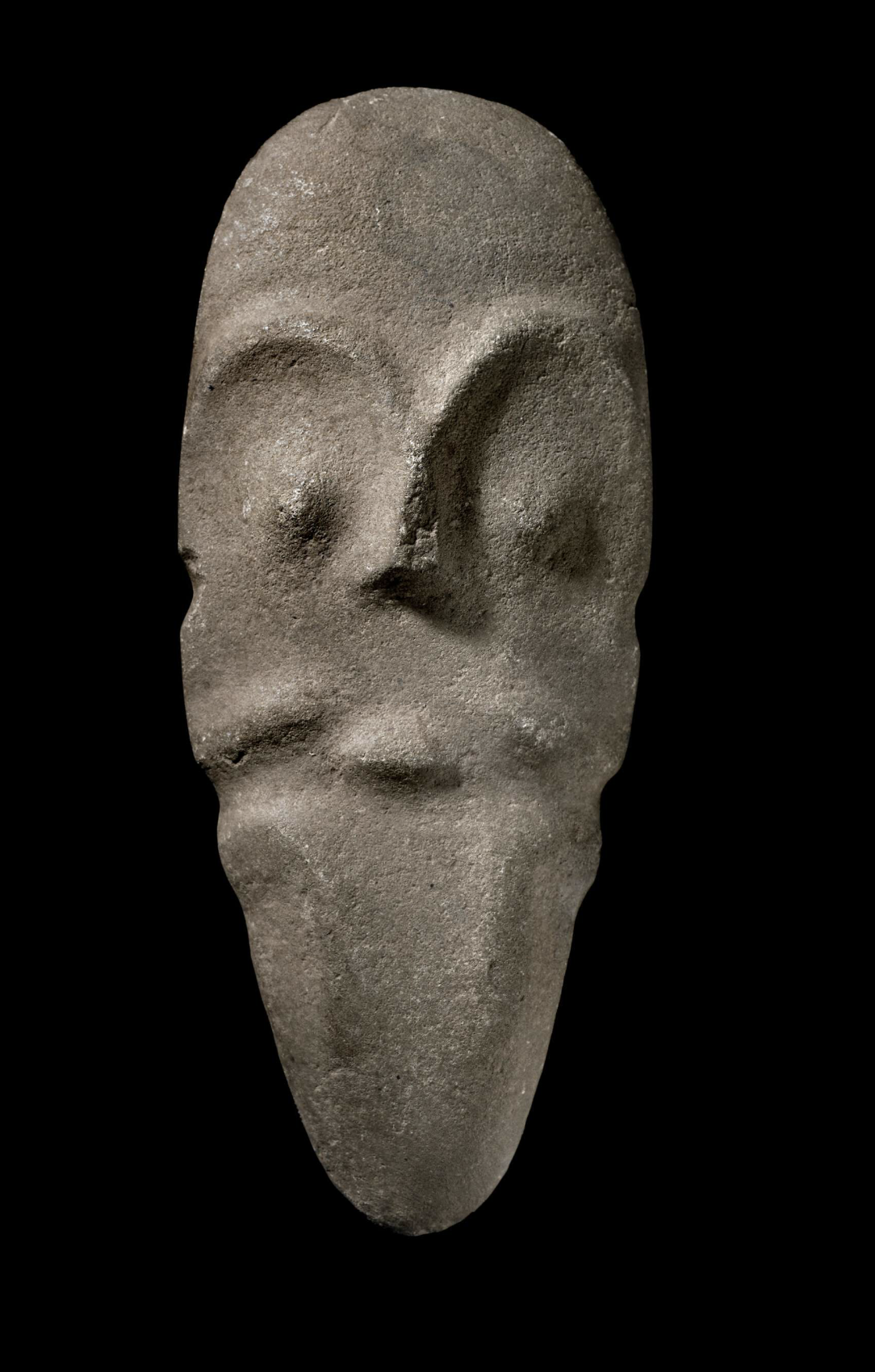
Axe or Wedge with Human Figure. Stone; Length 19.50 cm × Width 8 cm × Diameter 4 cm. Caribbean, Americas. This carved stone object, identified as an axe or wedge, features a possible anthropomorphic figure integrated into its form. Excavated in the Caribbean, the piece reflects pre-Columbian Indigenous stone-working traditions and may align stylistically with Taíno or related Caribbean cultural contexts. Bequeathed in 1865 by Henry Christy and held in the Department of Africa, Oceania and the Americas, the object has been exhibited internationally, including in the 2008–2009 exhibition Caribbean Before Columbus (Barcelona, Santiago de Compostela, Madrid). Conservation treatment was recorded on 28 March 2008. Museum no. Am,MI.128; Registration no. Am,MI.128. Additional IDs: CDMS no. Am186?C4.128; Misc. no. Am186?C5.314. Currently not on display. Collection of the British Museum, London. British Museum. (1865). Axe or wedge with human figure (Museum No. Am,MI.128; Registration No. Am,MI.128) [Stone object]. Department of Africa, Oceania and the Americas, The British Museum.
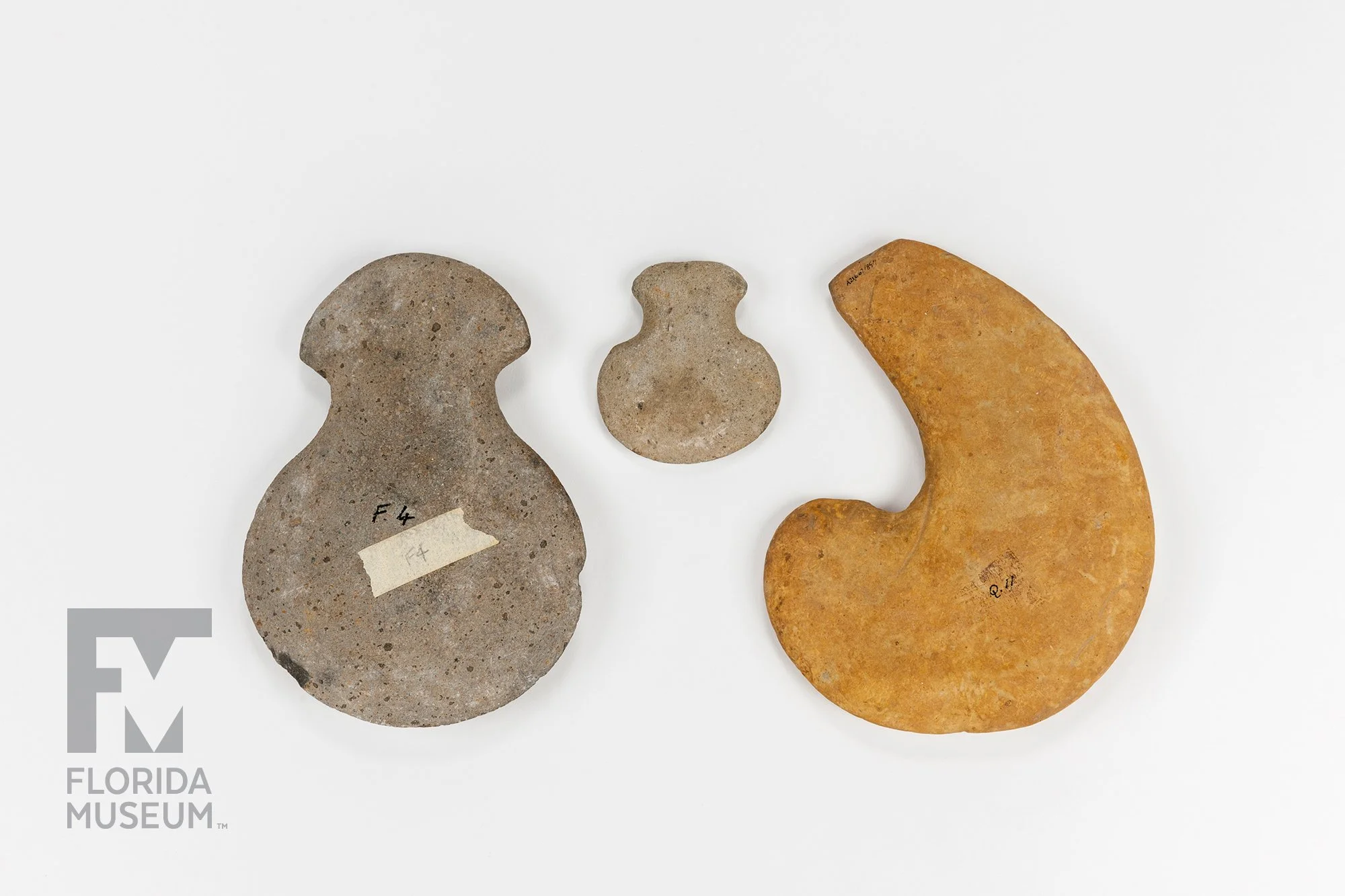
Stone Hoes. Circa AD 200–1400. Indigenous Caribbean peoples, Grenada; Caribbean. Basalt stone implements shaped into heavy, axe-like forms through percussion and grinding techniques, likely used as digging hoes for preparing agricultural soils such as those for cassava and sweet potato, and, in some cases, as valued exchange objects or symbols of social importance within native trade networks. Archaeological context and analysis by the Historical Archaeology and Caribbean Archaeology programs of the Florida Museum of Natural History, University of Florida. Featured in the Rare, Beautiful & Fascinating: 100 Years at FloridaMuseum online exhibit. Public domain. (Source: Florida Museum of Natural History, “Stone Hoes”). Florida Museum of Natural History. (n.d.). Stone Hoes (Object from Rare, Beautiful & Fascinating: 100 Years at FloridaMuseum).
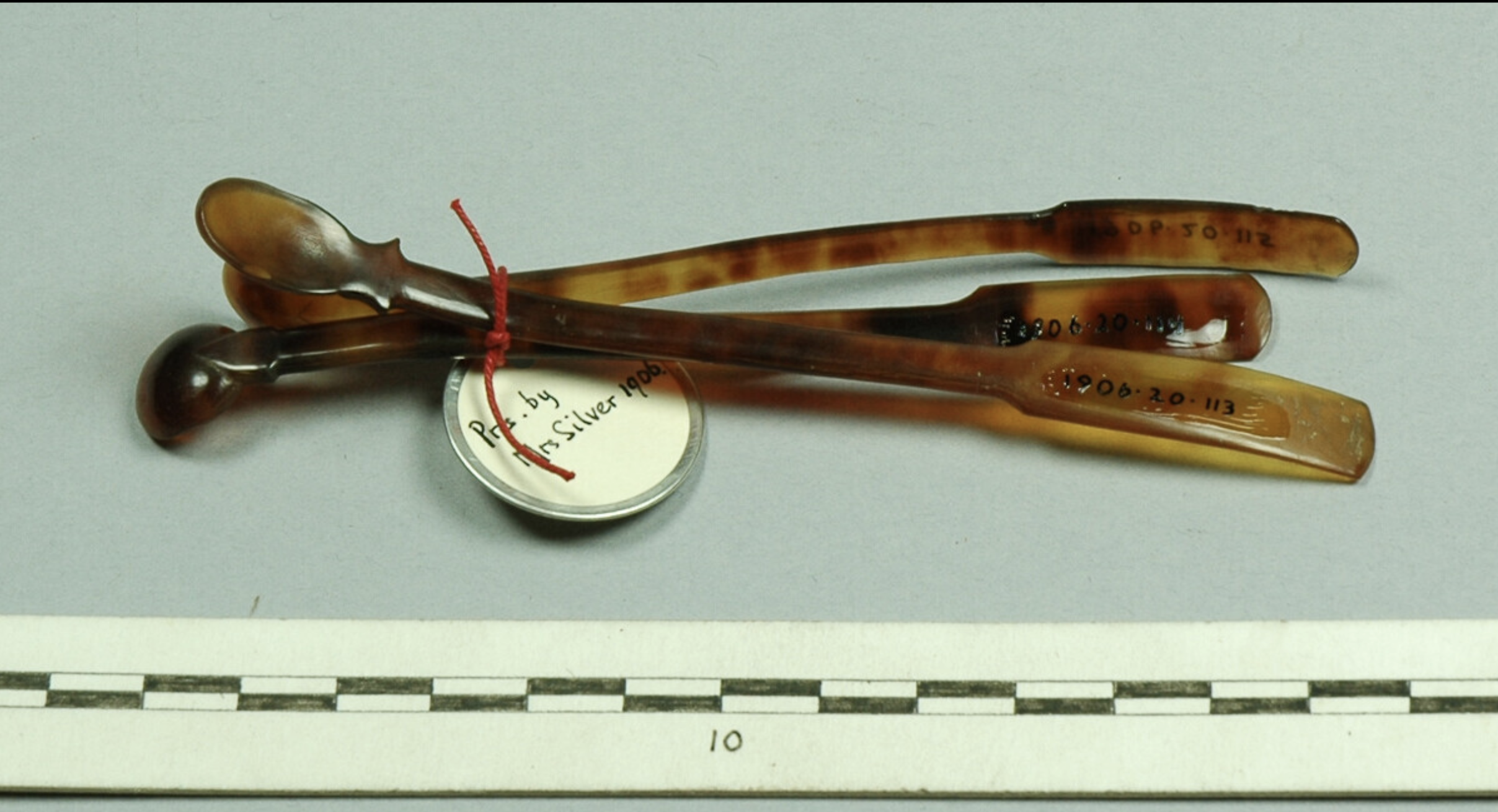
Turtleshell Spoon with Spatula-Shaped Handle. Before 1906. Unknown field collector; Caribbean. Material: turtleshell (reptile), carved. Length: 127 mm (maximum). This carved turtleshell spoon features a small bowl transitioning into a spatula-shaped handle, reflecting utilitarian craft traditions in the Caribbean where natural materials were transformed through careful carving into everyday implements. Donated in March 1906 by Sarah Constance Silver via the Oxford University Museum of Natural History, the object entered the Pitt Rivers Museum collection as Accession no. 1906.20.113. Its manufacture predates 1906, and the specific collector remains unknown.Collection of the Pitt Rivers Museum, University of Oxford. Pitt Rivers Museum. (n.d.). Turtleshell spoon with spatula-shaped handle (Accession No. 1906.20.113). University of Oxford.
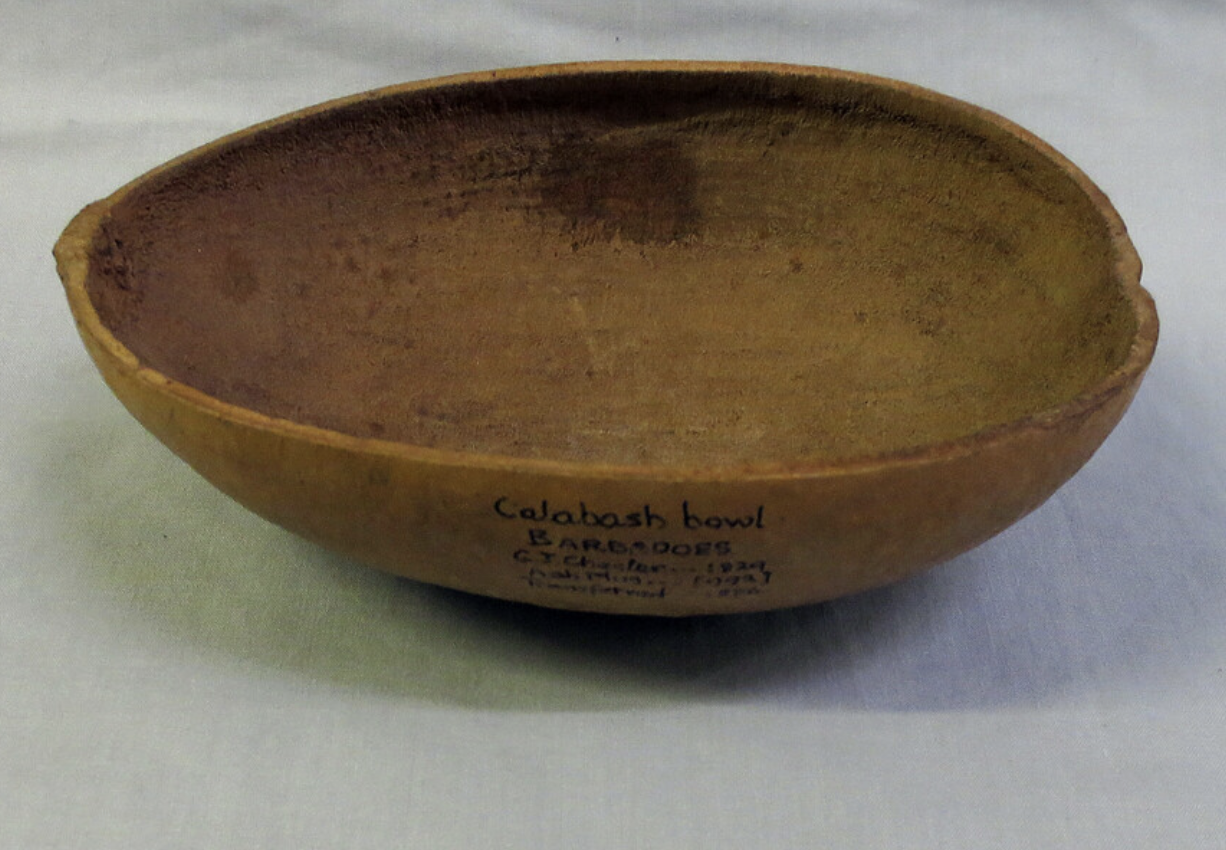
Gourd Vessel. Before 1829 (date uncertain). Likely collected on or before 1829 by Greville John Chester. Made from a gourd plant, split, scraped, and carved to form a functional container; diameter up to 145 mm, height up to 55 mm. This worked gourd vessel exemplifies Caribbean utilitarian craft traditions in plant-based material culture, where gourds were transformed through splitting and scraping into containers for storage, food preparation, or transport. Its form and manufacture reflect the technologies and domestic economy of early Caribbean life. Transferred to the Pitt Rivers Museum on 18 November 1885 from the Ashmolean Museum, University of Oxford (Accession no. 1886.1.992; other no. 109 992). The exact collector and original context are uncertain, and the date of manufacture is estimated as before 1829 based on catalogue records. Collection of the Pitt Rivers Museum, University of Oxford. Pitt Rivers Museum. (n.d.). Gourd vessel (Accession No. 1886.1.992). University of Oxford.
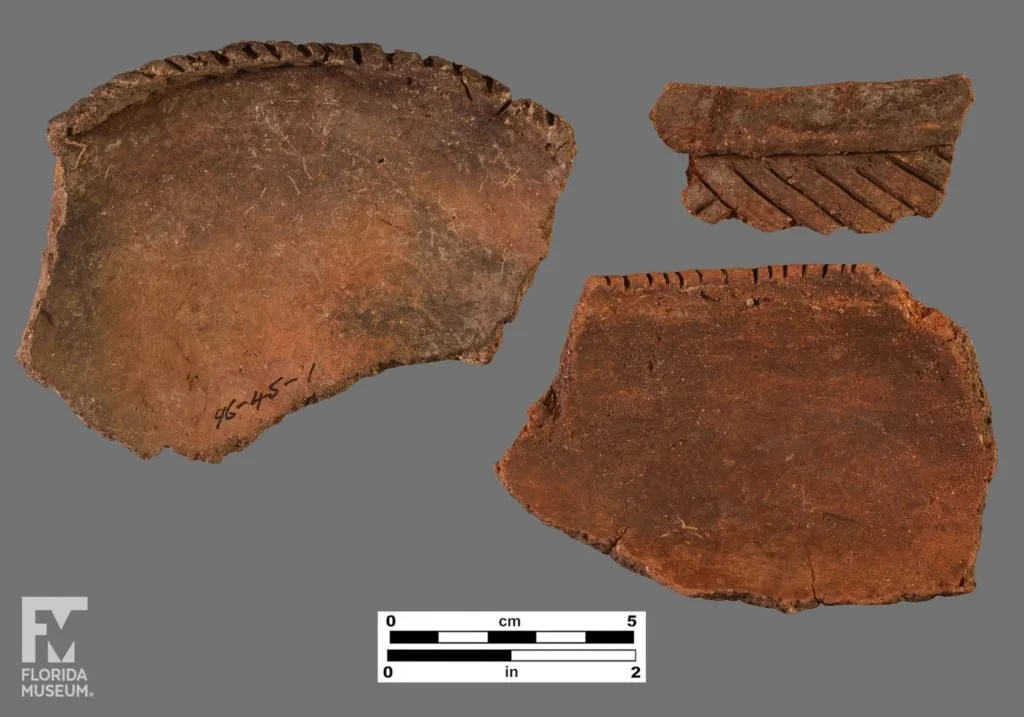
Meillacoid Pottery Sherds (FLMNH Catalog #96-45-1). Pre-Columbian; recovered from Skyline, Jamaica, Caribbean. Ceramic sherd fragments displaying incised decoration and a folded rim, characteristic of Meillacoid style pottery, a Late Ceramic Age ceramic type in the Greater Antilles. These sherds were made by Indigenous potters using hand-building and clay-tempering techniques typical of the Caribbean archaeological tradition, with surface treatments that include incising and folded rims reflecting stylistic and functional ceramic practices in pre-contact Jamaican communities. The Meillacoid ceramic series first appears in Hispaniola around AD 800–900 and spread to Jamaica and other islands, indicating broad cultural interaction and movement of peoples and styles across the region during the late first millennium CE. Collected through archaeological fieldwork; curated in the Caribbean Archaeology collection of the Florida Museum of Natural History, University of Florida. Public domain. Florida Museum of Natural History. (n.d.). Meillacoid pottery sherds (FLMNH Catalog No. 96-45-1). University of Florida.
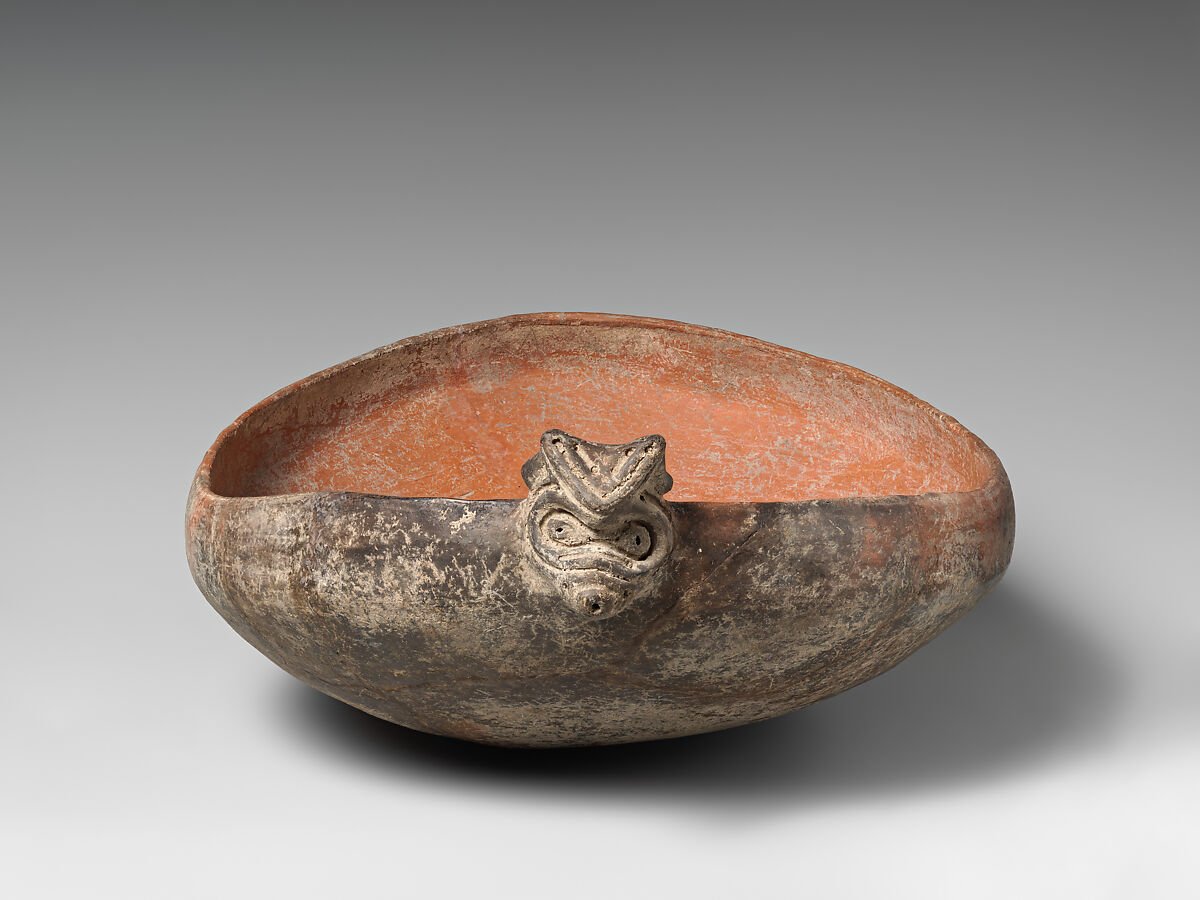
A Taíno ceramic bowl from the Caribbean, likely dating from the 13th to 15th century. The Metropolitan Museum of Art. (n.d.). Bowl. https://www.metmuseum.org/art/collection/search/314782
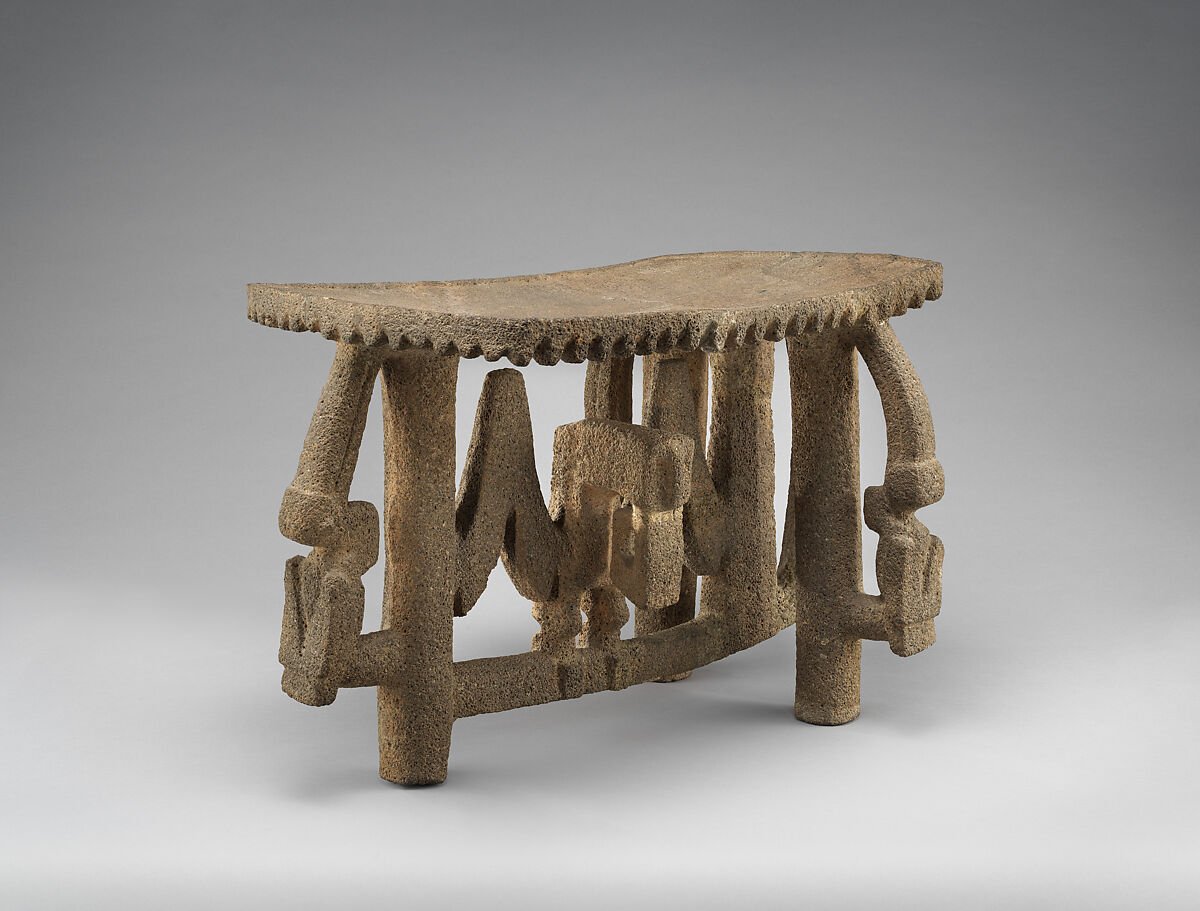
A "flying panel" metate from ancient Costa Rica, dating approximately from 1 to 500 CE. The Metropolitan Museum of Art. (n.d.). Flying panel metate. https://www.metmuseum.org/art/collection/search/312646
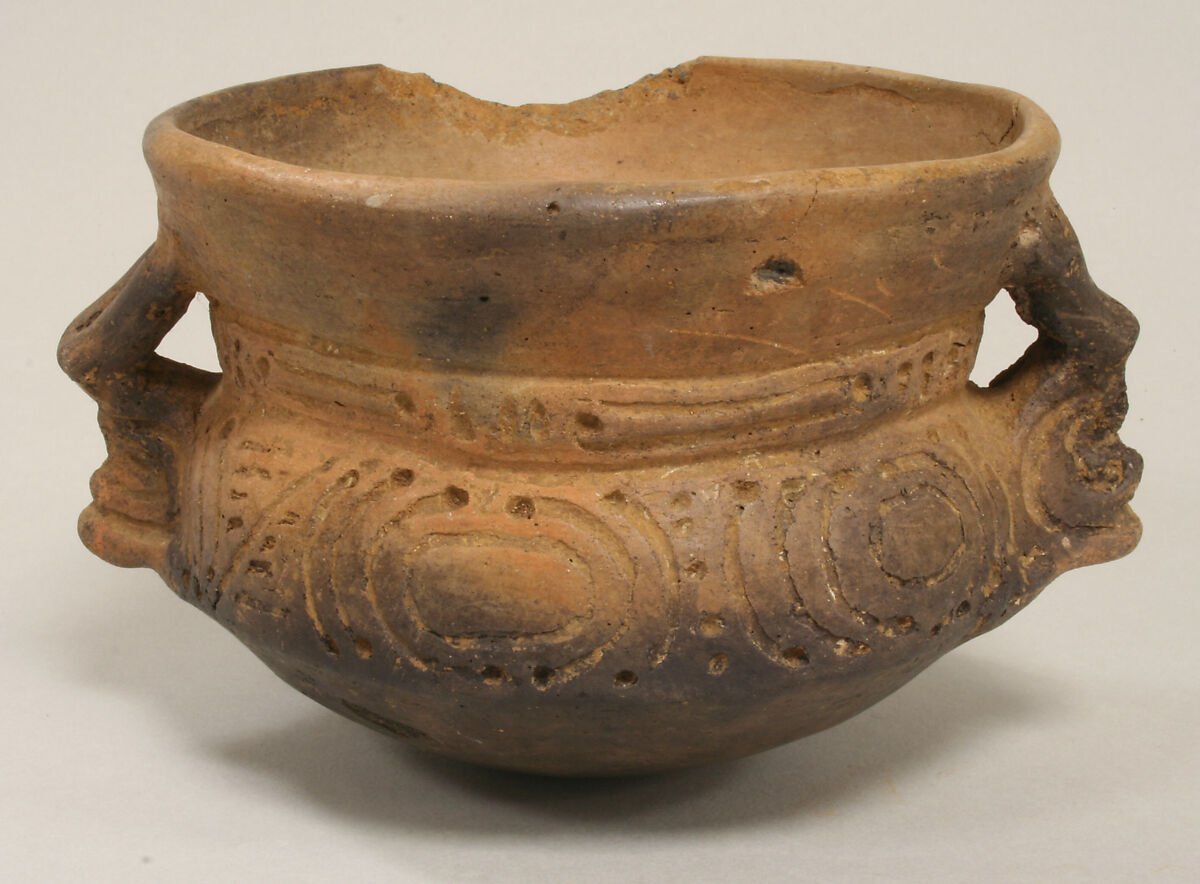
A Taíno ceramic bowl from the Dominican Republic, dating between the 13th and 15th centuries. The Metropolitan Museum of Art. (n.d.). Bowl with modeled human figure. https://www.metmuseum.org/art/collection/search/314312
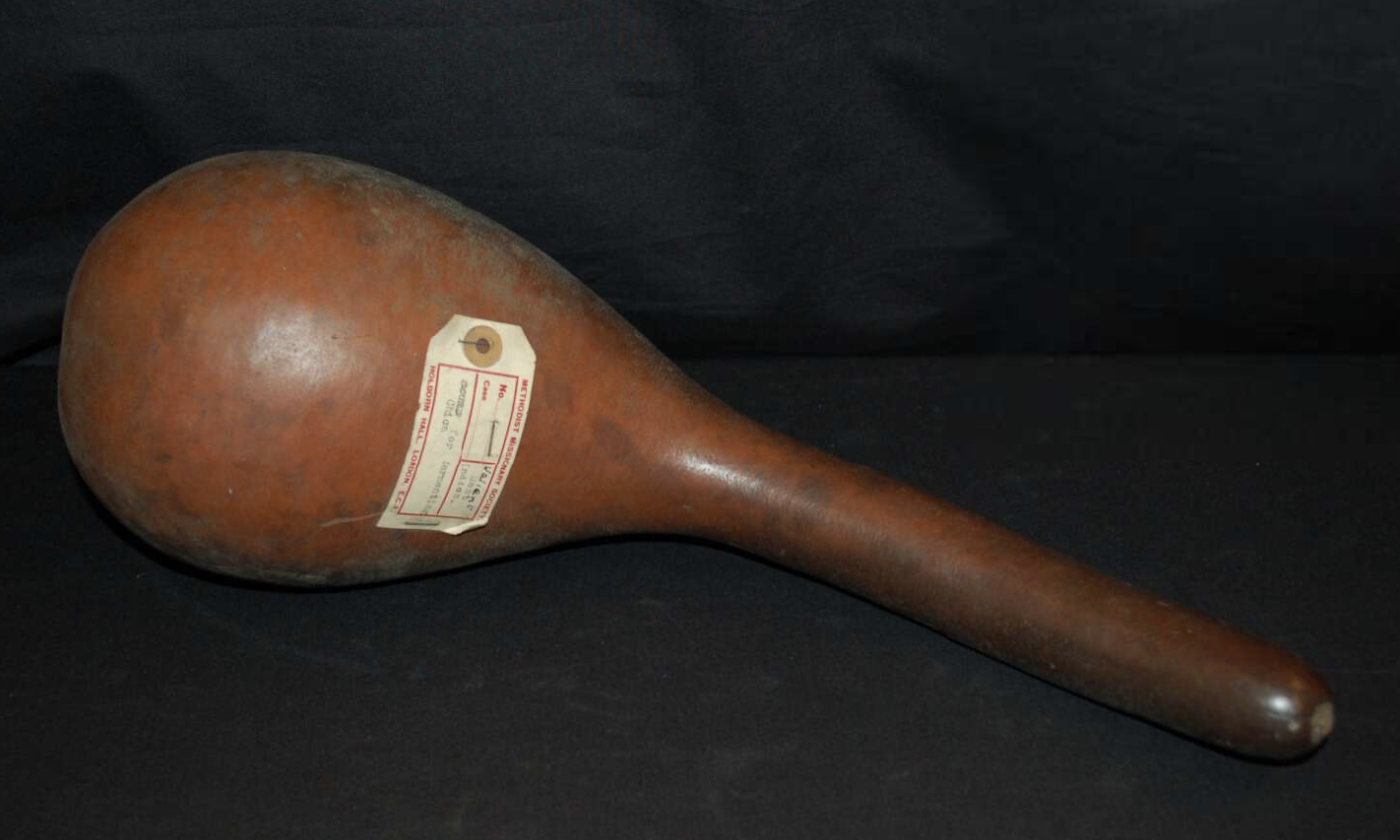
Gourd Vessel for Fermenting Chicha. Gourd; Height 46.50 cm × Diameter 16 cm. Caribbean (West Indies), Americas. This large dried gourd vessel features a globular body with a long neck and a hole bored at the top of the neck. The form and perforation indicate its use as a fermentation container, identified on an attached historical label as a “Gourd for fermenting Chicha.” Chicha is a fermented beverage traditionally produced in Indigenous communities across the Americas, often prepared from maize or other plant materials and consumed in communal or ceremonial contexts. The object was formerly in the collection of the Methodist Missionary Society; the date and means of acquisition by the British Museum are unknown. The label also bears the notation “Valient, West Indies.” Museum no. Am1997,Q.1788; Registration no. Am1997,Q.1788. Department of Africa, Oceania and the Americas. Currently not on display. Collection of the British Museum, London. British Museum. (n.d.). Gourd vessel for fermenting chicha (Museum No. Am1997,Q.1788; Registration No. Am1997,Q.1788) [Gourd vessel]. Department of Africa, Oceania and the Americas, The British Museum.
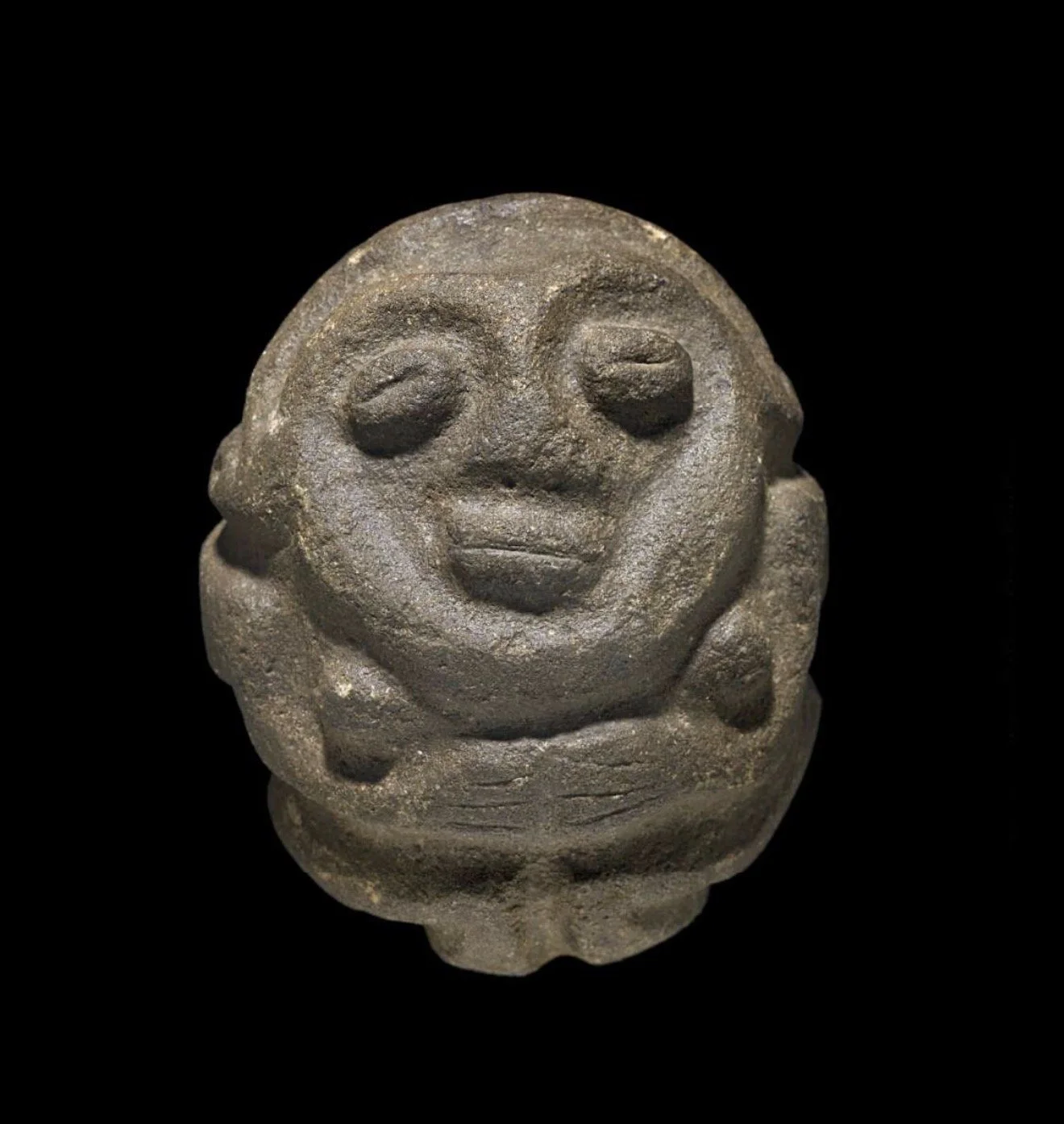
Anthropozoomorphic Mano (Rubber/Pestle). Stone; Height 9 cm × Width 7.50 cm × Diameter 6.50 cm. San Domingo (Dominican Republic), Caribbean. This carved brown stone mano, also described in museum records as a “rubber” or pestle, is formed as an anthropozoomorphic female figure. The object features frog-like legs, a heart-shaped face, prominent breasts, and coffee-bean-shaped eyes. Evidence of extensive wear on the base indicates repeated use in grinding or food-processing activities. Excavated in San Domingo (Dominican Republic) and previously owned by Dr. Samuel Egger, the object was purchased in Budapest by Sir Augustus Wollaston Franks for ten shillings and donated to the British Museum on 11 October 1876. It was later exhibited internationally in the 2008–2009 exhibition Caribbean Before Columbus. Museum no. Am.9877; Registration no. Am.9877; CDMS no. Am1876C1.9877; Misc. no. Am1876C1011.1. Department of Africa, Oceania and the Americas. Currently not on display. Collection of the British Museum, London. British Museum. (1876). Anthropozoomorphic mano (rubber/pestle) (Museum No. Am.9877; Registration No. Am.9877) [Stone mano]. Department of Africa, Oceania and the Americas, The British Museum.
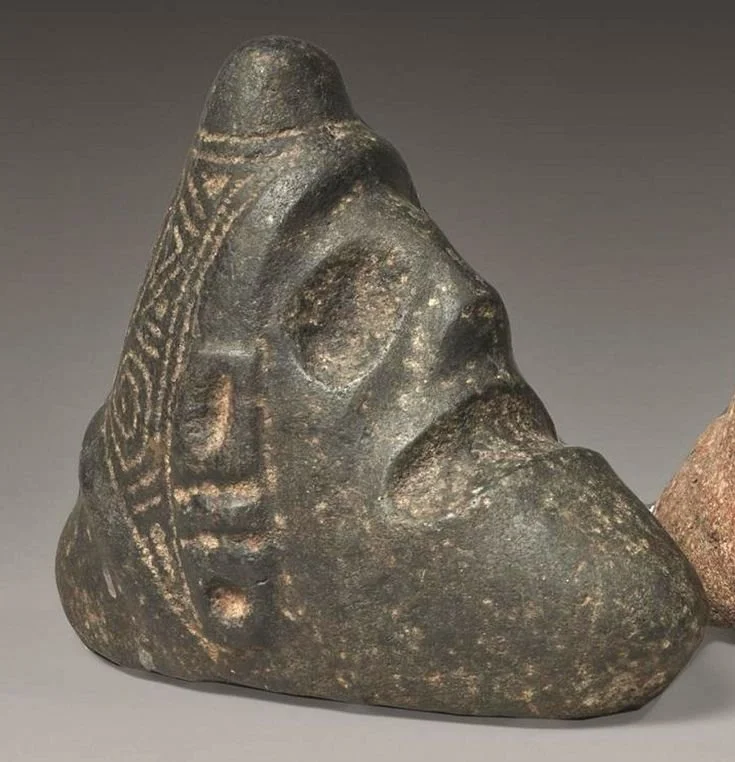
A Taino Zemi Trigonolith (zemi, trigonolite) made of basalt. 15.5 cm (6.1 in). Dated CA. A.D. 800-1500. Originates from the Greater Antilles. Categorized as cephalomorphic and belongs to the Taino culture.
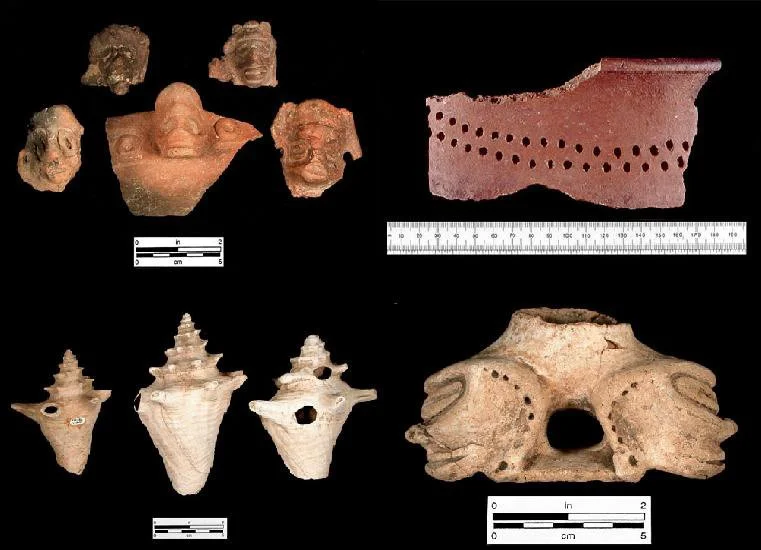
Material Remains from En Bas Saline. ca. AD 1200–1500. Taíno culture; En Bas Saline, Haiti, Caribbean. Predominantly ceramic (Carrier pottery, a local variant of the Chican-Ostionoid subseries), with additional materials including shell, bone, stone, and cotton-processing tools. Excavations at the En Bas Saline site recovered 119,169 artifacts, of which 73,303 derived from undisturbed contexts below the modern plowzone. Over 98% of the assemblage consists of ceramics associated with food preparation and consumption, particularly Carrier pottery distinguished by specific paste composition, manufacturing techniques, decorative modes, and vessel forms. Additional artifact categories include shell, bone, and stone ornaments and beads; fishing weights; cooking griddles; shell and bone tools; and stamps used to imprint patterns on cotton cloth. The collection is curated on behalf of the Haitian government by the Florida Museum of Natural History under a cooperative agreement between the University of Florida and the Bureau National d’Ethnologie d’Haïti, which includes provisions for training and research. Florida Museum of Natural History. (n.d.). Material remains from En Bas Saline. University of Florida.
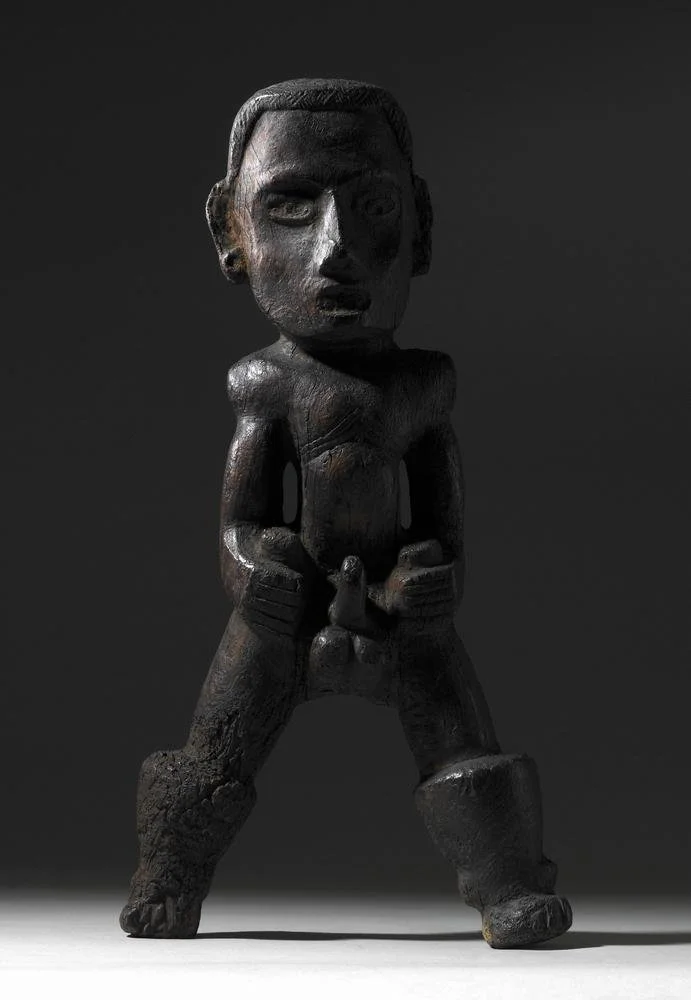
Taíno wooden figure, specifically identified as a cemí from the Chican Ostionoid period, dating roughly between 1220-1280 AD. These figures served as tangible embodiments of supernatural beings, linking them directly to human actions and beliefs. British Museum. (n.d.). Figure (museum no. Am1997, Q.793). https://www.britishmuseum.org/collection/search?keyword=ESA39195
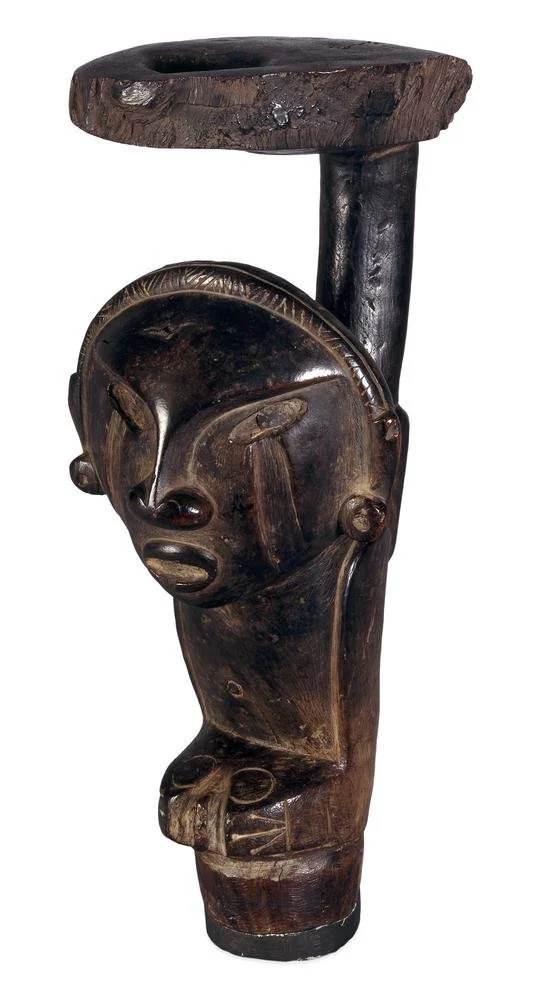
Taíno wooden sculpture known as the "Canopy" figure, a carved cohoba stand, designed to hold a platform on which hallucinogenic snuff was placed during ceremonial rituals. British Museum. (n.d.). Carved canopied cohoba stand (museum no. Am1977, Q.1). https://www.britishmuseum.org/collection/object/E_Am1977-Q-1
![A Taíno swallow stick, a pre-Columbian artifact carved from bone or wood, used in traditional rituals. Flickr user 18508177@N07. (n.d.). Taíno duho (ceremonial seat) [Photograph]. Flickr. https://www.flickr.com/photos/18508177@N07/14503004181/](https://images.squarespace-cdn.com/content/v1/65b41067c4042363cf11625f/cced3b16-1bf8-4207-a815-745bb21e7942/swallow-stick-1.gif)
A Taíno swallow stick, a pre-Columbian artifact carved from bone or wood, used in traditional rituals. Flickr user 18508177@N07. (n.d.). Taíno duho (ceremonial seat) [Photograph]. Flickr. https://www.flickr.com/photos/18508177@N07/14503004181/

A Taino ceremonial spatula or vomiting stick, specifically a 10th-15th century artifact from the Caribbean Greater Antilles. These tools were utilized in religious rituals, specifically for inducing vomiting to purify the body before inhaling hallucinogenic substances for spiritual contact. Latin American Studies. (n.d.). Taíno vomit spatulas. https://www.latinamericanstudies.org/taino/vomit-spatulas.htm
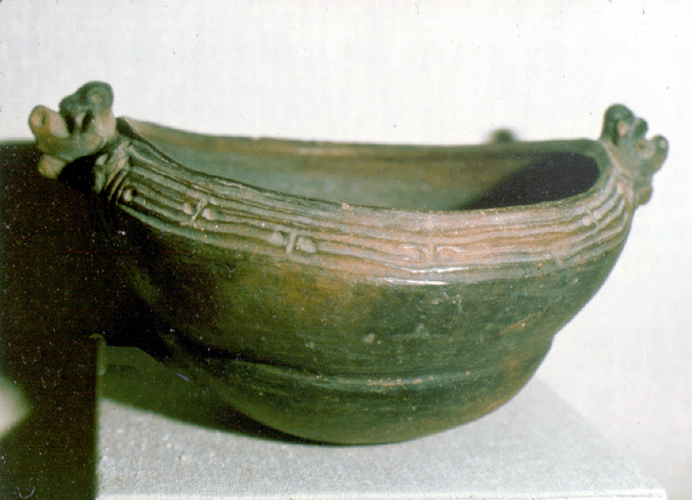
An ancient Taíno ceramic bowl, specifically a boat-shaped vessel featuring stylized effigy handles. Latin American Studies. (n.d.). Taíno bowls. https://www.latinamericanstudies.org/taino/bowls.htm
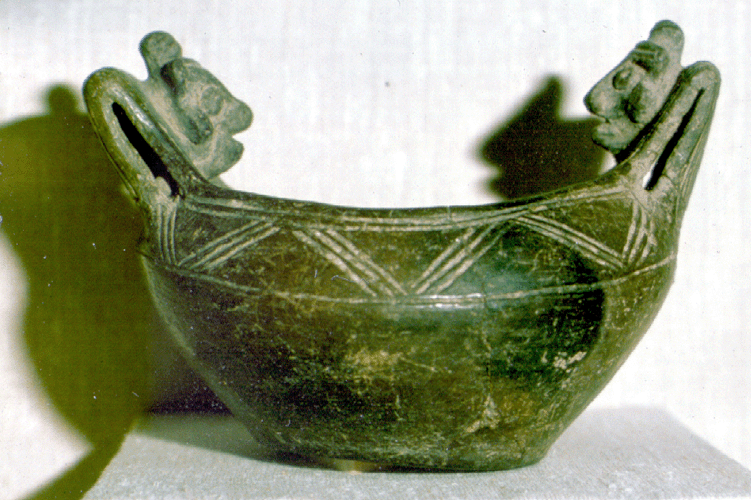
A Taíno ceramic two-headed bowl originating from the Dominican Republic. Latin American Studies. (n.d.). Taíno bowls. https://www.latinamericanstudies.org/taino/bowls.htm
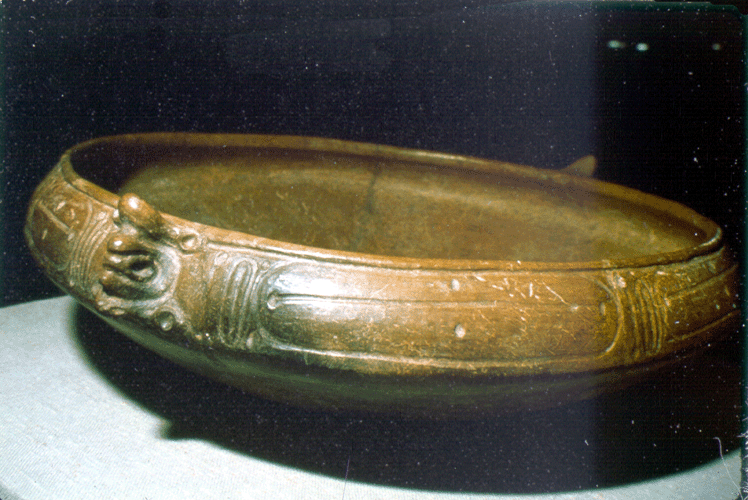
Fuente Magna Bowl, an archaeological artifact discovered in Bolivia. Some researchers argue the engravings are Sumerian cuneiform, suggesting prehistoric transoceanic contact, while others argue they are local indigenous symbols. Latin American Studies. (n.d.). Taíno dishes. https://www.latinamericanstudies.org/taino/dishes.htm
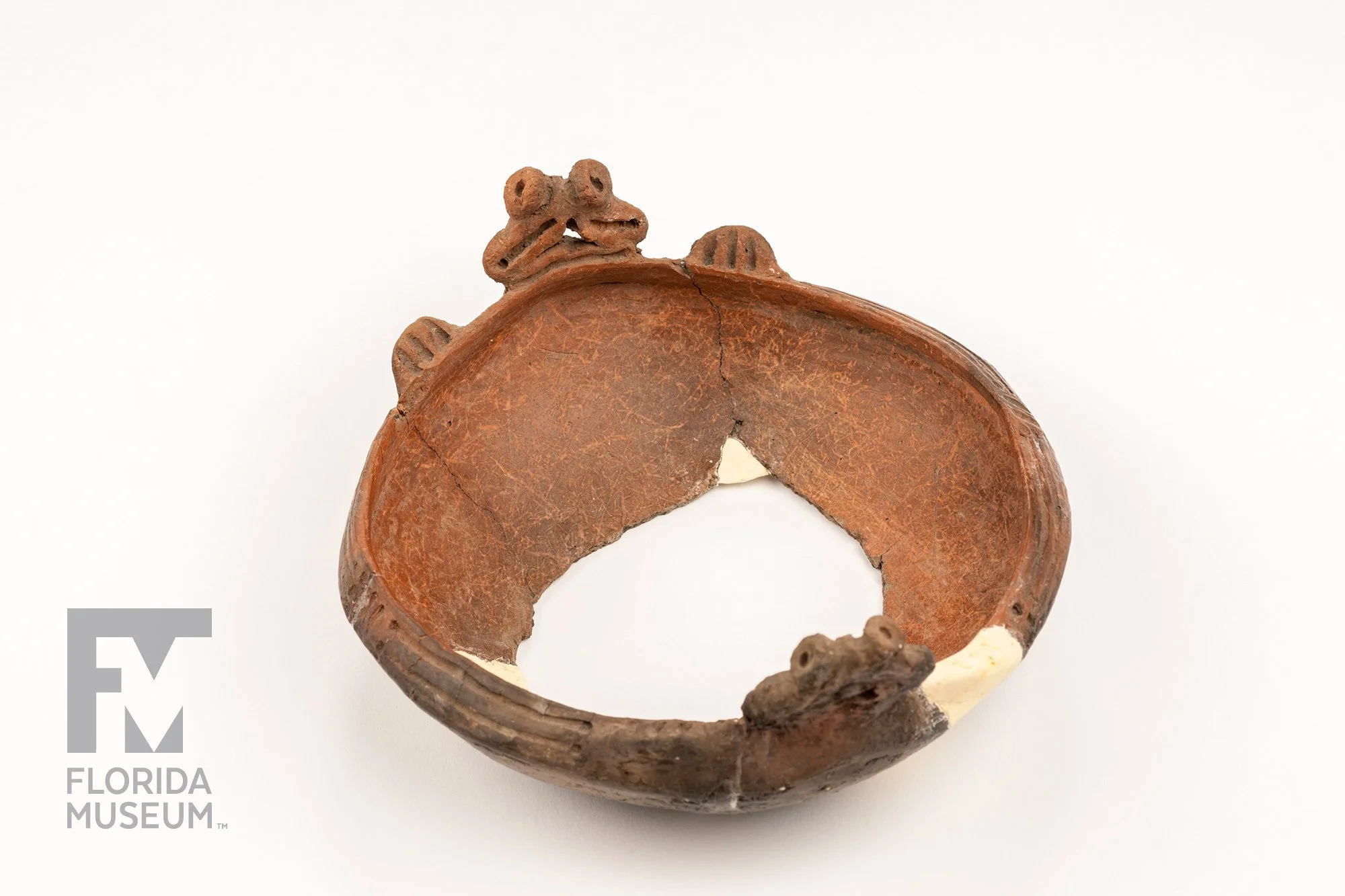
Vessel with Frog Adorno. Taíno culture; Dominican Republic, Caribbean. Ceramic pottery vessel, ca. AD 1200–1500, prior to European contact. This utilitarian vessel features an applied frog-shaped adorno — a decorative motif that held symbolic significance within Taíno cosmology. Frogs and the color green were associated with female fertility and beneficial rains, and the female deity Attabeira (“Frog Woman”) was one of the most important deities in Taíno belief systems; such motifs on pottery reflect the integration of spiritual symbolism into everyday ceramics and beverage or broth serving vessels. The form and decorative practice demonstrate typical Late Ceramic Age pottery production techniques among Indigenous Caribbean peoples. Recovered through archaeological fieldwork and curated by the Florida Museum of Natural History’s Caribbean Archaeology collection. Featured in the Rare, Beautiful & Fascinating: 100 Years at FloridaMuseum online gallery and representative of Taíno material heritage preserved in museum collections. Public domain. Florida Museum of Natural History. (n.d.). Vessel with frog adorno. University of Florida.
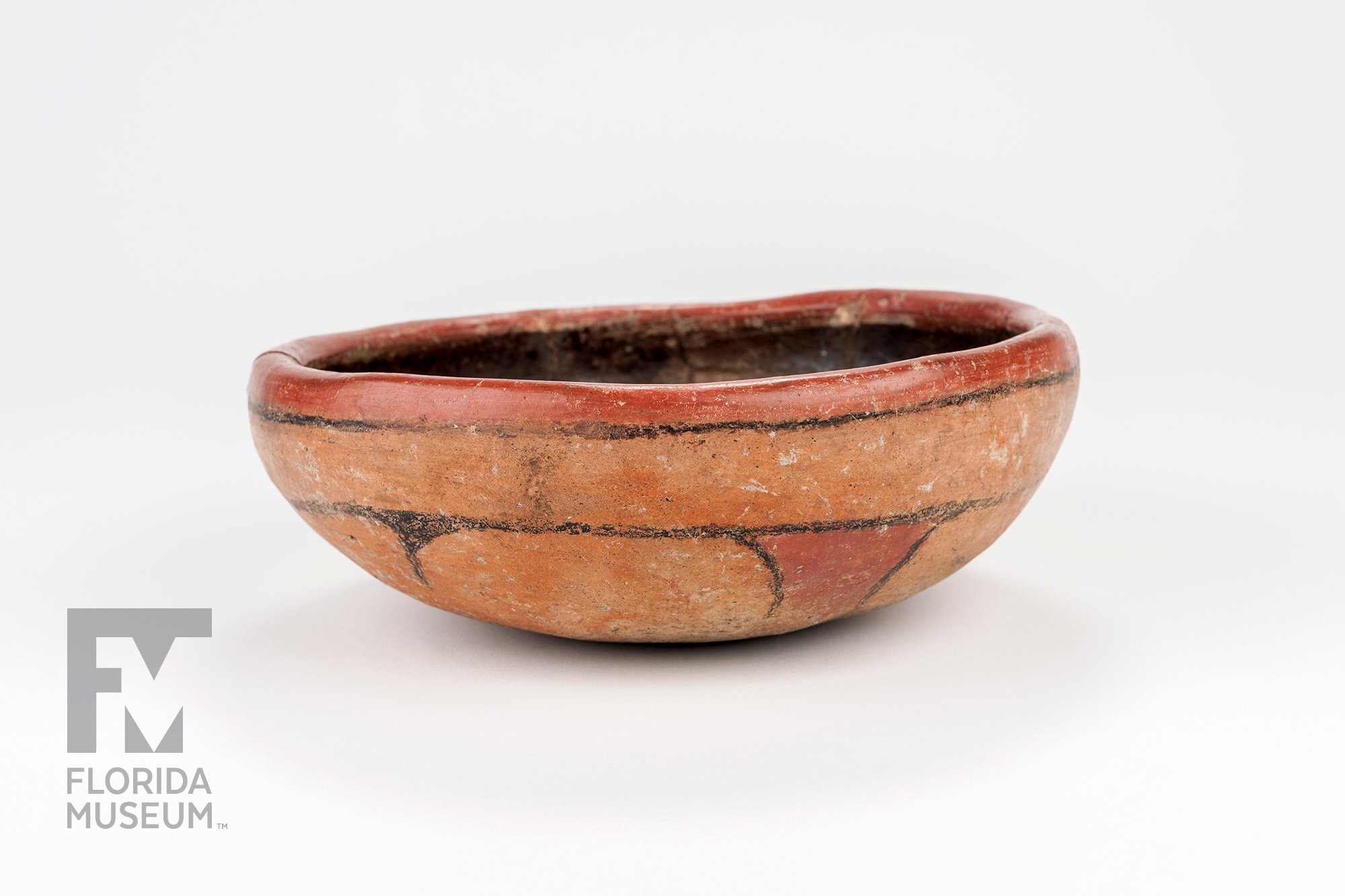
Manioc Beer Pottery Vessel. Native Island peoples; Grenada, Caribbean, ca. AD 1200–1400. Ceramic vessel with elaborate design and interior black resin coating, likely used in communal drinking contexts. The resin coating inside the vessel provides rare archaeological evidence of the processing and storage of acidic fermented liquids such as manioc beer — a traditional alcoholic beverage produced by boiling cassava (manioc), chewing or mashing it, and allowing it to ferment; the resin served to protect the ceramic interior from deterioration and reflects sophisticated understanding of material properties and foodways. Recovered through archaeological field research and curated by the Caribbean Archaeology collection of the Florida Museum of Natural History, University of Florida. Public domain. Florida Museum of Natural History. (n.d.). Manioc beer pottery vessel. University of Florida.
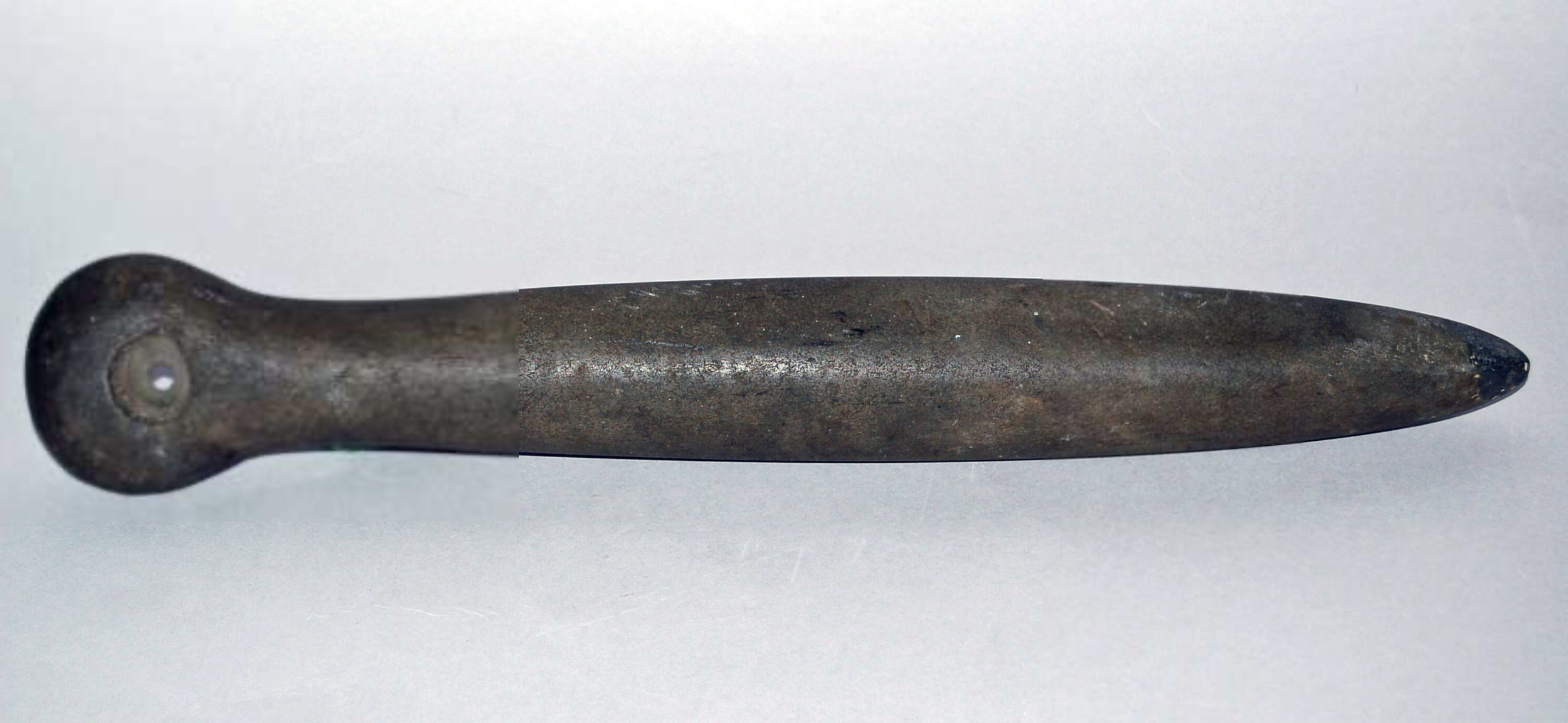
Stone Club (Possibly Ceremonial). Stone; Length 45.50 cm × Width 7 cm × Depth 5.10 cm. Caribbean, Americas. This carved stone club features a pointed distal end, a broadly lenticular shaft, and a discoidal proximal end with a central perforation. Its smooth dark grey surface and carefully shaped form suggest both functional and symbolic dimensions. While it may have served as a weapon, the refined finish and perforated discoidal base indicate the possibility of ceremonial or status-related use within Indigenous Caribbean societies. Field collected by Ephraim George Squier and Edwin Hamilton Davis, the club was purchased in 1931 from the Salisbury & South Wiltshire Museum and incorporated into the British Museum’s Department of Africa, Oceania and the Americas. The object bears an inscription mark reading “S 1277.” Museum no. Am,S.1277; Registration no. Am,S.1277; CDMS no. Am1931E1.1277. Currently not on display. Collection of the British Museum, London. British Museum. (1931). Stone club (possibly ceremonial) (Museum No. Am,S.1277; Registration No. Am,S.1277) [Stone club]. Department of Africa, Oceania and the Americas, The British Museum.
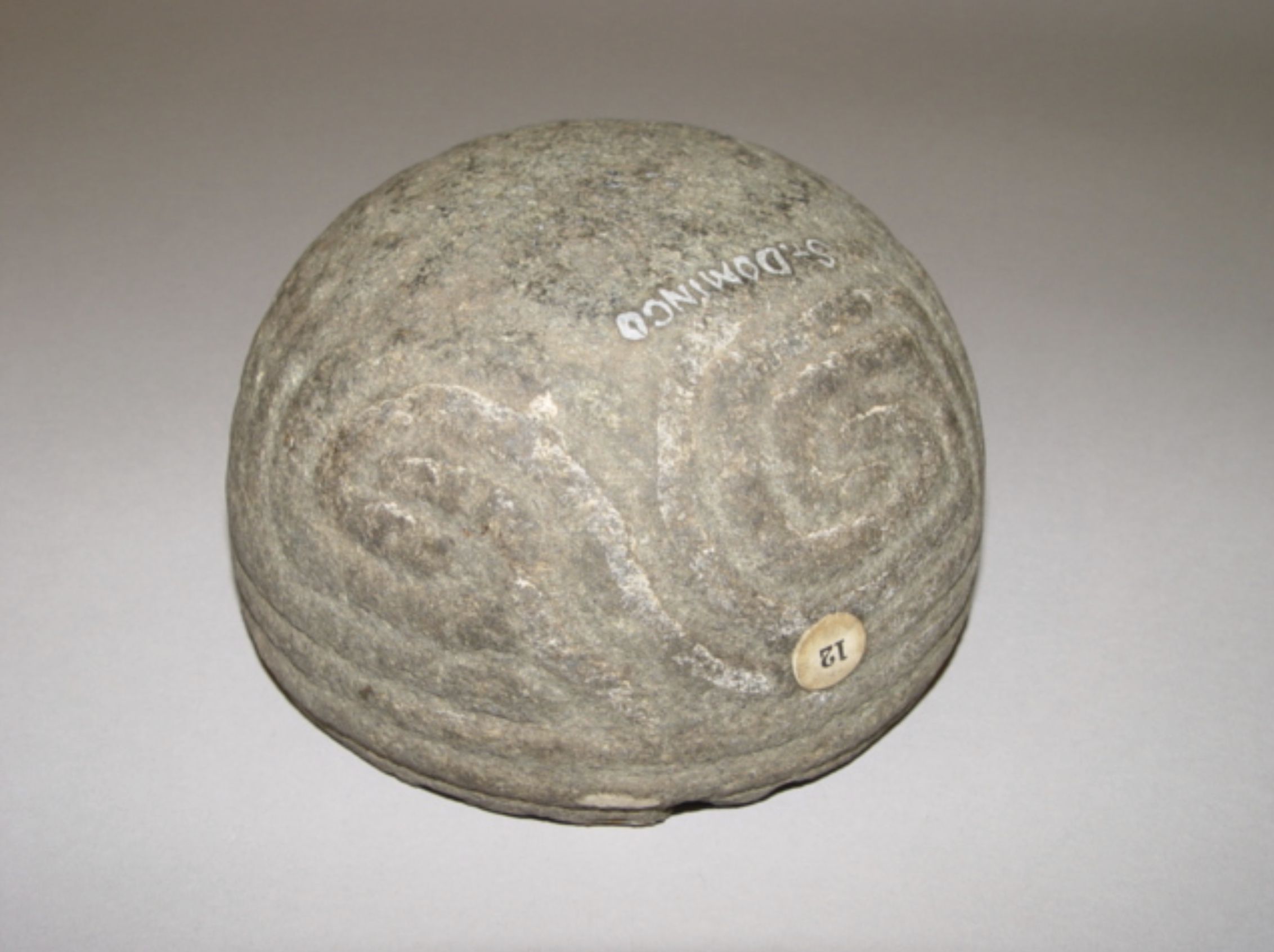
Stone Bowl (Possibly for Bruising Grain). Stone; Diameter 14.50 cm × Height 8 cm. Santo Domingo, Dominican Republic, Hispaniola, Caribbean (Greater Antilles). This carved stone bowl, possibly used for bruising or grinding grain, was excavated in Santo Domingo (National District), Dominican Republic. The vessel’s rounded interior and substantial stone body suggest use in food preparation processes such as crushing seeds, grain, or plant materials. Its form aligns with pre-Columbian Taíno and broader Greater Antillean stone vessel traditions associated with domestic subsistence practices. Field collected by Ephraim George Squier and Edwin Hamilton Davis, the bowl was later purchased in 1931 from the Salisbury & South Wiltshire Museum and incorporated into the Department of Africa, Oceania and the Americas at the British Museum. It was exhibited internationally in the 2008–2009 exhibition Caribbean Before Columbus (Barcelona, Santiago de Compostela, Madrid). Conservation treatment was recorded on 22 April 2008. Museum no. Am,S.177; Registration no. Am,S.177; CDMS no. Am1931E1.177. Currently not on display. Collection of the British Museum, London. British Museum. (1931). Stone bowl (possibly for bruising grain) (Museum No. Am,S.177; Registration No. Am,S.177) [Stone bowl]. Department of Africa, Oceania and the Americas, The British Museum.
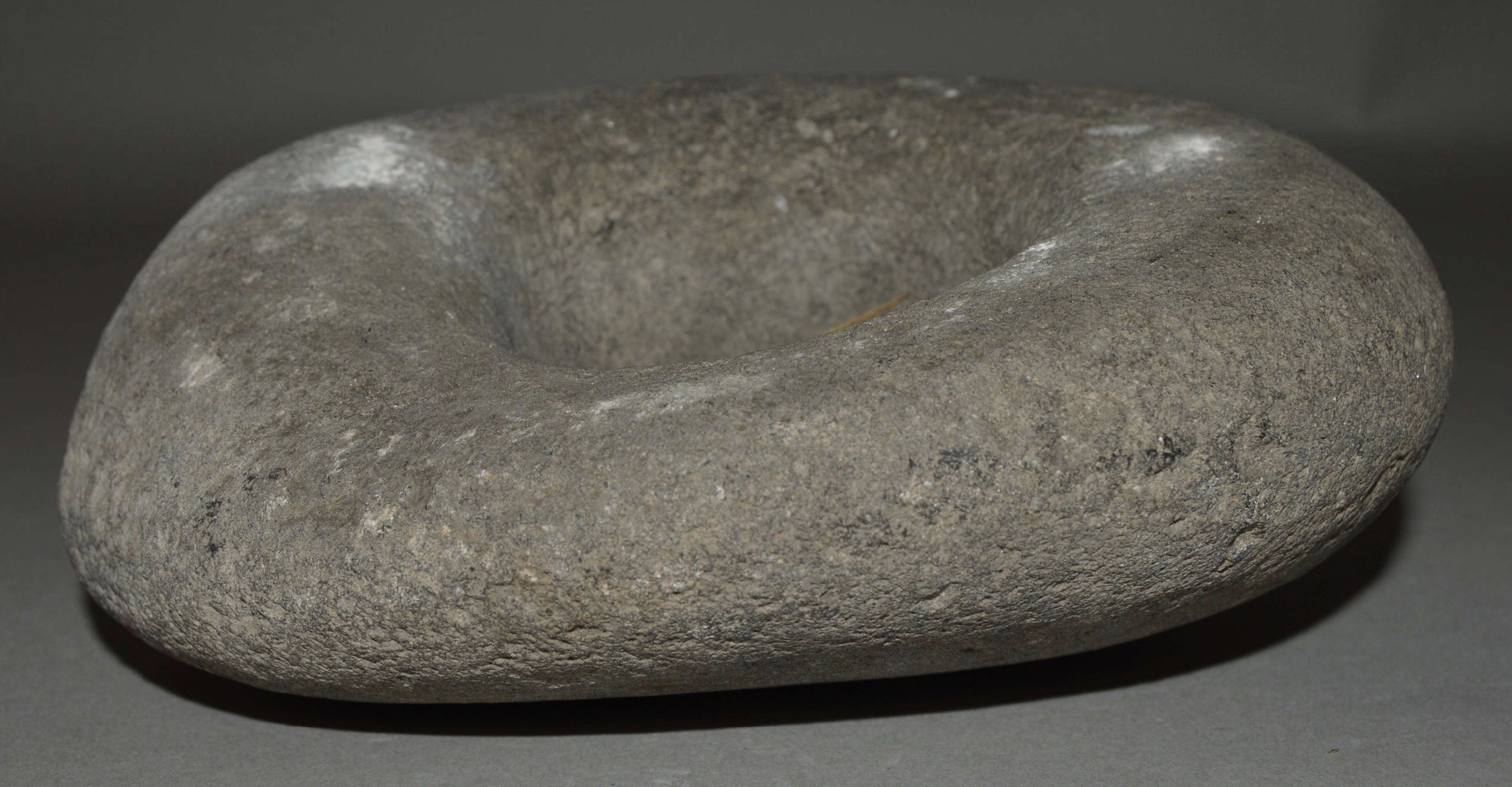
Stone Bowl or Grindstone. Stone; Height 7.50 cm × Width 18 cm × Depth 16.50 cm; Weight 2.24 kg. Caribbean, Americas. This heavy stone object is identified in the museum record as either a bowl or a grindstone. Its broad surface area, substantial weight, and shallow depth suggest possible use in food processing activities such as grinding or crushing plant materials, though its exact function remains uncertain. Found or acquired in the Caribbean, the object reflects stone tool and vessel traditions associated with Indigenous Caribbean material culture. The piece was discovered in the Americas collections of the British Museum in 1997. Museum no. Am1997,Q.788; Registration no. Am1997,Q.788. Department of Africa, Oceania and the Americas. Currently not on display. Collection of the British Museum, London. British Museum. (n.d.). Stone bowl or grindstone (Museum No. Am1997,Q.788; Registration No. Am1997,Q.788) [Stone object]. Department of Africa, Oceania and the Americas, The British Museum.
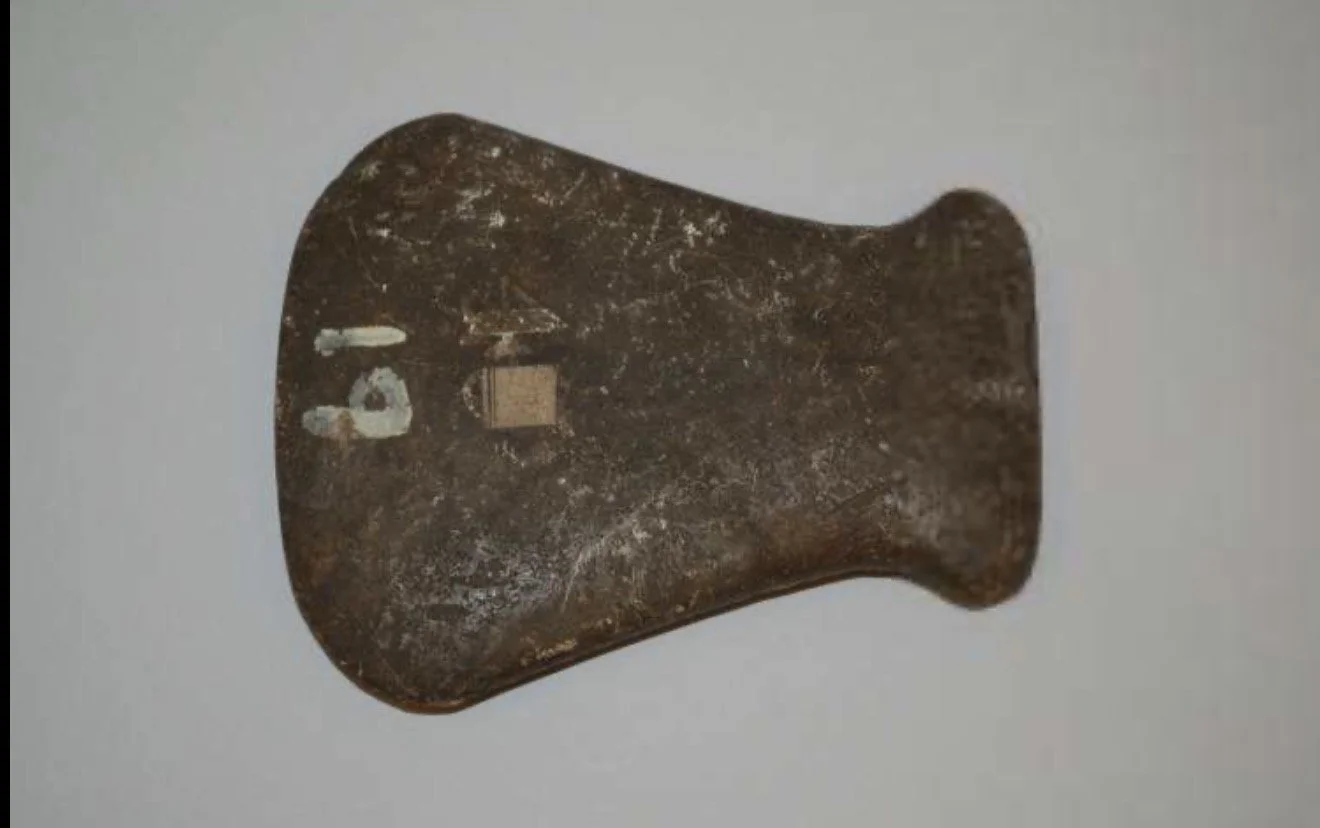
Stone Handaxe (Celt Type). Stone; Length 14 cm × Width 11.50 cm × Depth 1.80 cm. Caribbean, Americas. This stone handaxe, featuring a flared handle and wide blade, represents a lithic form commonly found in the Caribbean and associated with Indigenous pre-Columbian tool traditions. The broad cutting edge and tapered handle suggest use in woodworking, land clearing, or other utilitarian activities requiring durable stone implements. The object’s morphology aligns with Caribbean celt types frequently recovered in archaeological contexts across the West Indies. The handaxe was found in 1997 among unregistered South American collections at the British Museum, part of a group of 17 lithic objects and one pottery head of uncertain provenance. It bears multiple historical numbering systems, including old white-painted number “43,” more recent white-painted number “19,” and a pencil marking reading “W. Indies.” The object was formally registered in May 2013. Museum no. Am1997,Q.1495; Registration no. Am1997,Q.1495. Department of Africa, Oceania and the Americas. Currently not on display. Collection of the British Museum, London. British Museum. (2013). Stone handaxe (celt type) (Museum No. Am1997,Q.1495; Registration No. Am1997,Q.1495) [Stone handaxe]. Department of Africa, Oceania and the Americas, The British Museum.
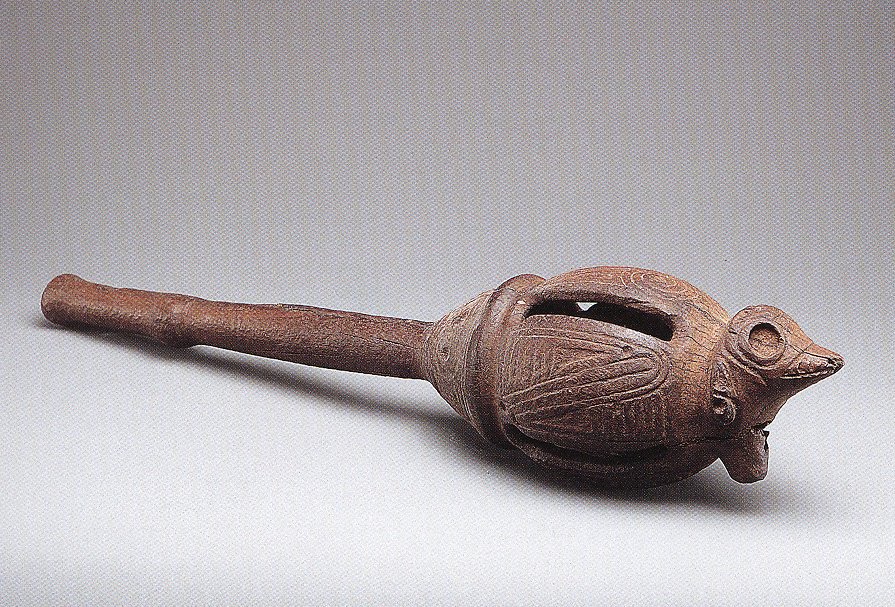
A pre-Columbian Taino wooden rattle, dating from approximately 900–1550 AD and originating from the Dominican Republic. Latin American Studies. (n.d.). Taíno wooden rattles. https://www.latinamericanstudies.org/taino/wooden-rattles.htm
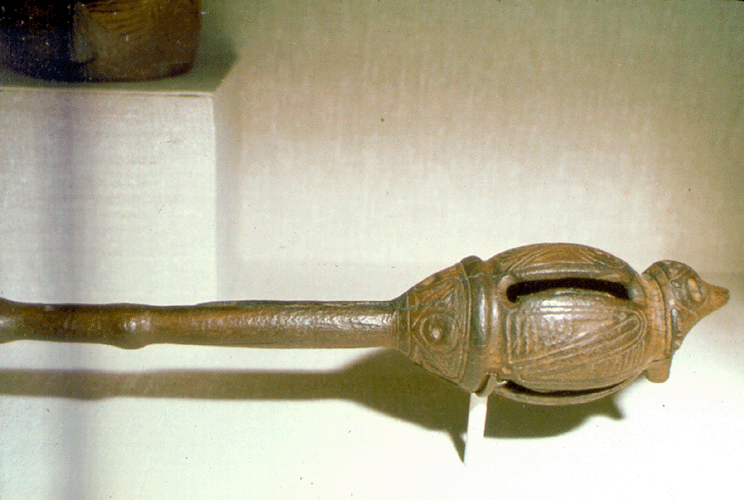
A pre-Columbian Taino wooden rattle, dating from approximately 900–1550 AD and originating from the Dominican Republic. Latin American Studies. (n.d.). Taíno wooden rattles. https://www.latinamericanstudies.org/taino/wooden-rattles.htm
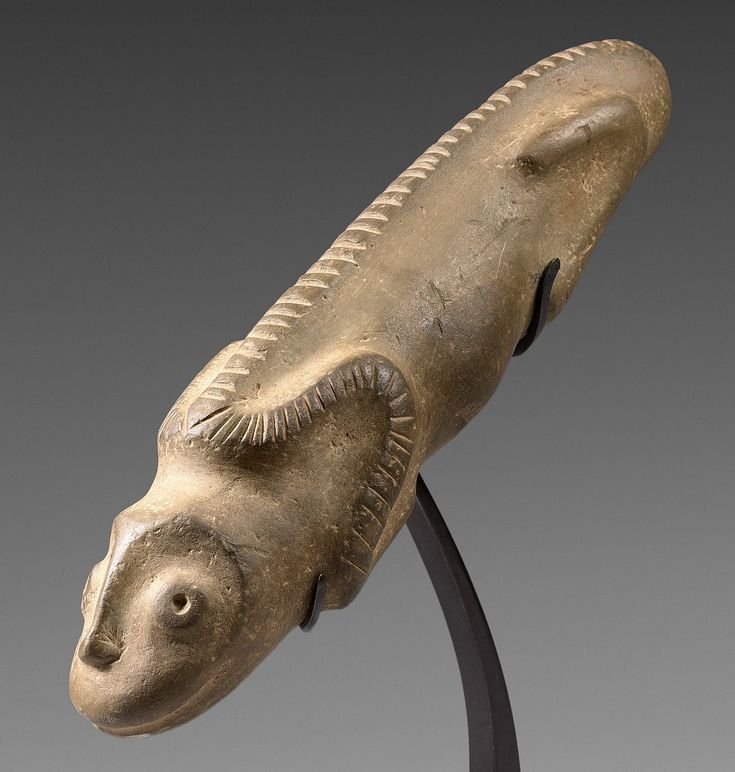
A Taino Figure (Carvings / Sculptures) made of Stone measures 23 cm (9.1 in). Dated CA. A.D. 800-1500, it originates from Hispaniola / Santo Domingo / Puerto Rico, is categorized as Iguana, and belongs to the Taino culture.

A Taíno amulet, likely from Hispaniola, dating from the 13th to 15th century A.D. Latin American Studies. (n.d.). Taíno wooden rattles. https://www.latinamericanstudies.org/taino/wooden-rattles.htm
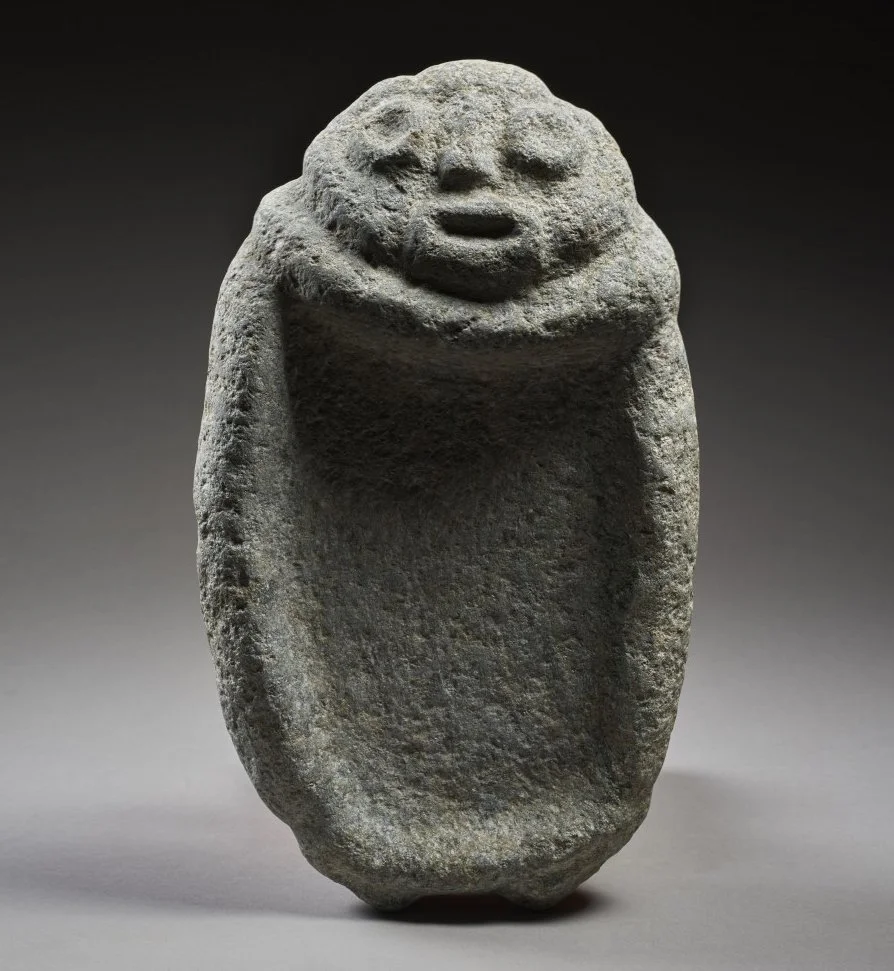
A Taino stone Zemi (deity figure) originating from the Greater Antilles in the Caribbean, likely dating between 1000 and 1500 CE. Believed to have served as a container for ancestral spirits or as a grinding table for ceremonial rituals. Artkhade. (n.d.). A Taíno grinding table (Greater Antilles). https://www.artkhade.com/en/object/DFZ8mmNn/a-taino-grinding-table-greater-antilles

A Taíno pestle, a rare stone artifact originating from the Greater Antilles and dating roughly between 1000–1500 CE. These pestles were traditionally used to crush cohoba seeds, a ritual hallucinogen, for inhalation by leaders to communicate with deities or ancestors. Sotheby’s. (2021). Pilon, Taíno, Saint-Domingue, Greater Antilles, AD 1000–1500. https://www.sothebys.com/en/buy/auction/2021/arts-dafrique-doceanie-et-des-ameriques/pilon-taino-saint-domingue-grandes-antilles-1000

A Taino stone bowl or mortar, likely used during the cohoba ritual for grinding hallucinogenic snuff. Artkhade. (n.d.). A Taíno mortar (Dominican Republic). https://www.artkhade.com/en/object/S3GuEv3Y/a-taino-mortar-dominican-republic
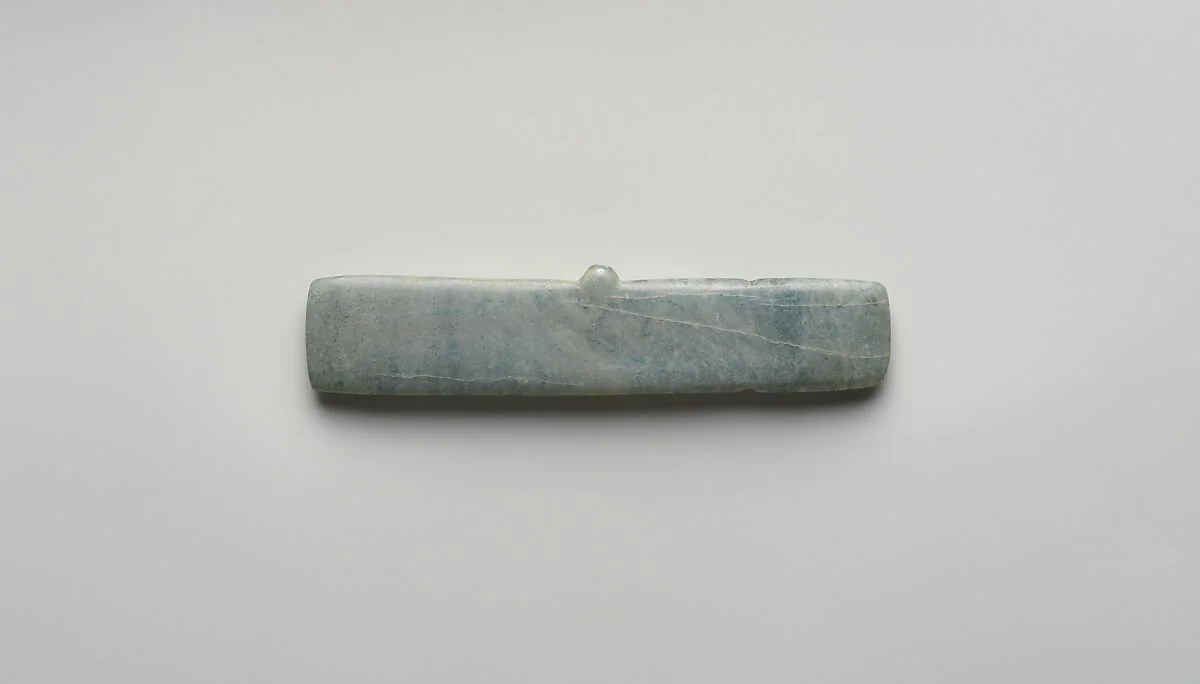
Winged pendant, greenstone or jade adze, likely utilized as a tool or ceremonial object in Pre-Columbian cultures such as the Olmec in Costa Rica. The Metropolitan Museum of Art. (n.d.). Descent of Eleven-Headed Kannon. https://www.metmuseum.org/art/collection/search/317450
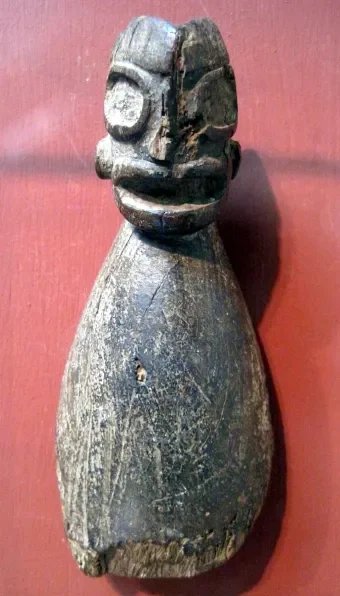
Carved Spoon with Anthropomorphic Handle. Taíno culture; Jamaica, Caribbean. Wood, carved. This carved wooden spoon features a stylized human face forming the handle, merging utilitarian design with spiritual symbolism. The exaggerated facial features and compact proportions align with Taíno sculptural conventions, where objects used in daily life often carried cosmological meaning. Collection of the National Gallery of Jamaica. National Gallery of Jamaica. (2009, November 28). Jamaican Taíno art at the NGJ [Photograph of carved spoon].
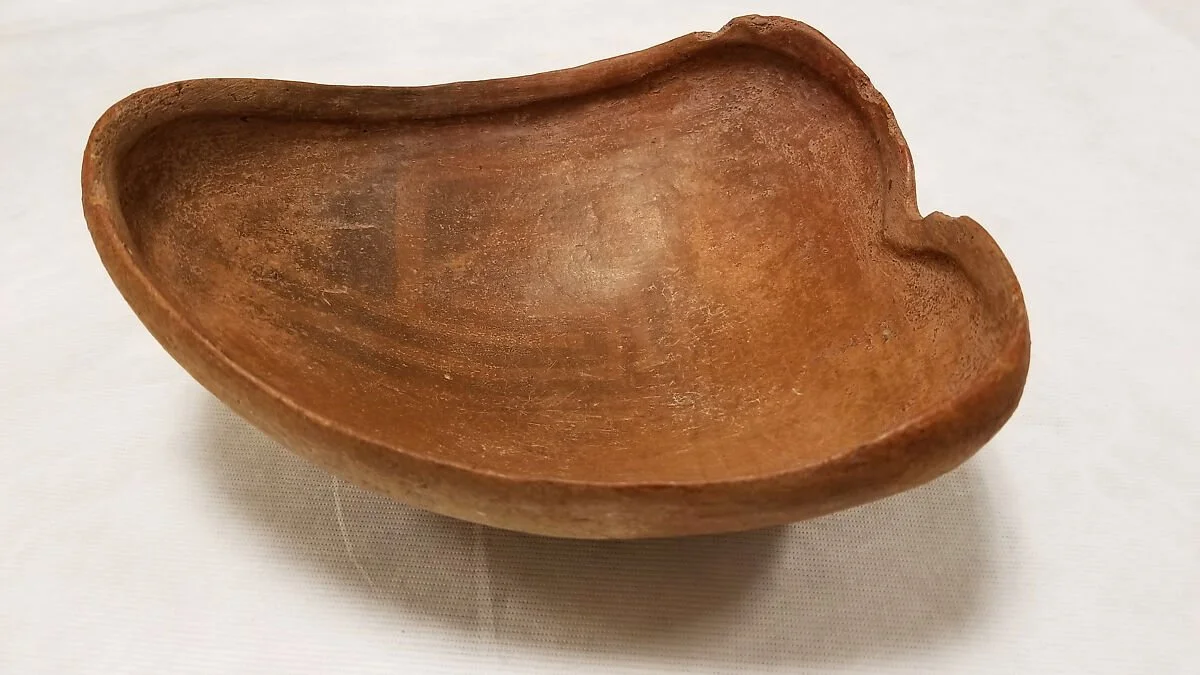
A Proto-Taíno bowl from the Early Ostionoid period, characterized by its organic shape resembling a leaf or a sliced guanábana fruit. The Metropolitan Museum of Art. (n.d.). Bowl with resist design. https://www.metmuseum.org/art/collection/search/820957
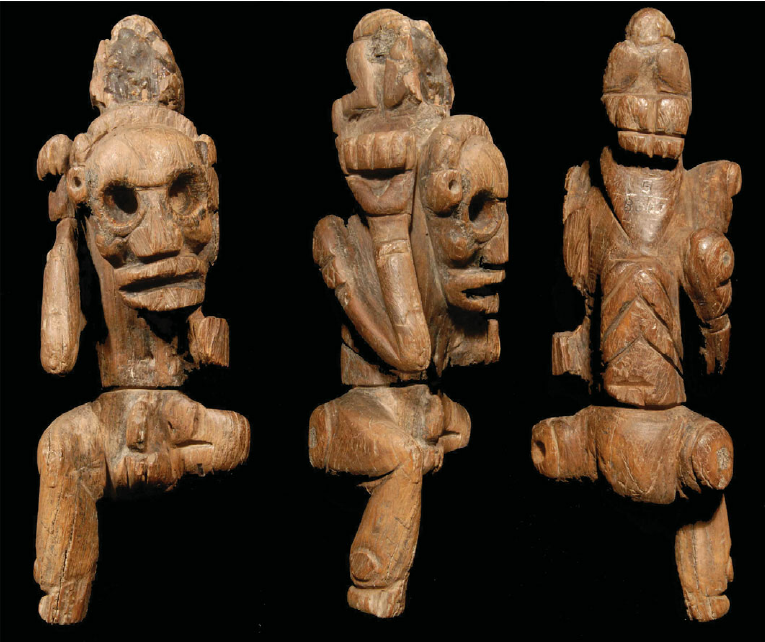
Cemı , Guaiacum sp., AD 1031–1299 (wood and resin dates), Loma de Polo (possibly Loma Pie de Palo) near Barahona, Dominican Republic. H: 192mm; W: 65mm (max); D: 56mm. Courtesy of the National Museum of the American Indian, Smithsonian Institution, Washington, 058307.
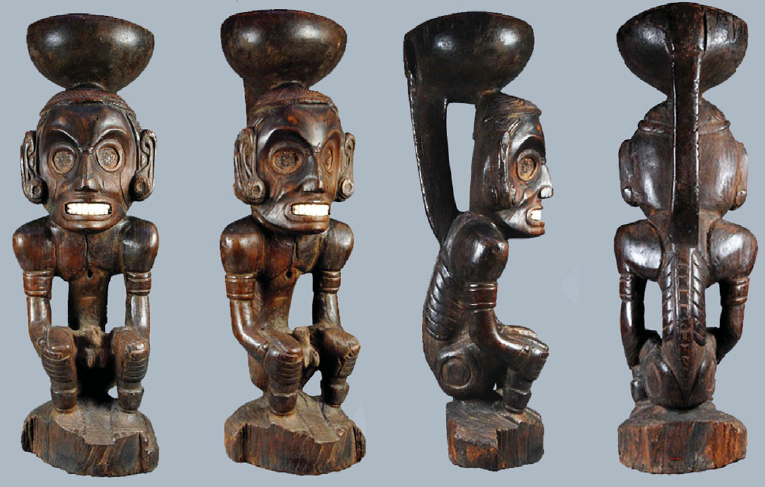
Cohoba stand, Guaiacum sp., shell, AD 974–1020 (modelled dates), Dominican Republic/Haiti (?). H: 665mm; W: 220mm (max); D: 230mm. The Metropolitan Museum of Art, The Michael C. Rockefeller Memorial Collection, Bequest of Nelson A. Rockefeller, 1979 (1979.206.380).
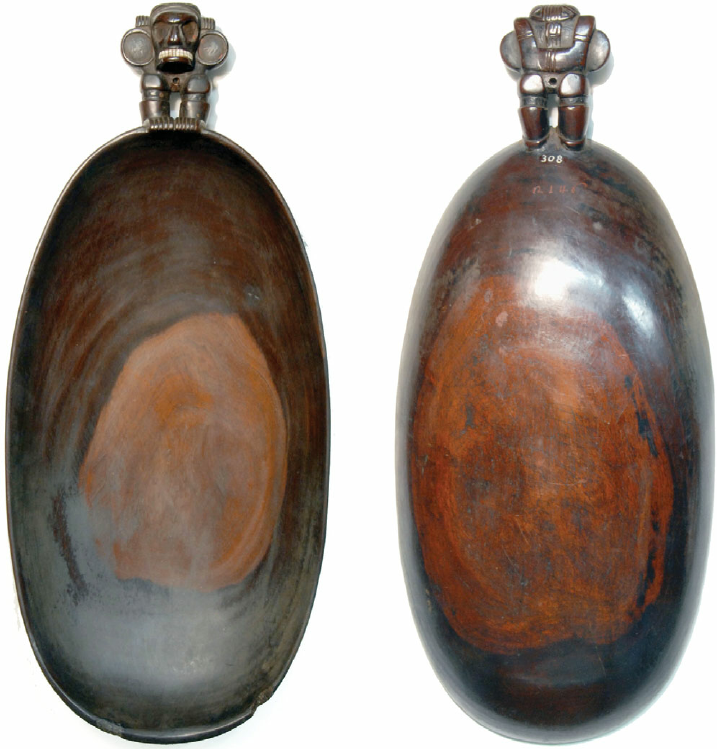
Florence platter, Guaiacum sp., AD 1445–1523 (69.5% probability), Dominican Republic/Haiti (?). L: 506mm; W: 222mm (max); D: 63mm. Courtesy of the Museum of Natural History, Section of Anthropology and Ethnology, Florence, Italy, 308.
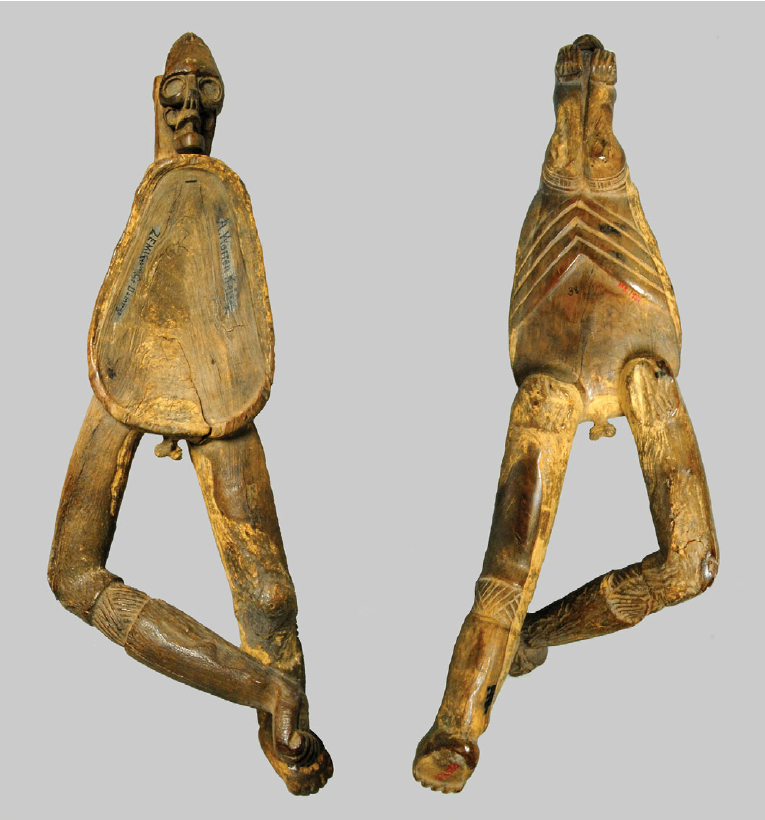
Kelsey duho, Guaiacum sp., AD 1298–1433 (wood and resin dates), Puerto Plata region (?), Dominincan Republic. L: 605mm; W: 205mm (max); H: 168mm. Courtesy of the Saint Louis Art Museum, Friends Fund and Primitive Art Society Fund in honor of Morton D. May, 168:1981.
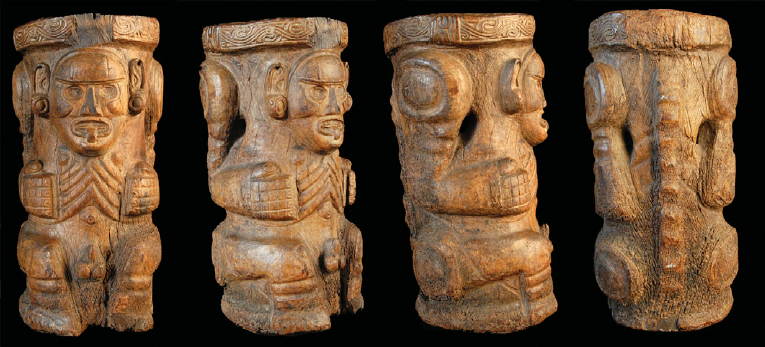
Reliquary, Guaiacum sp., AD 1052–1176 (modelled dates), Dominican Republic/Haiti (?). H: 460mm; W: 249mm (max); D: 250mm. Courtesy of Musée Barrois, Bar-le-Duc, France, 850.20.38.
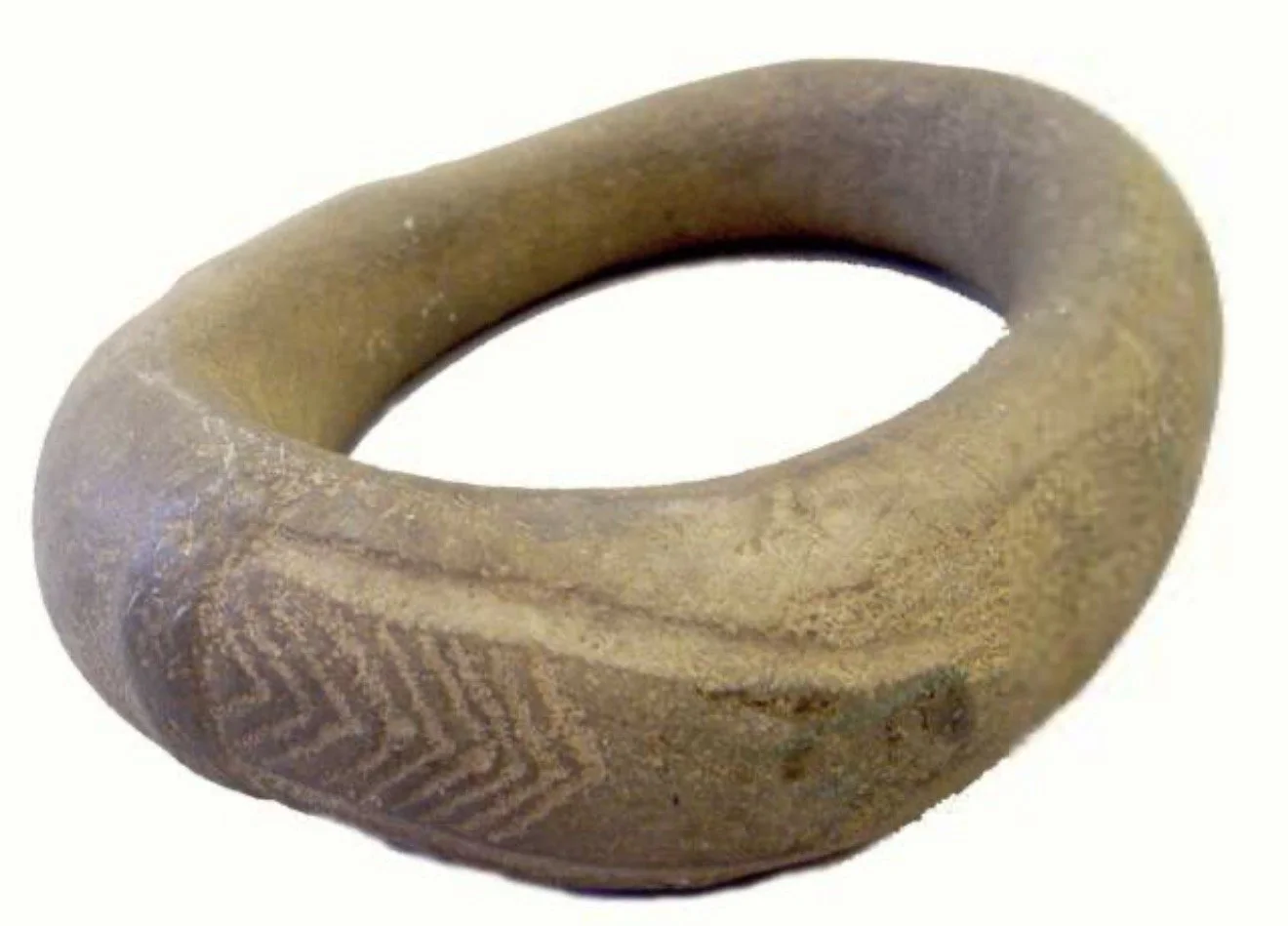
Stone Ring. Stone. Caribbean, Americas. This stone ring was excavated in the Caribbean and reflects Indigenous lithic traditions of the region. Categorized as ornamental objects, components of regalia, or symbolic items within ritual or social practices. The object’s simple carved form emphasizes durability and portability, consistent with stone-working technologies in the pre-Columbian Caribbean. The ring was rediscovered in 1997 within the Americas collections of the British Museum, apparently unnumbered and unregistered at the time. A label attached to the object reads “W. Simpson Jan. 18 1875,” referencing Reverend Dr. William Sparrow Simpson as a previous owner or collector. Museum no. Am1997,Q.734; Registration no. Am1997,Q.734. Department of Africa, Oceania and the Americas. Currently not on display. Collection of the British Museum, London. British Museum. (n.d.). Stone ring (Museum No. Am1997,Q.734; Registration No. Am1997,Q.734) [Stone ring]. Department of Africa, Oceania and the Americas, The British Museum.
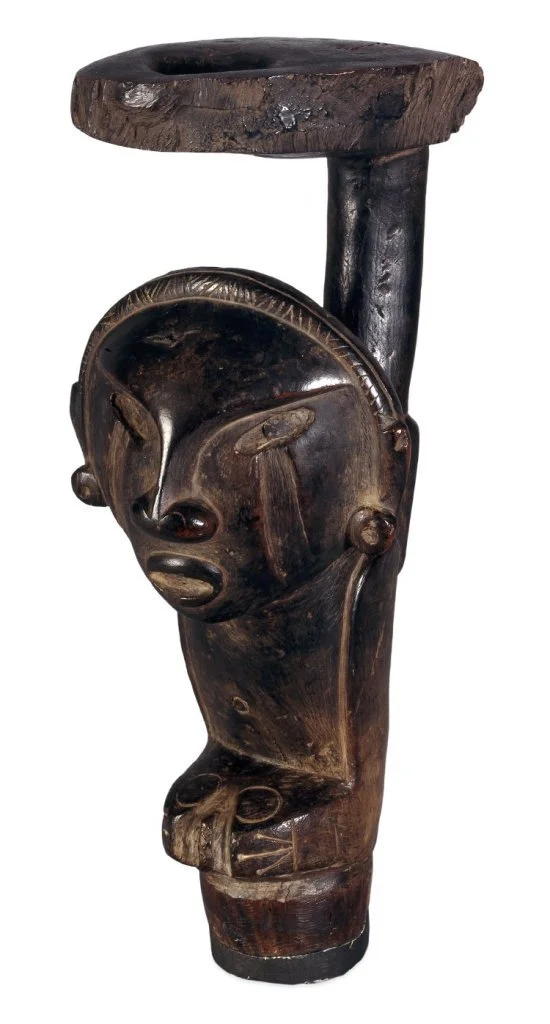
Jamaican Taino – Figure with canopy (facing left) © The Trustees of the British Museum
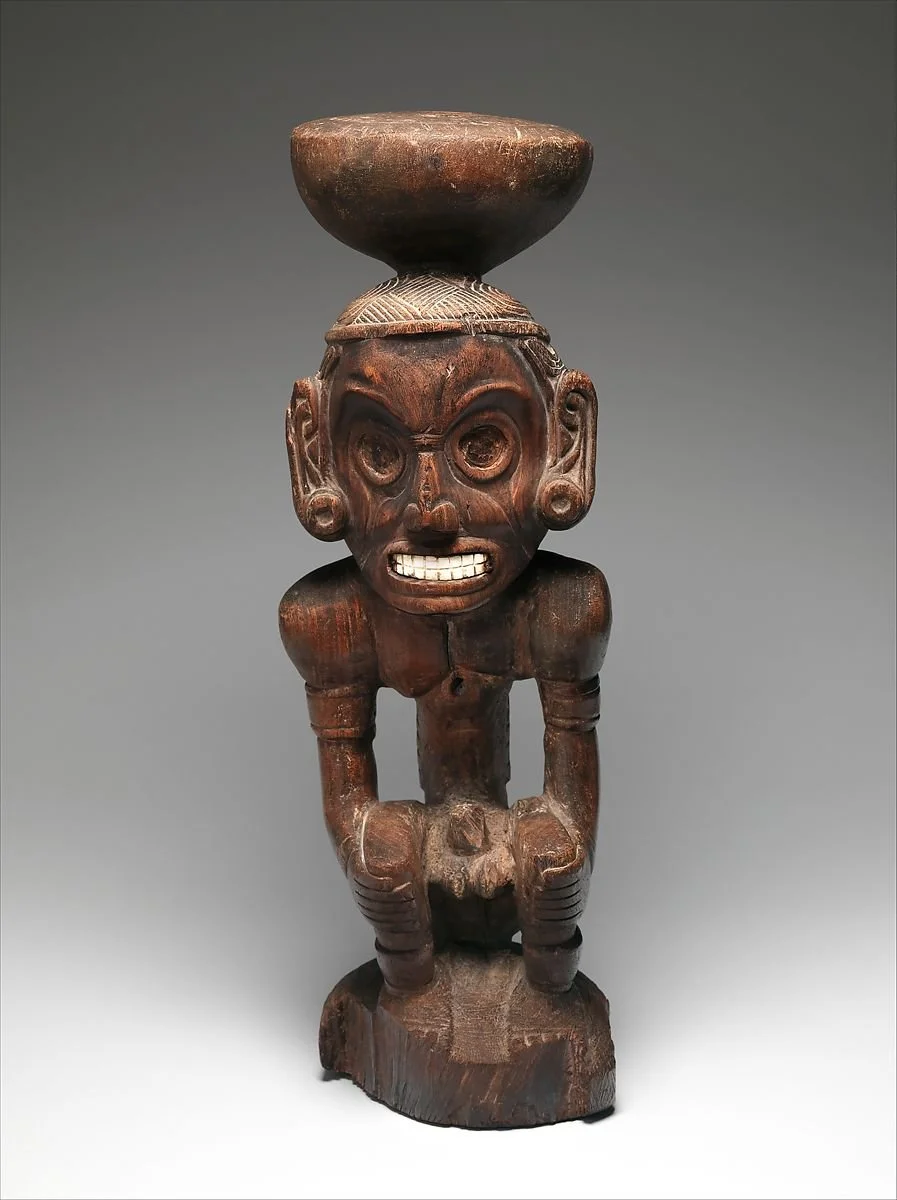
Taino – Deity (Zemi) (c1,000 AD), Metropolitan Museum, The Michael C. Rockefeller Memorial Collection, Bequest of Nelson A. Rockefeller, 1979
![Jamaican Taino, Male figure (Boinayel?), 15th century. British Museum. (n.d.). Male figure (deity?) made of wood [Image]. https://www.britishmuseum.org/collection/image/242103001](https://images.squarespace-cdn.com/content/v1/65b41067c4042363cf11625f/f54c74f7-51f6-4ad2-bd0e-8b4739139c7a/an00242103_001_l.jpg)
Jamaican Taino, Male figure (Boinayel?), 15th century. British Museum. (n.d.). Male figure (deity?) made of wood [Image]. https://www.britishmuseum.org/collection/image/242103001
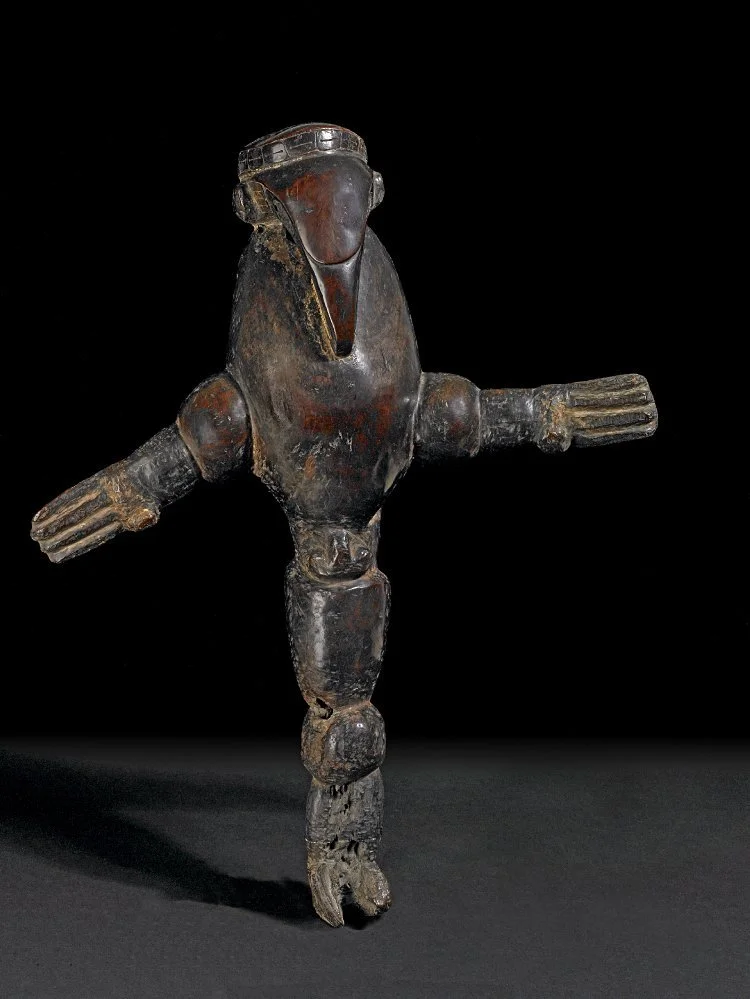
Jamaican Taino, The Bird Man (800-1500). British Museum. (n.d.). Figure (museum no. Am1977, Q.2). https://www.britishmuseum.org/collection/search?keyword=ESA25674
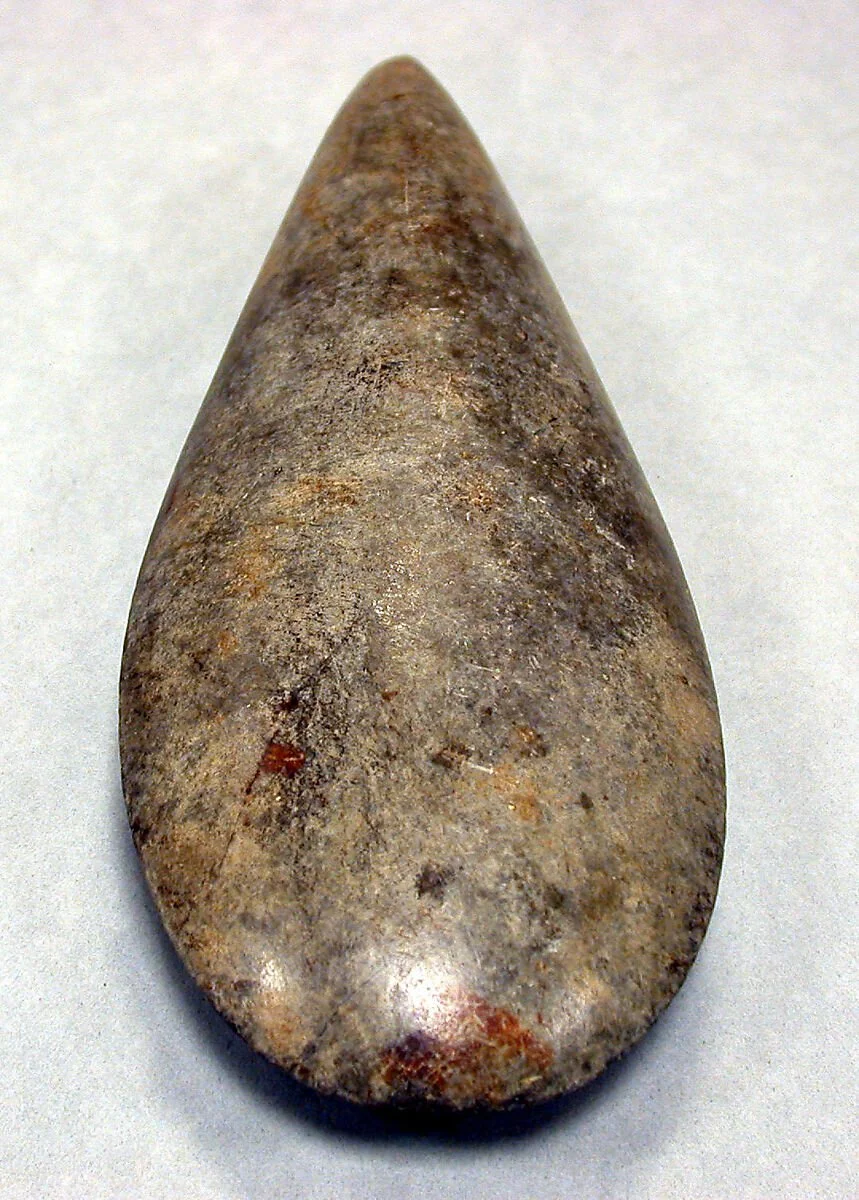
Celt. 7th–10th century. Taíno culture; Puerto Rico, Caribbean. Stone implement (Height 9 5/8 in. × Width 3 3/8 in. / 24.4 × 8.6 cm) carved and ground to a polished edge. This celt was made by Taíno craftspersons using percussion and abrasive techniques to shape the stone into a dual-purpose tool that could function as both a utilitarian blade and a symbolic or ceremonial object. Anonymous Gift, 1995 (Object No. 1995.313). Collection of the The Metropolitan Museum of Art, New York. Public domain. (metmuseum.org) The Metropolitan Museum of Art. (n.d.). Celt (Object No. 1995.313).
![Stone Celt. Before the 16th century. Taíno culture; Dominican Republic, Caribbean. Carved stone implement (Height: 6 7/8 in. [17.5 cm]), shaped by Taíno craftspersons through percussion and grinding techniques to produce a functional and polished too](https://images.squarespace-cdn.com/content/v1/65b41067c4042363cf11625f/12c054b7-1ea0-4981-848b-9ffb69917823/main-image-5.jpeg)
Stone Celt. Before the 16th century. Taíno culture; Dominican Republic, Caribbean. Carved stone implement (Height: 6 7/8 in. [17.5 cm]), shaped by Taíno craftspersons through percussion and grinding techniques to produce a functional and polished tool. In Taíno societies of the Greater Antilles, celts served as both practical implements and objects of symbolic or ceremonial significance, reflecting skilled lithic technology and socio-cultural roles in craft production, exchange, or ritual practice. Object Number: 1994.35.423. Bequest of Arthur M. Bullowa, 1993. Collection of the The Metropolitan Museum of Art, New York. Public domain. The Metropolitan Museum of Art. (n.d.). Stone Celt (Object No. 1994.35.423).
![Celt, 7th–10th century, Taíno culture, Puerto Rico, Caribbean. Carved stone (H. 24.4 cm × W. 8.6 cm [9 5/8 × 3 3/8 in.]). This polished stone implement was created by Taíno artisans using pecking and grinding techniques to shape and smooth the stone](https://images.squarespace-cdn.com/content/v1/65b41067c4042363cf11625f/a0a16dca-3008-477a-ab76-e530e0c29f1e/main-image.jpeg)
Celt, 7th–10th century, Taíno culture, Puerto Rico, Caribbean. Carved stone (H. 24.4 cm × W. 8.6 cm [9 5/8 × 3 3/8 in.]). This polished stone implement was created by Taíno artisans using pecking and grinding techniques to shape and smooth the stone surface. Celts functioned both as practical tools and as ceremonial or symbolic objects within Taíno society, often serving as markers of status, exchange, or ritual dedication. Anonymous Gift, 1995. Accession no. 1995.313. Collection of the The Metropolitan Museum of Art, New York. Public domain. The Metropolitan Museum of Art. (n.d.). Celt (Accession No. 1995.313).
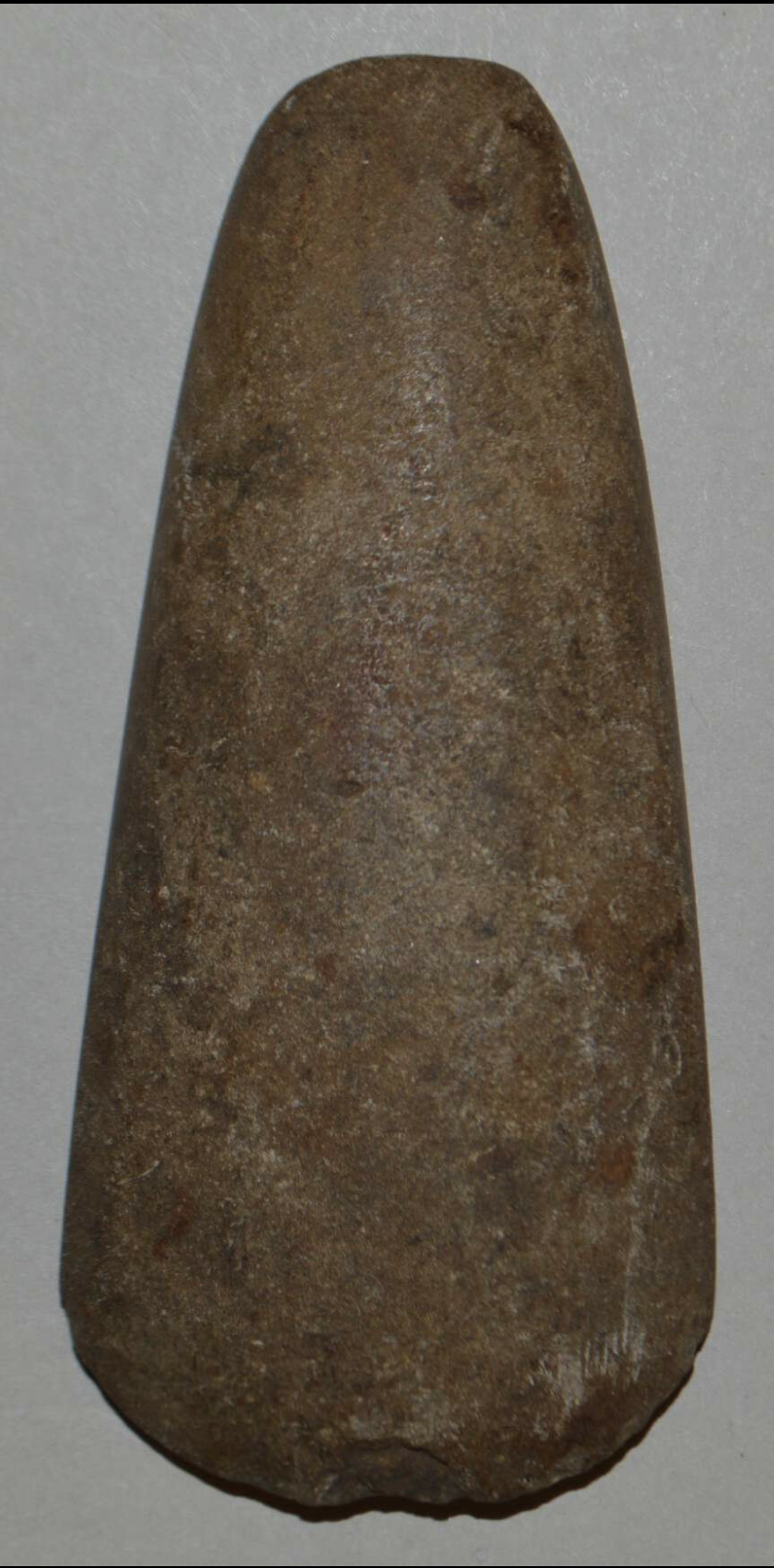
Adze Blade. Early 19th century. Stone; Height 10 cm × Width 4.50 cm × Depth 1.70 cm. Caribbean, Americas. This stone adze blade was excavated in the Caribbean and reflects Indigenous and early historic lithic tool traditions in the region. Adzes were woodworking implements used for shaping timber, canoe construction, architectural framing, and other forms of craft production. Collected in the field by Sir Graham Briggs and later acquired from his estate, the object forms part of a West Indies archaeological collection (Am,+.4380–4420) purchased by Sir Augustus Wollaston Franks and donated to the British Museum on 29 November 1889. Museum no. Am,+.4406; Registration no. Am,+.4406; CDMS no. Am1889C2.4406. Department of Africa, Oceania and the Americas. Currently not on display. Collection of the British Museum, London. British Museum. (1889). Adze blade (Museum No. Am,+.4406; Registration No. Am,+.4406) [Stone adze blade]. Department of Africa, Oceania and the Americas, The British Museum.
![Ancient Taíno ceramic vessels, including bowls and dishes. Smithsonian Institution, Bureau of American Ethnology. (n.d.). El Hatillo type ceramic remains (Plate 2) [Illustration]. Alamy. https://www.alamy.com/bulletin-ethnology-bureau-of-american-eth](https://images.squarespace-cdn.com/content/v1/65b41067c4042363cf11625f/1b2eab97-6569-4a62-95ea-93706c982ef4/bulletin-united-states-national-museum-1931-20320019339-2264d3-1024.jpg)
Ancient Taíno ceramic vessels, including bowls and dishes. Smithsonian Institution, Bureau of American Ethnology. (n.d.). El Hatillo type ceramic remains (Plate 2) [Illustration]. Alamy. https://www.alamy.com/bulletin-ethnology-bureau-of-american-ethnology-bulletin-193-plate-2-el-hatillo-type-ceramic-remains-for-explanation-see-p-270-please-note-that-these-images-are-extracted-from-scanned-page-images-that-may-have-been-digitally-enhanced-for-readability-coloration-and-appearance-of-these-illustrations-may-not-perfectly-resemble-the-original-work-smithsonian-institution-bureau-of-american-ethnology-washington-g-p-o-image234139494.html
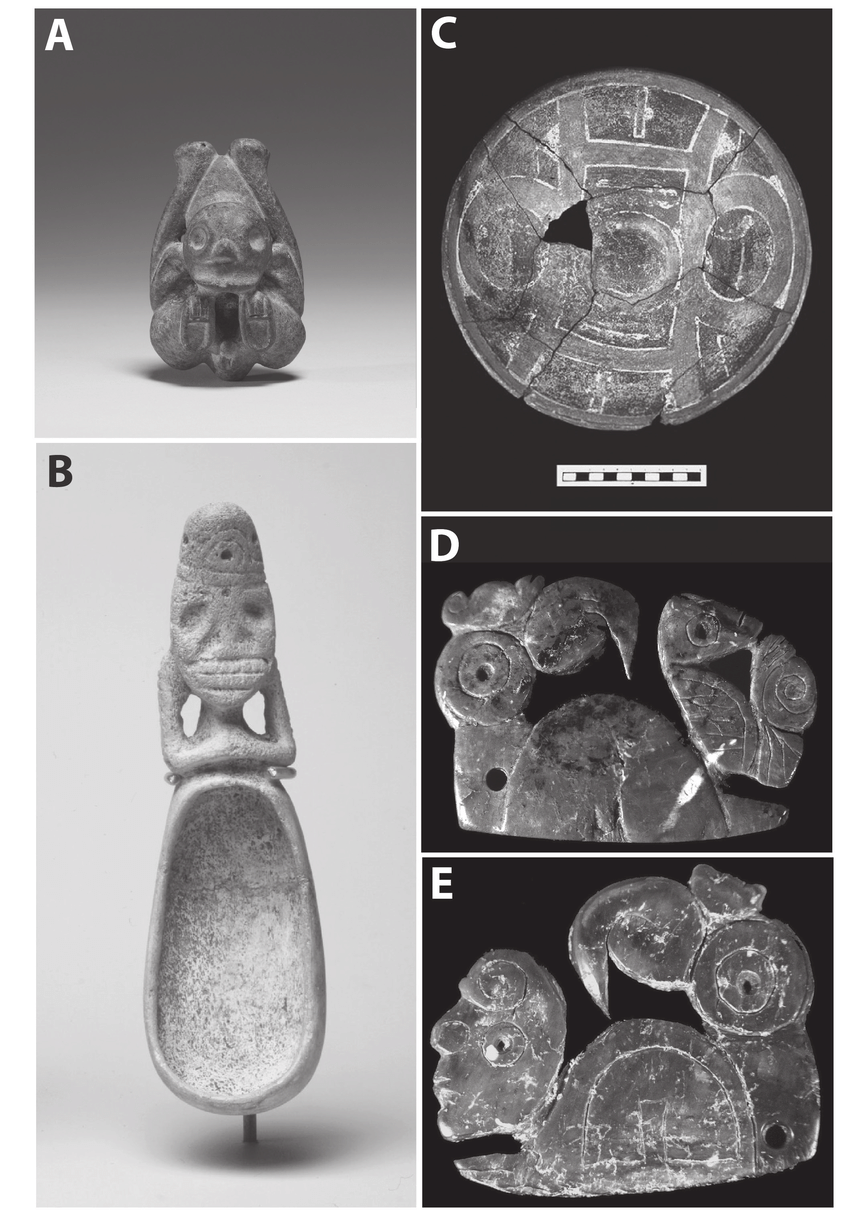
4. Examples of iconographic objects from the Caribbean: A, Cohoba Inhaler (by Walters Art Museum, CC BY-SA 3.0); B, Cohoba Spoon (by Brooklyn Museum); C, Reconstructed Cedrosan Saladoid bowl from Tecla, Guayanilla, Puerto Rico (photo by Jose Oliver); D, La Huecan jadeite/jadeitite bird pendant from Vieques (photo by Jose Oliver); E, La Huecan jadeite/jadeitite bird pendant from Vieques (photo by Jose Oliver).